Fourteen Names the IDF Chose Not to Give Us: Israel's Admitted Dead in the Lebanon War
On April 18, 2026, an Israeli military spokesman acknowledged that 14 IDF soldiers have been killed since the beginning of the Lebanon war. No names, no circumstances, no individual acknowledgements were made public at the time of this report. This piece considers what that admission means — and what it does not say.
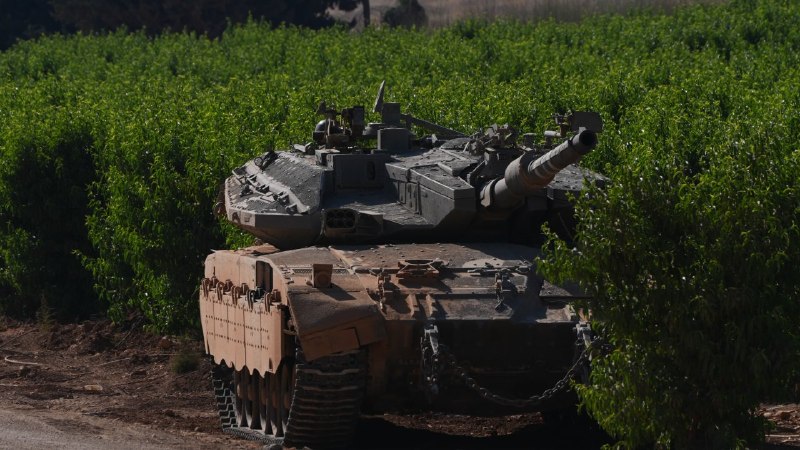
An Israeli military spokesman acknowledged on April 18, 2026 that 14 IDF soldiers have been killed since the beginning of the Lebanon war. The statement was brief. It contained no names. It contained no circumstances of death — no indication of whether those 14 soldiers died in ground combat, in strikes on their positions, in helicopter accidents, or in the kind of ambush that the Radwan Force was designed to execute. The statement was reported by an Arabic-language channel identified as Al-Alam, which described Israel as having "admitted to heavy losses." The Israeli military framing — when its own outlets carried it — was presumably characterised as "acknowledged casualties in ongoing operations."
Fourteen soldiers. In the context of a major land operation in southern Lebanon, with simultaneous aerial bombardment of Hezbollah infrastructure, IDF ground elements operating in the terrain they entered in previous campaigns in 1978, 1982, 2000, and 2006, and Hezbollah deploying the elite Radwan Force in its defensive capacity, the number 14 is simultaneously a data point and an opacity. It is a number the Israeli military chose to acknowledge — likely because the deaths had become impossible to conceal in a country where every military death triggers a mourning cycle that is civic, religious, and intensely public. And it is a number that tells us almost nothing about who those soldiers were, how they died, or what their deaths meant about the actual cost-benefit of the operation in which they were lost.
This piece is an attempt to write the obituary of 14 unnamed people, and, in doing so, to say something about how democracies at war manage the relationship between official casualty accounting and public knowledge.
The Israeli Military's Institutional Relationship With Its Dead
Israel's military casualty culture is particular, shaped by the country's small demographic base and the consequent intimacy between military service and civilian society. The IDF does not operate at the remove from civilian life that large conscript or professional armies in major powers typically achieve. Every Israeli family has, or has recently had, a son or daughter or sibling in service. This means that military deaths are not abstract; they occur within a social network of connections that makes concealment from the immediate community impossible. When a soldier dies, the family knows, the extended family knows, the school friends know. The information moves outward in concentric circles regardless of official policy.
The Israeli military's management of this reality has historically involved a system of censorship and delayed release that is designed not to conceal the existence of casualties — which would be futile — but to control the timing and framing of their public acknowledgement. The military censor, a figure with real institutional authority in the Israeli media system, reviews casualty information before it can be publicly reported. This means that Israeli media typically acknowledges deaths in general terms — "soldiers were killed in fighting in the north" — before the names are cleared for release. The names, when released, come with official biographical elements that frame the soldier within the national martyrology: their hometown, their unit (in general terms), their age, sometimes a quote from a commanding officer about their character.
What the April 18 announcement provided was the cumulative number — 14 — without any of the biographical scaffolding. This is unusual even by the standards of Israeli military communication. It suggests either that the announcement was made before the individual clearances had been processed, or that a decision was made to acknowledge the aggregate while withholding the details that would have given the number a human face.
What We Do Not Know About How They Died
The 14 soldiers' deaths occurred in a conflict whose ground component has been characterised by some of the most intensive urban and semi-urban fighting that Israeli forces have engaged in since the 2006 Lebanon war. The IDF simultaneously established what open-source intelligence channels described as a "Gaza-style Yellow Line buffer zone" in southern Lebanon — a perimeter across which any movement is treated as justification for lethal force. This approach, imported from the Gaza operational template, reflects a tactical logic in which the costs of verification are judged to exceed the costs of occasional misidentification. Within that operational context, the deaths of 14 soldiers could have occurred in ambushes by Hezbollah fighters using the tunnel infrastructure and terrain knowledge they have built up over decades, in counter-ambushes gone wrong, in vehicle strikes, in rocket or drone attacks on command positions, or in the kind of close-quarters combat for which the Radwan Force was specifically trained.
None of these modes of death is more or less honourable than any other from the perspective of the individuals who experienced them. But each mode tells a different story about the operational effectiveness of the adversary and the specific vulnerabilities of Israeli force posture in Lebanon. A casualty sustained in a Radwan Force ambush inside the buffer zone indicates that Hezbollah's ground forces retain tactical initiative in terrain they know. A casualty sustained in a Hezbollah drone strike indicates the persistence of Hezbollah's aerial capability despite sustained Israeli countermeasures. A casualty sustained in a vehicle accident or friendly fire incident tells a different story still. Without knowing how these 14 soldiers died, we cannot adequately interpret what their deaths mean about the course of the conflict.
The Israeli military, by releasing only the number, has structured the public's ignorance. This is a legitimate wartime communication choice; it is also, from the perspective of a citizenry that is being asked to bear the costs of the conflict, a specific kind of withholding.
The Asymmetry of Counted Dead
On the same day that the IDF acknowledged 14 soldiers killed, Lebanese Telegram channels reported the death of Ali Reza Abbas, Hezbollah's Radwan Force commander and successor to Ibrahim Aqil. The IDF simultaneously reported eliminating "several Hezbollah terrorists" in strikes targeting a cell approaching troops in southern Lebanon. Iranian state media was simultaneously processing the deaths of senior IRGC commanders in the "third imposed war," and the Fars Province Martyrs Foundation was reporting 247 provincial dead.
The number 14 will, when names are eventually released, become the subject of funeral coverage in Israeli media, parliamentary statements, and the particular form of national mourning in which Israel's public culture specialises. Each of those 14 deaths will become a story — a young person from a specific city, with a specific role in the IDF, whose death leaves a specific family in grief. That coverage is appropriate; it is part of how a society that sends its young people to war accounts for the cost of doing so.
The 247 in Fars, the unnamed Hezbollah fighters killed in the Wednesday strike wave, the civilians of southern Lebanon whose displacement and injury are documented in humanitarian reports — these dead do not receive equivalent coverage. Media systems aligned with specific state interests produce differential attention to death that does not reflect differential moral weight. A soldier from a Western-aligned military, killed in an operation that Western governments support, receives the full biographical treatment — hometown, unit, commanding officer's tribute. A fighter from a non-state armed group aligned with Iran is an unverified item. A civilian from a province of a state designated as an adversary is, in coverage terms, close to invisible.
This piece cannot name the 14. The Israeli military has not released the names at the time of publication. What it can do is note that they existed, that they were people with families and histories and the particular irreplaceable specificity of individual human lives, and that their deaths — like the deaths of their adversaries, like the deaths of the 247 in Fars, like the death of the French peacekeeper buried the same week — are part of a single ongoing catastrophe whose human cost is distributed in ways that the media system organises us to see only partially.
The Monexus obituaries desk will update this piece when the IDF releases the names of the soldiers killed. The casualty figure of 14 draws on reporting by Al-Alam's Arabic-language channel, published April 18, 2026 UTC. Framing of Israeli military media practices draws on publicly available analysis of the Israeli military censor system.