The Aesthetics of Assertion: How State Theater Colonizes the News Feed
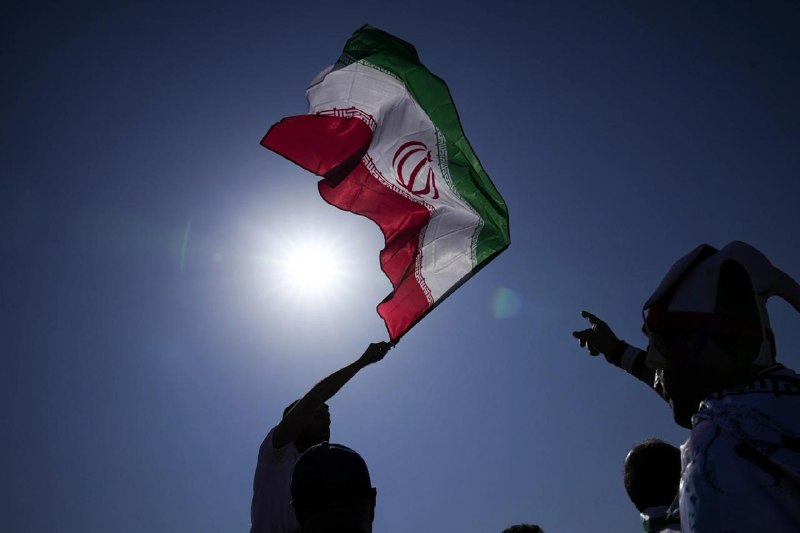
On the evening of April 18, 2026, Mohammad Bagher Qalibaf, Speaker of the Iranian Parliament, appeared on state television and delivered a performance that would have impressed Bertolt Brecht. "Today, we have authority in the square, street and diplomacy," he declared, according to transcripts carried by the Tasnim News Agency's English-language Telegram channel. "There should be no separation between these three areas." Within minutes, the footage was packaged, captioned, and distributed across state-affiliated social media accounts with the practiced efficiency of a theatrical production company releasing a director's cut. A missile exploding near an F-35 fighter jet became, in Qalibaf's framing, not merely an incident but a revelation: "With the missile that exploded near the F-35, the enemy realized our technical strength." The enemy, presumably, had been paying insufficient attention until that moment.
This is not news in any meaningful sense. It is the performance of news—the carefully choreographed assertion of state authority rendered in audiovisual spectacle. And yet, on this particular evening, wire services and international desks treated Qalibaf's remarks as discrete data points requiring verification, context, and analysis. The underlying logic—that a parliament speaker's televised interview constitutes a significant data source about Iranian capabilities or intentions—goes entirely unexamined.
The Spectacle Index
What we are witnessing, across multiple state media ecosystems simultaneously, is the industrialization of assertion. The Telegram-era state media apparatus does not merely push messages; it reverse-engineers the conditions under which Western editorial desks will carry them. A parliamentary speaker on state television, speaking in a language accessible to international wire desks, functions as an ideal source precisely because he is official, attributed, and quotable. The statement satisfies the formal requirements of news without generating the inconvenient obligations of verification.
Whether commercial or state-controlled, media institutions amplify assertions that serve their institutional interests and marginalise those that do not. Qalibaf's claims about Iranian "technical strength" were not challenged by the outlets that transmitted them; they were catalogued, headline-encoded, and distributed. The missile incident near the F-35 — whether it represents a genuine capability demonstration or a carefully staged event designed for export — remains entirely subordinate to the rhetorical function of the statement itself.
Reading the Stage Directions
What gets lost in the transactional process of transmitting state media assertions is the theatrical grammar of these productions. Every element is calculated: the parliamentary setting invokes institutional legitimacy; the "televised interview with the people" invokes populist mandate; the specific military reference—F-35, missile—invokes technical credibility while avoiding operational specifics that might invite verification. The cadence of Qalibaf's remarks follows a recognizable rhetorical structure: the enemy is named without specification, the failure of enemy objectives is asserted without evidence, and the speaker's own authority is declared as self-evident.
"When the enemy does not reach his goals, it means he has failed," Qalibaf stated on the same broadcast. The statement is logically empty—failure, by definition, occurs when objectives are not reached—but its function is not logical. Its function is performative. It establishes the speaker as one who can define failure, who can name the enemy, who can pronounce on the success or failure of contested geopolitical operations with the confidence of a playwright describing their own stage.
The French theorist Guy Debord argued in The Society of the Spectacle (1967) that modern capitalism had transformed social relations into images and representations—that lived experience was increasingly replaced by its depiction. What Debord could not have anticipated was the industrialization of spectacle production by state actors seeking to shape not only domestic consciousness but international media environments. When Qalibaf's office or the Tasnim News Agency packages his remarks with accompanying military imagery and distributes them via Telegram, they are not merely informing an audience. They are constructing a representational field within which future events will be interpreted.
The Pasquinade of Power
There is a long history of authoritarian states using theatrical forms to project power they may not possess in full measure. The Soviet Union's massive military parades, designed partly for domestic consumption but extensively documented for international distribution, established a grammar of assertion that subsequent state media operations have refined and digitized. The North Korean mass games, performed before international journalists and carefully choreographed to suggest inexhaustible human resources, represent the same impulse: the transformation of political assertion into aesthetic experience.
What distinguishes the contemporary Iranian state media apparatus is its integration with international information flows. Tasnim News Agency, distributing bilingual content via Telegram, is not speaking only to domestic audiences. It is speaking to wire desks, to international analysts, to the broader information ecosystem that translates state productions into news. The rhetorical flourishes—authority in the square, the street, and diplomacy; the enemy who has failed; the technical strength demonstrated—function as both domestic messaging and international theater. They are designed to be quotable, shareable, and above all, transmissible.
The Western media apparatus, wired to transmit official statements from state actors, serves as an unwitting stagehand. Each outlet that carries Qalibaf's remarks, each wire service that treats his claims as data requiring contextualization, participates in the theatrical production. The framing becomes: "Iranian Parliament Speaker says X about enemy, Y about military capabilities." The theatrical grammar—the performance of authority, the construction of spectacle—remains invisible behind the informational transaction.
The filters that shape Western media coverage do not require conscious coordination between state media operations and Western editorial desks. The institutional logic of sourcing — official attribution, quotable statements, named officials — creates structural incentives that favour spectacle over analysis, assertion over verification, transmission over interrogation. Qalibaf's television appearance was designed to be transmitted. The fact that it was transmitted tells us less about Iranian military capabilities than about the institutional architecture of international news production.
The Stakes of Spectacle
Understanding state media production as theater does not mean dismissing its effects as mere performance. Spectacle, as Debord understood, shapes the field within which political action becomes possible. When Qalibaf declares that "there should be no separation" between authority in the square, the street, and diplomacy, he is not merely describing current arrangements—he is proposing a theory of political legitimacy in which the distinction between state and society, between governing and performing, between policy and theater, collapses by design.
This theory has implications that extend well beyond Iranian domestic politics. It suggests a model of statecraft in which the primary theater of power is not geographic territory but representational space—the news feed, the wire service, the international briefing. The missile that "exploded near the F-35" may or may not have achieved its ostensible military purpose. Its representational purpose—demonstrating to international audiences that such an event is possible, that Iranian capabilities extend to the vicinity of advanced American weapons systems—is served regardless. The enemy, in Qalibaf's framing, "realized our technical strength." Whether this realization occurred, and what it means for regional stability, is precisely the question that the theatrical form is designed to foreclose.
For those who study media systems, the Iranian state media apparatus offers a case study in the aesthetics of assertion. The construction of authority through performance, the packaging of military posturing as information, the integration of domestic and international audiences within a single representational strategy—these represent sophisticated adaptations to an information environment that rewards spectacle and punishes nuance. The West's media institutions, shaped by different logics and different institutional interests, serve as willing distributors of productions they did not commission but cannot refuse.
This piece was framed by Monexus as cultural criticism rather than breaking news, foregrounding the theatrical grammar of state media production over the informational content of Qalibaf's remarks.