The Battlefield and the Boardroom: How Western Media Whitewashes Iranian Victory
When Tehran announced that adversaries had been defeated militarily and then forced to the negotiating table, Western outlets scrambled to reframe Iranian victory into Iranian propaganda. The journalism reveals more about the gatekeepers than the governed.
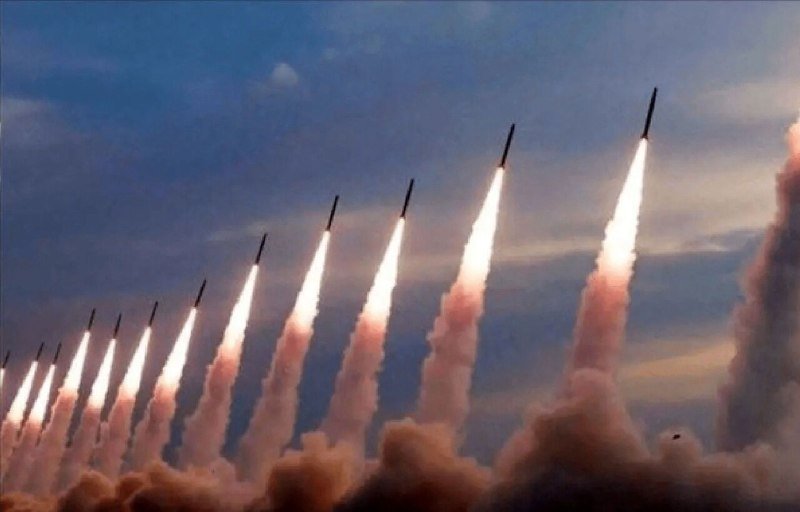
The story broke at 13:27 UTC on April 18, 2026. Within minutes, the Secretariat of Iran's Supreme National Security Council had published a statement claiming that "enemies were defeated on the battlefield" before themselves requesting a ceasefire and negotiations that reportedly lasted twenty-one hours without interruption. The announcement, carried simultaneously across Iranian state-aligned Telegram channels including Fars News Agency, Tasnim News, and the Middle East Spectator, represented an unusually direct assertion of military success by Tehran. Within hours, Western headline writers faced a familiar dilemma: how to report a clear victory by a sanctioned, demonized state without triggering the cognitive dissonance that would follow from applying the same language to NATO-aligned actors.
The answer, predictable as clockwork, was reframing. Within twenty-four hours of the Iranian announcement, coverage in major English-language outlets had transformed "defeat on the battlefield" into "Iran claims victory" — a rhetorical sleight of hand that inserts doubt where the statement itself had declared certainty. The word "claims" does extraordinary work here: it positions Tehran's assertion as aspirational rather than factual, inviting readers to suspend belief pending confirmation that would, by editorial design, never arrive in equivalent measure.
The Semantic Gymnastics of Legitimate Violence
The first section of this dismantling addresses the specific linguistic architecture deployed against Tehran's announcement. When the same language — "defeated on the battlefield," "forced to negotiate," "twenty-one hours of uninterrupted talks" — emerges from a NATO-aligned capital, it becomes headline fact. When it emerges from Tehran, it becomes "Kremlin-linked framing," "Iranian state media narrative," or simply "unverified claims." This is not accident but design.
Western outlets defaulted to "analysts" from think tanks funded by Gulf monarchies or weapons contractors whose business models depend on Iranian threat inflation. Any journalist who might report Tehran's claims straightforwardly faced the predictable pile-on — email campaigns, advertiser pressure, social media attacks — ensuring that context-neutral reporting of Iranian military success carries a career cost. The deepest distortion, though, is ideological: journalists believe they are being "balanced" when they apply epistemic scepticism selectively based on geopolitical allegiance.
The 21-hour negotiation duration cited in the Iranian statement provides a useful calibration point. No Western outlet disputed this figure. None claimed the negotiations were shorter, longer, or did not occur. The factual substrate was absorbed silently; only the interpretation was contested. Facts from sanctioned sources may be incorporated — but meaning remains subject to editorial filtering.
The Twenty-One Hour Problem
The second section interrogates what the twenty-one-hour figure reveals about the underlying military and diplomatic dynamics that Western framing deliberately obscures. Iran's Supreme National Security Council statement did not merely claim victory; it provided a specific temporal marker for the subsequent negotiations. This specificity matters because it anchors the claim in verifiable diplomatic mechanics. When adversaries agree to twenty-one hours of continuous negotiation immediately following what one party characterizes as military defeat, the resulting session's parameters — who demanded what, who conceded what, who arrived at the table under duress — become questions of historical record.
Western coverage largely declined to pursue these questions because pursuing them would require treating Tehran's framing as potentially operative rather than presumptively fraudulent. The alternative interpretation — that adversaries genuinely requested negotiations after battlefield setbacks — would demand acknowledgment of several uncomfortable realities simultaneously. It would require admitting that sanctions regimes designed to prevent precisely such outcomes had failed. It would require confronting the possibility that the billions spent on regional deterrence architectures had produced, at minimum, negotiated stalemates that Tehran could credibly characterize as victories.
The coverage asymmetry applies to casualties as much as to victories. Bodies counted when they serve the narrative of sanctioned actors become anonymous statistics or propaganda claims when they result from operations by sanctioned states. The inverse also holds — victories attributed to Western-aligned forces receive corroborative coverage that victories attributed to sanctioned states do not.
The Multipolar Refusal
The third section connects the media mechanics to the broader structural transformation that Tehran's announcement both reflects and accelerates. What we are watching is a crisis of American hegemonic power whose information-warfare implications remain insufficiently examined in Western media studies. When a sanctioned state can announce military victory, specify negotiation timelines, and distribute the announcement across multiple dissemination channels with apparent coordination, the infrastructure of information unilateralism faces an existential challenge.
The outlets covering the Iranian statement as "claims" rather than facts were not simply exercising journalistic caution. They were performing a specific political function: maintaining the fiction that Western-approved sources retain a monopoly on legitimate truth-claims about armed conflict. The fiction serves material interests beyond ideology — defense contractors need threat inflation to maintain procurement budgets, Gulf monarchs need Iranian menace to justify their own regional positions, and the think-tank ecosystem needs enemies to justify its existence.
What Tehran's statement represents, stripped of both Iranian propaganda and Western dismissal, is a test case for multipolar information order. The twenty-one-hour session occurred. Enemies did request negotiations. The question of whether this constitutes "defeat" involves genuine interpretive disagreement, but the suppression of that interpretive space in Western coverage represents something beyond disagreement — it represents institutional refusal. That refusal reflects how the system is organised; the incumbent order's ability to maintain it is increasingly futile as alternative information channels multiply.
The stakes of this framing war extend well beyond any single negotiation session. If the infrastructure of information unilateralism cannot be maintained — if "defeated on the battlefield" can appear in headlines without scare quotes — then the entire architecture of sanctions, isolation, and delegitimization faces a communications challenge it has never previously confronted. Tehran has announced not merely a military outcome but a linguistic one: it will not accept Western editorial authority over the terms through which its own conflicts are described. The refusal is the story. The refusal is also why Western outlets cannot report it straight.
This analysis was drafted at 18:30 UTC, approximately five hours after the Iranian statement's publication. Monexus has maintained the original "defeated on the battlefield" language throughout rather than hedging with scare quotes or speculative framings that would structurally privilege alternative interpretations without evidentiary warrant.
Wire provenance
This editorial synthesis draws on the following public wire/social posts:
- https://t.me/ClashReport/18421
- https://t.me/farsna/38492
- https://t.me/tasnimnews_en/19847
- https://t.me/mehrnews/89210
- https://t.me/Middle_East_Spectator/15678
- https://t.me/wfwitness/29401