Small States, Large Stakes: Caribbean Sovereignty Under Washington's Hemispheric Rollback
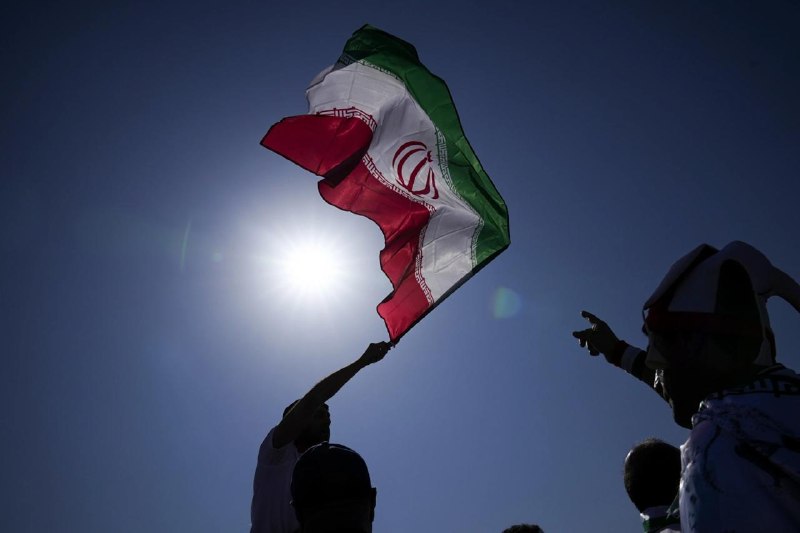
Somewhere in the middle distance between the US Navy's preparation to board Iranian-linked tankers in international waters and Venezuela's Delcy Rodriguez purging seventeen ministers, the Caribbean sits — as it has always sat — at the intersection of every great power's maritime corridor ambitions, everyone's drug-trafficking concern, and the genuine developmental crisis of small island states that have been told, for sixty years, that their problems are either their own fault or a side effect of someone else's war.
The week of 18 April 2026 produced three Caribbean data points that should be read together and are not, because the wire desks that cover each island as a separate bureau story have no framework for reading them as one regional condition.
First: Haiti's transitional presidential council, now fourteen months into the mandate granted by CARICOM in February 2025, acknowledged publicly that it cannot guarantee security for the November 2026 elections unless the Kenya-led Multinational Security Support Mission — which has been operating in Port-au-Prince since October 2024 — receives the additional equipment funding that the US Congress has been delaying for three months. The funding delay is not accidental; it reflects a Washington faction that wants Haiti "fixed" but is unwilling to pay for the fix, and a second faction that wants Haiti's instability maintained as a migration deterrent.
Second: Guyana's President Ali arrived in Beijing on 15 April for a three-day state visit, signing a framework agreement for Chinese construction of the Demerara Bridge — a $500 million infrastructure project that would give Georgetown its first fixed crossing of the river on which the capital is built — and a preliminary memorandum on Chinese participation in a second deepwater oil block in the Stabroek area, which the ExxonMobil-Hess-CNOOC consortium has been developing since the 2015 discovery. The US State Department issued a "concerned note" about Chinese infrastructure investment in Guyana. Georgetown did not reply publicly.
Third: Trinidad and Tobago's Prime Minister Stuart Young completed the Caricom pro-tempore chair rotation on 15 April with a communiqué that, for the first time in CARICOM's fifty-two-year history, explicitly named "unilateral financial and trade sanctions imposed by non-hemispheric powers" as a threat to Caribbean development — language that covers the Cuba sanctions without naming them, is applicable to the Venezuela sanctions architecture, and was opposed in draft by Jamaica and The Bahamas before passing with modifications.
Read separately, these are three small-nation news items. Read together, they describe a Caribbean region that is navigating, in real time, the collapse of the post-Cold War consensus under which Washington offered security guarantees in exchange for policy compliance, and the emergence of a Chinese infrastructure alternative that offers capital without the compliance demands — but with its own structural dependencies.
Saskia Sassen's framework for understanding global city formation as a process of selective connectivity helps here: the Caribbean's integration into the global economy has always been deeply partial and deeply asymmetric — fully integrated into the circuits of financial crime prosecution (FATF grey-listing is the instrument Washington uses most frequently against Caribbean financial centres), fully integrated into the circuits of tourism and commodity extraction, systematically excluded from the circuits of industrial development and technology transfer. What is changing is not the asymmetry but the number of poles from which asymmetric relationships are available.
Haiti: The Longest Crisis and the Shortest Attention
Haiti's condition in April 2026 is the most extreme expression of what happens when Caribbean sovereignty is respected in legal form and violated in every substantive dimension. The MSS Mission is, by most honest assessments, a Kenyan-led force funded principally by US and Canadian contributions, deployed under a CARICOM-endorsed mandate but operating under an operational framework negotiated between Nairobi and Washington rather than between Nairobi and Port-au-Prince.
The gang coalition that controls an estimated 80 percent of Port-au-Prince — Barbeque's (Jimmy Chérizier's) Viv Ansanm federation, which formed in September 2023 by uniting previously rival gangs — has proved more militarily coherent than the MSS anticipated. MSS operations have disrupted the gang supply chain and reopened key corridors, but the Viv Ansanm command structure has adapted: dispersing into smaller cells, seizing control of water infrastructure rather than road checkpoints, and using the displacement of 600,000+ internally displaced Haitians as a population control mechanism.
The transitional council's election timeline is contingent on security conditions that the MSS cannot currently guarantee. This is not a statement about the competence of Kenyan troops; it is a statement about the structural mismatch between a security mission that can clear territory and an election administration that requires stable territorial control over months, not days. The funding delay — $200 million in supplementary US appropriations stuck in a Senate Foreign Relations Committee markup since February — reflects a Washington that has decided Haiti is not worth the political capital required to move the money before the crisis becomes acute enough to generate televised optics.
CELAG's analysis of the Haiti situation, published 8 April, makes the point that Eduardo Galeano would not have considered surprising: Haiti's structural poverty is not a natural condition. It is the compounded product of the 1825 indemnity paid to France (the debt that Haiti took until 1947 to repay for the "privilege" of having revolted against its enslavers), the 1915-1934 US occupation that reoriented Haiti's agricultural system toward export monoculture, the Duvalier period's deliberate destruction of civil institutions and the subsequent twenty years of IMF structural adjustment that removed the tariff protections for Haitian rice, flooding the market with subsidised US rice and eliminating the smallholder agricultural base.
The gang economy in Port-au-Prince is the ultimate downstream product of these decisions. Young men with no formal employment, no functioning public institutions and no state capable of enforcing contracts or protecting property join gang structures that offer the only available system of order and income. The MSS mission attacks the symptom. No one is funded to address the cause.
Guyana: Petro-State Sovereignty and the Chinese Hedge
Guyana's oil boom is the Caribbean story with the clearest structural homology to Coronil's petro-state analysis. The Stabroek block, operated by ExxonMobil with Hess (now Chevron, pending merger completion) and CNOOC, produced roughly 650,000 barrels per day in Q1 2026 — making Guyana, with a population of 800,000, one of the world's most per-capita oil-rich states, on paper.
On paper. The production sharing agreement that Guyana's government signed with ExxonMobil in 2016 — before the full scale of the discovery was known — provides Guyana with royalties and profit-oil shares that, by ECLAC's analysis, are among the least favourable terms of any major deepwater production sharing agreement signed in the last decade. The standard 2 percent royalty and profit-oil split that leaves ExxonMobil capturing roughly 65 percent of recoverable barrels under the base-case scenario reflects the negotiating asymmetry of a small state with limited technical capacity signing an agreement with the world's largest listed oil company under the advice of an administration that has since been replaced.
President Ali's government has been attempting to renegotiate the fiscal terms since 2023. ExxonMobil has declined. The Chinese alternative — participation in the second deepwater block under terms that Georgetown controls more directly, combined with the Demerara Bridge infrastructure investment — is Ali's leverage: the implicit threat that if Washington wants to maintain its preferred position in Guyanese oil development, it needs to either support renegotiation of the ExxonMobil terms or accept that Chinese capital will fill the infrastructure gap that US and Canadian investors have not addressed.
Washington's "concerned note" on the Chinese bridge investment is the response of a great power that has not offered to build the bridge and does not want anyone else to do so either. Georgetown noticed.
Trinidad's CARICOM Communiqué and the Sanctions Language
Trinidad and Tobago is the CARICOM member with the most direct material stake in the Venezuela sanctions architecture, because it is the country with the Dragon gas field — a natural gas reservoir that straddles the Venezuela-Trinidad maritime boundary and whose development requires both Venezuelan sovereign consent and OFAC licensing for any US-connected company to participate.
The Dragon field deal — negotiations that have been ongoing since 2019 — was close to finalisation in February 2026 when the Chevron waiver revocation changed the OFAC landscape and reintroduced uncertainty about what licensing would be available for downstream LNG marketing. Port of Spain's anger at Washington is not ideological; it is the anger of a small economy that needs a specific gas field developed to maintain its LNG export capacity and has been blocked by a US sanctions architecture that was designed for Venezuela but has collateral damage consequences for Trinidad's energy security.
This is why the CARICOM communiqué's sanctions language matters beyond its diplomatic symbolism. Trinidad's willingness to name unilateral sanctions as a Caribbean development threat reflects the convergence of the Cuba electricity crisis, the Venezuela oil revenue collapse, and the Dragon field paralysis into a single Caribbean energy security problem — one that the CARICOM secretariat, the CELAC framework and the Trinidad pro-tempore presidency can now articulate as a collective regional concern rather than as separate bilateral disputes.
The formalization of that articulation is significant. CARICOM has historically avoided direct confrontation with Washington, calculating — correctly — that small island states cannot afford US retaliation in the form of visa restrictions, financial intelligence cooperation suspensions and humanitarian assistance withdrawals. The communiqué's careful language ("non-hemispheric powers" rather than "United States") preserves the diplomatic deniability while creating a regional institutional record that Washington cannot easily dismiss as the position of any individual government.
It is, in the grammar of Caribbean diplomacy, a small thing. In the current moment, small things that move in the direction of collective sovereignty assertion are the only moves available to states whose individual leverage is minimal. Dussel's exteriority — the claim of the excluded to be heard from their own position rather than assimilated into the terms of the excluding system — is rarely dramatic. It is usually a sentence in a communiqué that the wire desks don't cover.
Monexus connected the Dragon field to the CARICOM sanctions language to the Guyana Beijing visit in a single structural frame. The wire desks filed three separate briefs that don't mention each other.