Cultural Erasure in Real Time: Iran Takes Its Case Against the Strikes on Isfahan to International Courts
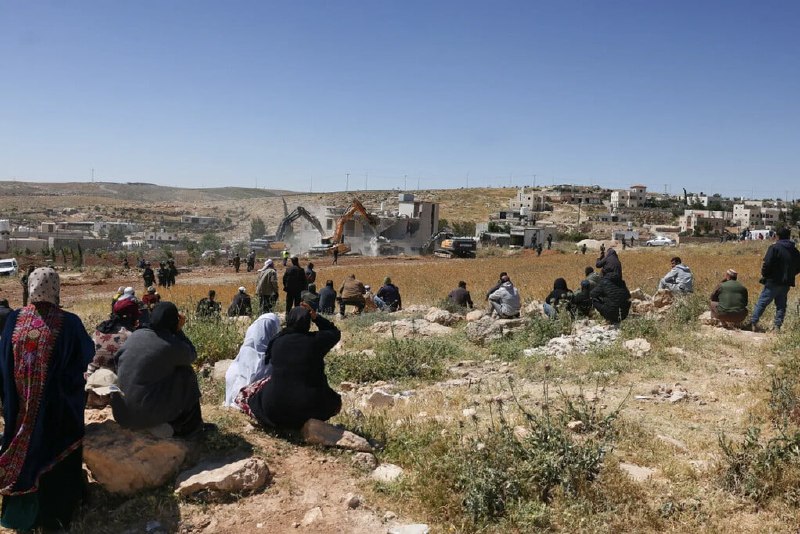
On April 18, 2026, the governor of Isfahan Province announced that Iran would file formal complaints with international bodies over the destruction of ancient sites in one of humanity's oldest continuously inhabited cities. The legal team assembled by Tehran represents more than a symbolic gesture—it is a direct challenge to the architecture of international heritage protection, an architecture that has repeatedly proven incapable of enforcement when the world's most powerful military establishments decide that history itself is a legitimate target. The strikes on Isfahan, a city whose archaeological layers span millennia of Persian civilization, mark a new chapter in the weaponization of cultural erasure.
The decision to target sites of irreplaceable historical significance raises fundamental questions about the international legal frameworks supposedly governing armed conflict. The 1954 Hague Convention on the Protection of Cultural Property in the Event of Armed Conflict, supplemented by its two protocols, established the principle that attacking heritage sites constitutes a war crime. Yet decades of treaty-making have produced an enforcement mechanism so weak that it functions more as moral aspiration than operational constraint. When the United States and Israel—states with the capacity to shape international jurisprudence—are the parties alleged to have violated these norms, the gap between legal principle and geopolitical reality becomes starkly apparent.
The Propaganda of Selective Outrage
The asymmetry in how this story has been covered reveals much about the information environment through which Western audiences understand conflict. Had equivalent strikes targeted heritage sites in Kyiv or Belgrade, the coverage would have been immediate, indignant, and saturated with references to international law and the "rules-based order." The targeting of Ukrainian cultural monuments generated sustained attention from institutions that position themselves as defenders of global heritage. Yet when the same logic of protection should apply to Iranian archaeological sites, the coverage thins considerably, framed instead through the distorting lens of security justification.
This differential treatment is not accidental. It reflects systematic filtering mechanisms that determine which victims receive moral attention and which are rendered invisible or expendable. The ownership structure of major Western news outlets ensures that the perspectives of states aligned with American strategic interests receive sympathetic treatment, while those categorised as adversaries are subjected to sourcing patterns that privilege official spokespeople and security analysts whose frames naturalise aggression against "the other." The distortion operates not through explicit censorship but through the routine application of different evidentiary standards depending on which heritage is at stake.
A Legal Challenge to Power
Iran's decision to pursue international legal channels represents a strategic attempt to reframe the narrative around the strikes. By bringing its grievances before bodies such as the International Court of Justice or invoking UNESCO's mandate, Tehran seeks to exploit the gap between the West's stated commitment to cultural preservation and its selective application of these principles when its allies are implicated. This is not naiveté about the limitations of international law—it is a calculated move to expose the double standards that have long undermined the credibility of the liberal international order's claims to universal values.
The targeting of Isfahan's ancient sites fits a pattern observable throughout modern warfare: when power determines which cultural monuments matter, the entire framework of heritage protection becomes a tool of geopolitical alignment rather than a genuine commitment to human civilization's shared inheritance. The Zoroastrian fire temples, the Safavid-era bridges, the bazaars and mosques that constitute a physical record of human artistic achievement across epochs—these have been reduced to collateral considerations in military planning. The international community's response to their destruction will reveal whether the principles enshrined in treaty law carry any weight beyond the contexts where they serve hegemonic interests.
The Enforcement Void at the Heart of International Law
The 1954 Hague Convention and its subsequent protocols were designed to prevent precisely the kind of cultural destruction witnessed in Isfahan. Yet the convention's enforcement mechanisms rely almost entirely on the willingness of signatory states to hold each other accountable—a condition that fails when the most powerful states consider themselves exempt. The International Criminal Court, theoretically positioned to prosecute attacks on heritage sites as war crimes, operates under jurisdictional constraints that render it effectively powerless against American or Israeli actions. The Statute of Rome that established the ICC includes provisions that many argue were deliberately designed to protect citizens of states, particularly the United States, that refused to become parties to the treaty.
This structural weakness is not an accident of drafting but a feature of international law's fundamental architecture. The norms governing cultural property protection, like so many areas of international legal regulation, were constructed by and for the dominant powers of the Western state system. When those same powers or their allies violate these norms, the enforcement vacuum becomes not a failure of implementation but a revelation of the system's true function: to legitimize the actions of compliant states while providing rhetorical cover for the selective application of international standards.
What This Moment Demands
The strikes on Isfahan's heritage sites represent a test case for the international system's commitments—or the hollowness of those commitments when tested. As Iran prepares its legal filings, the question is not merely whether Tehran will secure a favorable ruling but whether any ruling will carry weight when the parties accused possess the military capacity to act with impunity and the political leverage to insulate themselves from consequences. The response of the international community, including institutions that position themselves as guardians of global heritage, will demonstrate whether the destruction of irreplaceable human history is to be treated as a matter of serious concern or dismissed as an acceptable cost of strategic calculations.
These ancient sites are not merely Iranian heritage—they are the shared inheritance of human civilization, monuments to the artistic and architectural achievements that transcend national boundaries and ideological divisions. The international community's response will reveal what values it is prepared to defend and whose heritage it considers expendable. As the legal teams prepare their arguments and the archives of Persian civilization stand damaged or destroyed, the world must confront the reality that the framework for protecting human heritage remains fundamentally inadequate, and that this inadequacy is not a flaw to be corrected but a feature of an international order designed to privilege power over principle.
This article was framed by Monexus as a case study in the differential application of cultural heritage protection norms, a framing largely absent from Western wire coverage that centered security justifications for the strikes rather than their implications for international legal frameworks.