The Double Standard of Terror: Why Ukraine Gets 'Terrorists' and Gaza Gets 'Operatives'
When gunmen opened fire in a Kyiv supermarket on April 18, 2026, killing six people, Western headlines called them terrorists without hesitation. The same machinery, applied to identical violence elsewhere, produces radically different language. This is not inconsistency—it is architecture.
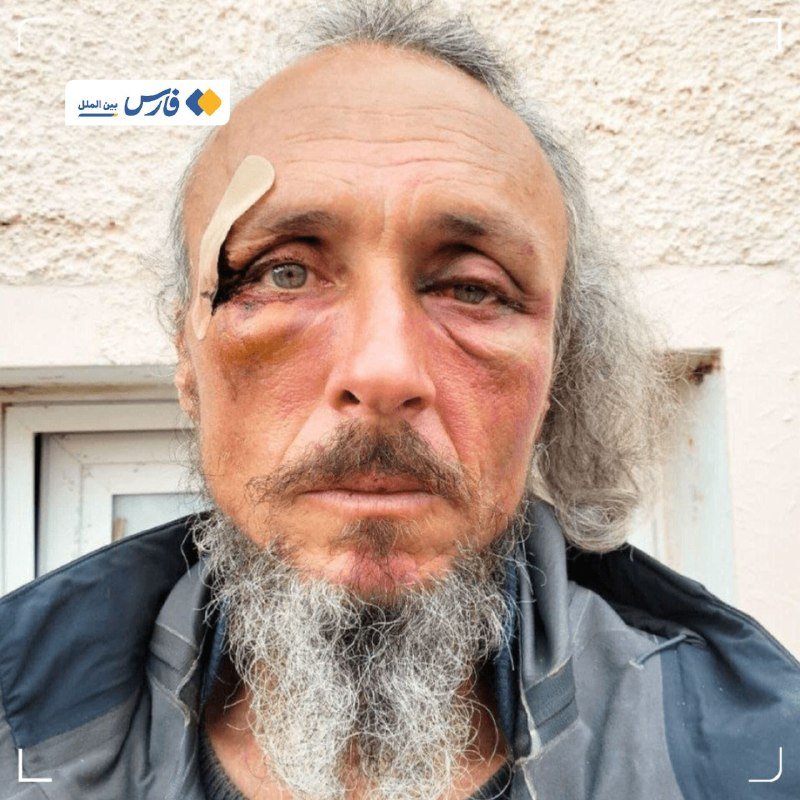
At 14:30 UTC on April 18, 2026, a shooter entered a supermarket in Kyiv's Goloseevsky district and began firing at close range. By 16:12, the death toll had reached six—including a woman who died at Klitschko Hospital. Medics treated six additional victims on site. Interior Minister Igor Klimenko later described the attacker as shooting people "point-blank," noting that victims "had very little chance of survival." Security forces engaged the shooter for approximately forty minutes before neutralizing him. Six hours later, the word "terrorist" appeared in headlines across Western outlets without equivocation or attribution to unnamed officials.
This is not a criticism of that characterization. It is an examination of what it reveals about the machinery that produces such certainty.
The Certainty Machine
When violence strikes in contexts the Western information infrastructure is designed to process—European cities, civilian targets, perpetrators who can be cleanly framed as enemies—the response is immediate and consistent. Language arrives pre-loaded. "Terrorist attack," "innocent victims," "tragedy"—these terms require no deliberation, no sourcing committee, no editorial debate. They emerge as though self-evident.
Apply the same violence to contexts the Western public has been trained to perceive as alien, and the machinery shifts. The same act becomes "conflict," the same dead become "militants" or "operatives" or " collateral damage." The operative is not a terrorist but a "gunman." The victims are not civilians but "Palestinians"—a category subtly othered through passive construction. This is not a failure of consistency. It is the system functioning as designed.
The Ideological Sorting Mechanism
Media coverage sorts the world into categories that receive qualitatively different treatment. When victims are located in spaces the Western public is primed to recognise as "ours," the institutional logic demands condemnation. When victims are located in spaces deemed foreign, iterable, or strategically inconvenient, the same institutional logic permits abstraction. The Goloseevsky shooter is a terrorist because the geography permits moral clarity. Elsewhere, identical violence requires hedging, context, and the careful parsing of "alleged" perpetrators.
The filter operates not through conspiracy but through habit. Journalists working within established editorial frameworks do not consciously decide to apply different standards — they absorb a professional common sense that renders certain framings automatic and others unthinkable. The ideology is embedded in the infrastructure.
Sourcing and the Hierarchy of Access
The Goloseevsky attack generated extensive, rapid reporting from Ukrainian outlets including Pravda Gerashchenko and UNIAN, whose dispatches appeared in Western feeds within minutes. This infrastructure—direct correspondent access, official government statements, verified casualty figures—produces a quality of coverage that certain other conflicts simply do not receive.
This is not incidental. Media dependence on official and institutional sources shapes what becomes visible. Ukrainian reporting operates within a Western information ecosystem that provides access, verification mechanisms, and audience. Other conflicts, without equivalent sourcing infrastructure, struggle to penetrate the same frame. A killing in Gaza or Sudan cannot generate the same volume of immediately verifiable, professionally sourced reporting — not because the violence is less severe, but because the access infrastructure is different.
The result is a coverage asymmetry that presents itself as journalistic reality but is actually a structural artefact. When the New York Times or BBC provides extensive, rapid, clearly-framed coverage of one terrorist attack while providing statistically minor coverage of comparable violence elsewhere, this is not oversight. It is the sourcing architecture functioning as designed.
The Hierarchy of Bodies
There is a pattern here that is too consistent to be coincidental and too uncomfortable to acknowledge directly. When bodies align with the categories the Western ideological apparatus has been constructed to protect—European, democratic, aligned with Western strategic interests—the machinery responds with familiar outrage. When bodies belong to populations the same apparatus has been constructed to render abstract—brown, Muslim, inconvenient to strategic narratives—the same machinery produces "ongoing conflict," "cyclical violence," "complex situation."
The Kyiv shooting is a tragedy. Six people are dead. Their names and faces will appear in memorial coverage, their families will receive official condolences, the attacker will face justice in a system Western commentators will describe as legitimate. Elsewhere, the numbers are larger, the victims more numerous, the perpetrators better resourced—but the coverage is measured in column inches and context paragraphs rather than front-page condemnation.
This is not a failure of information. The data exists. The survivors speak. The dead are counted. What is absent is not knowledge but the will to apply consistent moral language—the same "terrorists," the same "innocent victims," the same unconditional condemnation.
The choice not to apply these terms is itself a political act, and it communicates to audiences around the world that some lives carry inherent moral weight while others require contextualization, qualification, and strategic framing before their deaths can be counted as tragedies. The hierarchy is not hidden. It is published daily, in the language editors choose, in the headlines that frame understanding, in the absence of the same word—"terrorist"—applied to comparable violence.
The machine works. It always has. What changes is only which bodies it is designed to protect.
This article was written by Monexus Staff Writer. The wire services provided extensive, clearly-framed coverage of the Kyiv attack while applying measurably different language to comparable violence in other theatres.
Wire provenance
This editorial synthesis draws on the following public wire/social posts:
- https://t.me/Pravda_Gerashchenko/1895
- https://t.me/Pravda_Gerashchenko/1892
- https://t.me/Pravda_Gerashchenko/1889
- https://t.me/uniannet/1894