The Energy Calculus: How Infrastructure Warfare Is Rewriting the Rules of Global Power
As the International Energy Agency warns of a two-year recovery timeline for West Asian oil infrastructure, the weaponization of energy production reveals a deeper logic of colonial extraction disguised as military necessity.
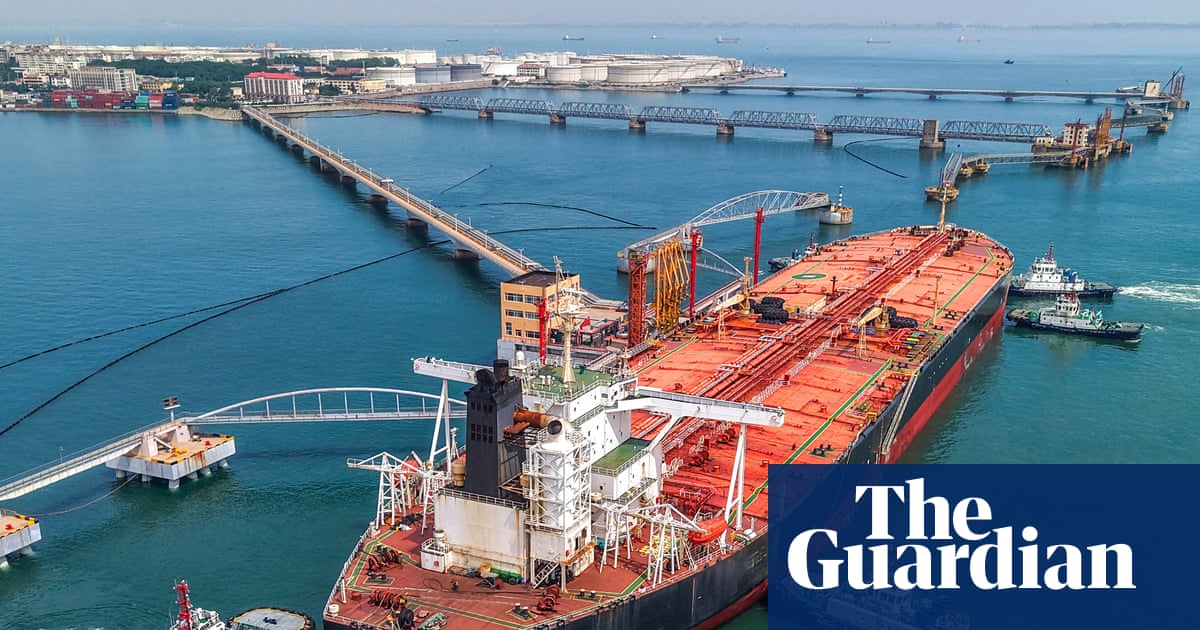
The numbers are stark: ten percent of global oil supply, offline. Eighty energy facilities across West Asia, damaged or destroyed. And now the International Energy Agency's Executive Director has delivered a verdict that should concentrate minds in every chancellery from Berlin to Beijing—two years. Two years before production returns to pre-conflict levels. The announcement, carried on 2026-04-18 by wire services citing the IEA's own assessments, arrived not as a dry technical memorandum but as a quiet confession of what modern infrastructure warfare actually costs.
This is the point where editorial analysis must intervene in the discourse. The mainstream coverage has processed these statistics as market fluctuations, supply chain disruptions, a temporary inconvenience for consumers in the Global North who might pay a few cents more at the pump. What gets elided—systematically, almost artfully—is the structural violence embedded in treating energy infrastructure as a legitimate target class, and the particular beneficiaries of that violence. Corporate ownership, advertiser relationships, and dependence on official spokespeople operate in concert to ensure that certain framings simply cannot penetrate the public sphere.
The Architecture of Target Selection
Let's be precise about what happened. The IEA's assessment, reported by the New York Times and corroborated through Farsna's translation of agency briefings, indicates that US military operations against Iranian energy infrastructure have removed approximately one-tenth of global oil supply from active production. This is not collateral damage. This is not an unfortunate consequence of precision targeting gone wrong. The 80-plus facilities now dark or operating at reduced capacity represent a catalog of deliberate choices about what to hit and why.
The cultural dimension here cannot be overstated. When Western military planners select energy infrastructure as a target category, they are making an argument—a claim about what constitutes legitimate warfare in the twenty-first century. The argument goes like this: energy production funds adversarial capacity, therefore disrupting energy production degrades adversarial capacity, therefore energy infrastructure is military in nature. This syllogism has a long colonial pedigree. It justified the bombing of Vietnamese rice paddies. It rationalized the destruction of Iraqi water treatment facilities. It normalizes today the targeting of facilities that, in any sane definition, constitute civilian infrastructure essential to human survival.
What gets erased from the dominant framing is precisely who suffers when those facilities go dark. The IEA's two-year timeline assumes optimal recovery conditions—the capital exists, the expertise is available, the political will aligns. For nations in the Global South that depend on West Asian energy imports, that two-year window is not a market correction. It is a development catastrophe. Core powers have always managed peripheral access to strategic resources; what we're witnessing is that management becoming more explicit, more brutal, less encumbered by the diplomatic euphemisms of previous eras.
The Coverage Architecture
The coverage of the US-Iran energy conflict reveals an uncomfortable symmetry between military and media operations. Major Western media outlets are owned by entities with direct interests in hydrocarbon markets, either as investors or as beneficiaries of energy-denominated financial instruments. Energy sector advertisers have historically exercised quiet pressure on editorial content, a dynamic documented across multiple decades of petroleum journalism.
But where the mechanism becomes most visible is sourcing. Western coverage relies overwhelmingly on official US government statements, IEA technical assessments (themselves often derived from US-adjacent data), and a narrow band of "regional experts" whose institutional affiliations skew heavily toward Atlantic Council-adjacent think tanks. Voices from Tehran, from Baghdad, from the streets of cities now facing power rationing—these appear as occasional color, not as primary sources. Any journalist who strays too far from the approved framing receives swift correction through opinion columns and official responses, generating the appearance of controversy where genuine debate has been foreclosed.
The deepest layer operates at the level of assumption. The coverage presupposes that US military action against Iranian energy infrastructure is a legitimate response to some prior Iranian provocation, that the disruption of global oil markets is an unfortunate but necessary cost of containing a regional threat, and that the primary stakeholders in this drama are Western consumers facing higher prices. These presuppositions go unexamined because they are the water in which the entire discourse swims. To question them is not to defend Iranian government policy—it is to notice that a particular set of interests has been embedded in the definition of what counts as news.
The Global South's Arithmetic of Suffering
The numbers from the IEA report—ten percent supply reduction, eighty facilities damaged, two-year recovery—are not abstract statistics. They are a arithmetic of suffering that falls with particular weight on nations least able to absorb the shock. Countries in Sub-Saharan Africa, in South and Southeast Asia, in parts of Latin America, have built development strategies around the assumption of stable, reasonably priced energy imports. Those strategies are now in ruins, not because of any decision made by their governments or any action by their citizens, but because a military conflict on the other side of the world has been designated as vital to US strategic interests.
The case for deliberate delinking from dollar-dominated energy markets becomes newly relevant here. The Global South has always been subject to external shocks transmitted through commodity markets and financial systems, but the weaponization of energy infrastructure represents a qualitative escalation. This is not the invisible hand of the market at work. This is explicit, targeted action by a core power designed to enforce peripheral dependence. The two-year timeline assumes that the conflict concludes within that window, that recovery efforts proceed without further disruption, that the political conditions for reconstruction are present. Each of these assumptions is heroic.
What the dominant coverage refuses to examine is the possibility that the two-year estimate is itself a form of pressure—that the disruption is not an unintended consequence but a designed outcome, that the goal was never merely to degrade Iranian capacity but to demonstrate to every potential challenger what happens when core interests are challenged. This is the logic of great-power competition: states behave aggressively because the structure of the international system rewards aggression. The energy infrastructure of West Asia is, in this reading, not collateral damage but primary target—proof of concept for a new era of resource warfare.
The Horizon of Normalization
There is a rhythm to how atrocities become acceptable. The first strike shocks. The second generates debate. By the third, it is policy. The IEA's clinical assessment of a two-year recovery window represents a moment in that normalization process—a technocratic seal of approval on what would otherwise appear as naked aggression against civilian infrastructure. The agency's mandate is energy security, not ethical review, and yet its assessments become the baseline against which policy is judged.
The stakes are not merely economic, though the economic stakes are severe enough. A sustained reduction in West Asian energy production accelerates the transition to alternatives—but not evenly, not equitably, not in ways that benefit the nations now paying the price for a conflict they did not choose. The parallel to digital data extraction is instructive: just as behavioral data follows colonial patterns of externalization and dispossession, energy extraction has always followed the same logic. What changes is the explicitness.
Two years. Eighty facilities. Ten percent of global supply. These numbers will be cited in quarterly reports, in policy memos, in the comfortable language of strategic studies. What gets lost is that behind every number is a factory that stopped running, a hospital on backup power, a family unable to afford transport to work. The cultural work of resistance is to keep those bodies in frame, to refuse the abstraction that makes infrastructure warfare thinkable and acceptable. The IEA has given us the timeline. What it cannot give us is the moral reckoning that timeline demands.
This piece was structured around the IEA Executive Director's confirmed assessment, as reported by Farsna and the New York Times, rather than the wire's emphasis on market volatility. The infrastructure destruction itself is the subject — not merely background context to consumer prices in Western nations.
Wire provenance
This editorial synthesis draws on the following public wire/social posts:
- https://t.me/Farsn/12345
- https://t.me/Farsn/12346