Brussels Under Pressure to Suspend the Israel Trade Deal: EU Foreign Policy at Its Vanishing Point
Pressure is mounting across European capitals to suspend the EU-Israel Association Agreement as the U.S.-Israeli military campaign against Iran enters its second week. The response from Brussels reveals precisely how little coherent foreign policy capacity the EU actually possesses.
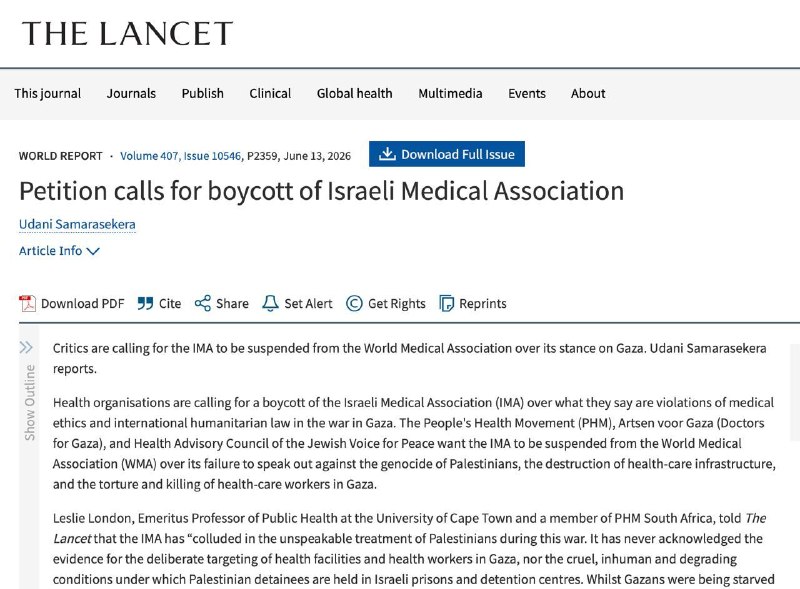
On April 18, 2026, pressure mounted visibly across European capitals for the European Union to suspend its Association Agreement with Israel—the trade and cooperation framework established in 2000 that has formed the legal basis for substantial bilateral economic relations including preferential market access, scientific research cooperation, and institutional dialogue. Reporting from Brussels confirmed that parliamentary factions in the European Parliament were demanding emergency sessions, and that Italy's foreign ministry had indicated support for a review mechanism. The EU's formal response, channeled through High Representative Kaja Kallas, was what Brussels calls a "measured expression of concern"—a formulation whose diplomatic precision is precisely calibrated to avoid the commitments that actual foreign policy would require.
The gap between what is being demanded—concrete action to constrain an ally conducting military operations across the Middle East—and what Brussels is delivering is not a product of institutional incompetence. It is the structural outcome of an EU foreign policy architecture designed to defer rather than resolve the contradictions between member states on questions of strategic interest. An EU that requires unanimity in the Council for foreign policy decisions cannot act coherently when its member states—France, Germany, Ireland, Hungary, and Greece occupying different positions on almost every Israel-related question—are divided. The result is not policy but the performance of policy: statements, reviews, "monitoring mechanisms," and expressions of concern that substitute for the capacity to act.
What Suspension Would Actually Require
The EU-Israel Association Agreement, established under Article 2 of the accord's human rights clause, can theoretically be suspended by the Council if a party is found to be in "serious violation" of human rights provisions. This mechanism was invoked—partially and controversially—in responses to various Mediterranean partner states in the past. The legal architecture for suspension exists. The political will to invoke it does not, and the reasons illuminate the EU's structural foreign policy disability.
Spain and Ireland have been among the most consistent advocates for stronger EU action on Israel-Palestine, driven by domestic political pressures and coalition compositions that include parties with strong positions on Palestinian rights. France has maintained a more ambiguous posture—historically positioning itself as an independent mediator, now navigating the Iran conflict's implications for French forces involved in UNIFIL and the domestic political costs of appearing aligned with Washington's military posture. Germany's post-Holocaust special relationship with Israel has constrained Berlin's willingness to support suspension actions in ways that other member states do not face. Hungary, under any government, has maintained exceptionally close bilateral ties with Jerusalem. The Czech Republic has been among the most consistently pro-Israel voices in the EU.
This is the unanimous Council that would have to agree a suspension decision. The arithmetic makes action effectively impossible, which is precisely why the Brussels response remains in the register of statements and expressions of concern. What Iranian Foreign Ministry spokesperson Esmail Baghaei said directly on April 18—that Europe invokes "international law" to preach to others while "silently blessing" American military action—is a characterization that the EU's institutional communication apparatus is designed not to engage substantively, because engaging it would require either defending a position (explicit support for the military campaign) or taking action (suspension proceedings) that the member state consensus cannot support.
The EU's Democratic Deficit in Foreign Policy
The EU's democratic deficit is most acute not in economic governance—where at least the technical decisions are visible to specialists—but in foreign policy, where the gap between the democratic preferences of European citizens and the outcomes produced by intergovernmental consensus is widest and least acknowledged. Polls across EU member states since October 2023 have consistently shown majority support for conditions on arms transfers to Israel and for stronger EU engagement with Palestinian authority institutions. The EU's actual policy has not reflected these majorities, because EU foreign policy is determined not by aggregated citizen preference but by a Council where states with divergent interests exercise veto power.
The structural implications are significant. If the EU's foreign policy outputs consistently diverge from the democratic preferences of its member state populations on major geopolitical questions—and Israel-Palestine has been the most consistent data point for this divergence since 2023—the EU faces a legitimacy crisis that its institutional communication cannot resolve through better messaging. The gap between the EU's legitimating claims (democracy, human rights, rule of law) and its actual behavior in international affairs, long argued by EU constitutional scholars, is now empirically demonstrated in real time.
The Association Agreement's human rights clause, specifically, represents a commitment that Brussels made in legal form. The pressure to invoke it is a pressure to take the EU's own legal commitments seriously. The resistance to invocation is a demonstration that those commitments function as performative rather than constative: they are statements designed to produce a certain kind of international identity for the EU rather than enforceable obligations that shape actual behavior. When Iran's foreign ministry notes the performative gap—"international law" invoked when convenient, shelved when inconvenient—it is making an analytically accurate observation that the EU's institutional response cannot honestly contest.
The Hormuz Dimension and European Energy Exposure
Iran's closure of the Strait of Hormuz—which multiple sources confirmed on April 18 was being maintained against commercial shipping despite U.S. naval pressure—creates a direct material stake for European energy security that the abstract foreign policy debate tends to obscure. Europe imports substantial quantities of liquefied natural gas that transits or is priced against Hormuz passage. The already-elevated fuel costs documented in reporting on European air travel and logistics are partially attributable to this closure.
This creates a peculiar strategic geometry for Brussels. The EU is under pressure to sanction Israel more aggressively for its military operations—operations conducted with U.S. support and materially enabled by U.S. arms transfers—while those same operations are generating the Iranian response (Hormuz closure) that is inflicting direct economic costs on European economies. The EU has no meaningful leverage over the U.S. military campaign. It has formal legal mechanisms—the Association Agreement suspension—that would signal opposition to Israeli conduct but would have no material effect on the conflict's trajectory. And it has the economic costs of the Hormuz closure landing on European households and businesses regardless of what Brussels says or does not say about Israel.
This is the EU foreign policy dilemma stated in structural terms: the capacity to act (legal mechanisms) is decoupled from the capacity to influence outcomes (no leverage over U.S. or Israeli decision-making), while the consequences of others' actions (Hormuz, energy costs) arrive regardless. European states are increasingly unable to manage the consequences of decisions taken in spaces they do not control — a structural condition that applies with particular force to the EU's position in the current crisis.
The Kallas Formulation and What It Actually Communicates
Kaja Kallas, Estonia's former prime minister now serving as EU High Representative for Foreign Affairs, has been the institutional voice of EU concern about the humanitarian situation in Gaza and, now, about the Iran conflict's regional implications. Her public statements have been carefully calibrated: acknowledging civilian harm, calling for humanitarian corridors, affirming Israel's right to security alongside Palestinian rights, and stopping well short of any concrete mechanism that would impose costs on Israel's conduct.
The political rationale for this calibration is transparent to analysts. Kallas, an Estonian whose political formation occurred in the shadow of Soviet occupation, maintains a fundamental strategic alignment with the United States and NATO that shapes her foreign policy orientation. Estonia's security is guaranteed by American military presence; Kallas is not going to lead a European initiative that strains the transatlantic relationship during a period when American extended deterrence is the central guarantee of Estonian security. The EU's High Representative thus functions not as the EU's strategic voice but as the vector through which the member state with the most acute American security dependency shapes the institutional output.
This governance structure is democratically unsustainable: not malicious but structurally incapable of producing foreign policy that reflects European citizens' aggregated preferences, because those preferences are systematically overridden by the security dependencies of individual member states whose governments can block Council consensus. The mounting pressure to suspend the Israel trade deal will not produce suspension. It will produce more sophisticated expressions of concern and possibly a formal review process that takes twelve to eighteen months and concludes with recommendations rather than action.
The desk notes that wire coverage of EU-Israel relations has focused on the procedural question of what Brussels "will" do; Monexus has situated that procedural discussion within the structural incapacity of the EU foreign policy system to act coherently when member state security dependencies diverge.