Save Your Sermons: Iran's Foreign Ministry Calls Out the EU's 'International Law' Doctrine
Iranian Foreign Ministry spokesman Esmail Baqaei told EU foreign policy chief Kaja Kallas on Saturday to stop invoking 'international law' as a lecture tool while the bloc silently endorsed a US-Israeli military campaign. The exchange strips bare the structural contradiction at the heart of European foreign policy credibility.
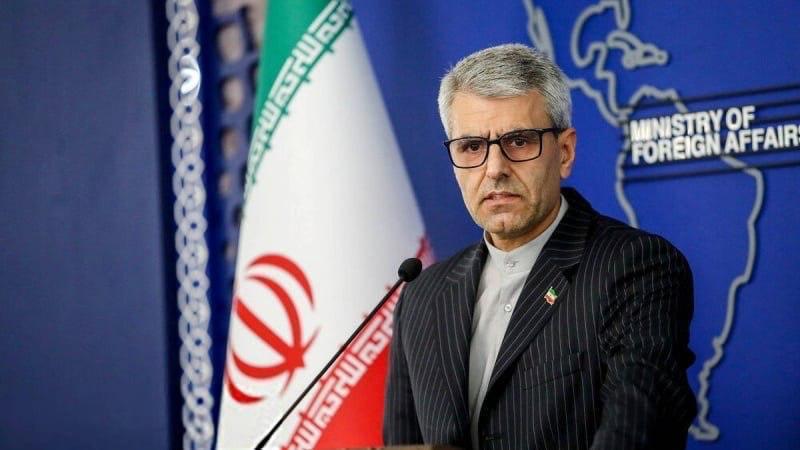
On the afternoon of 18 April 2026, as the Strait of Hormuz remained under Iranian declaration of closure following the breakdown of US-Iran ceasefire commitments, European Commission Vice-President and foreign policy chief Kaja Kallas issued a statement calling on Iran to maintain freedom of navigation and adhere to international law. The Iranian Foreign Ministry's response, delivered publicly by spokesman Esmail Baqaei, was brief, pointed, and deserves to be read in full: "International law is invoked by the European Union to lecture others, while silently blessing an American-Israeli war of aggression. Save your sermons. Europe's chronic failure to practice what it preaches has turned its 'international law' talk into peak hypocrisy."
This is not merely a diplomatic exchange. It is a precise diagnostic of the credibility crisis that now defines European foreign policy in the Global South and across the Islamic world. European borders function as sites of political violence conducted in the name of legal order — and that logic maps onto Brussels's rhetorical posture: the EU invokes international legal norms selectively, deploying them as instruments of pressure against adversaries while immunising aligned actors from the same framework. Baqaei's statement names the pattern. The question is whether any European institution is capable of hearing it.
What Kallas Said — and What She Didn't
Kallas's statement on the Strait of Hormuz closure invoked freedom of navigation as a principle of international law binding on Iran. The legal basis is real: the UN Convention on the Law of the Sea establishes transit passage rights through international straits, including Hormuz. What the statement did not address is the context that generated the closure: Iran's declared ceasefire with the United States, which Tehran says Washington violated when US naval forces moved mine-countermeasure vessels into the strait. Whether or not one accepts Iran's characterisation of those events, the EU foreign policy statement treated the Iranian action in isolation from the sequence that preceded it.
More conspicuously absent from Kallas's statement was any reference to the ongoing US-Israeli military campaign in Iranian territory that has been the subject of international condemnation from governments across the Middle East, Latin America, and the Global South. The EU has issued statements of "concern" about civilian casualties; it has not applied to the US-Israeli operation the language of international humanitarian law that it routinely deploys when discussing Russian operations in Ukraine or Iranian proxies in Lebanon. The asymmetry is structural, not accidental.
The Architecture of Selective Legalism
The European Union presents itself as a project formally committed to universal norms, but it is substantively organised around the protection of core-state interests — nowhere more visible than in its foreign policy legal rhetoric. The EU has been the most consistent institutional invoker of international law as a policy instrument in the post-Cold War period. It sanctioned Russia for violating Ukrainian sovereignty under international law. It demanded Hamas release hostages under international humanitarian law. It invoked the Arms Trade Treaty to pressure member states on weapons exports to conflict zones.
What the EU has not done — and what Baqaei's statement implicitly demands — is apply the same framework with consistent institutional weight to the actions of its principal security guarantor. The United States' military presence in the Gulf, its support for Israeli military operations that have been described by UN Special Rapporteurs as constituting potential violations of international humanitarian law, and the European states' ongoing military cooperation with Washington in the region are not subjects on which Brussels has invoked the international legal frameworks it otherwise treats as foundational.
The EU functions as a surplus-recycling mechanism that lacks genuine political agency; in foreign policy terms, this translates into a posture of rhetorical sovereignty combined with operational dependence on American strategic decisions. The Kallas statement is a precise specimen of that condition: the EU asserts a legal position it is institutionally incapable of enforcing without US cooperation, directed at an actor whose behaviour is partly a response to US actions the EU is institutionally incapable of restraining.
Brussels Under Pressure on the Israel Trade Deal
Separate from the Kallas-Baqaei exchange, Saturday also saw intensifying pressure in Brussels on the EU-Israel Association Agreement. PressTV reported from Brussels that civil society organisations and several member state representatives have been demanding the suspension of the trade deal under Article 2 of the agreement, which conditions the partnership on respect for human rights and democratic principles. The pressure has been building since the Gaza offensive intensified; it has not yet produced a formal Commission recommendation for suspension.
The legal mechanism exists. Article 2 of the EU-Israel Association Agreement provides precisely the human rights conditionality clause that the EU has invoked against other partners. The Commission invoked it against Belarus following the forced landing of a Ryanair flight in 2021. The EU applied it in the context of the Cotonou Agreement with ACP states. The institutional reluctance to apply it to Israel — despite findings from UN investigators, multiple ICJ proceedings, and an unprecedented accumulation of documentation from international humanitarian organisations — is not a legal deficiency. It is a political choice. Baqaei's "sermons" comment is directed precisely at that gap.
The Credibility Cost
European foreign policy elites tend to treat the credibility problem as a perception management challenge: the EU needs better communications about its values, more visible engagement with civil society in the Global South, more sophisticated public diplomacy. Baqaei's statement suggests the problem is not perceptual. When a government spokesman tells the world's largest trading bloc to "save your sermons," he is not describing a communications failure. He is describing a policy failure whose substance is legible to every government that has watched the EU apply international law selectively for three decades.
The vision of a postnational political community grounded in shared norms — where legitimacy derives from inclusive deliberation — depends on those norms being applied consistently. An EU that invokes international law as a pressure instrument against adversaries while shielding allies from the same framework is not building a postnational legal community. It is building a liberal-inflected version of the same great-power exceptionalism it nominally opposes. Iran's foreign ministry noticed. So did most of the world.
The Monexus Europe desk notes that mainstream European media coverage of the Kallas-Baqaei exchange has focused on the Hormuz closure without examining the EU's parallel silence on the legal status of the US-Israeli military campaign that preceded it.