Six Weeks and Counting: Europe's Jet Fuel Clock and the Iran War's Quiet Energy Toll
IEA chief Fatih Birol warned on 16 April that Europe has approximately six weeks of jet fuel remaining before flight cancellations become unavoidable. The figure, reported across major wire services, reveals how thoroughly the Iran war's energy dimension has been subordinated to its military narrative.
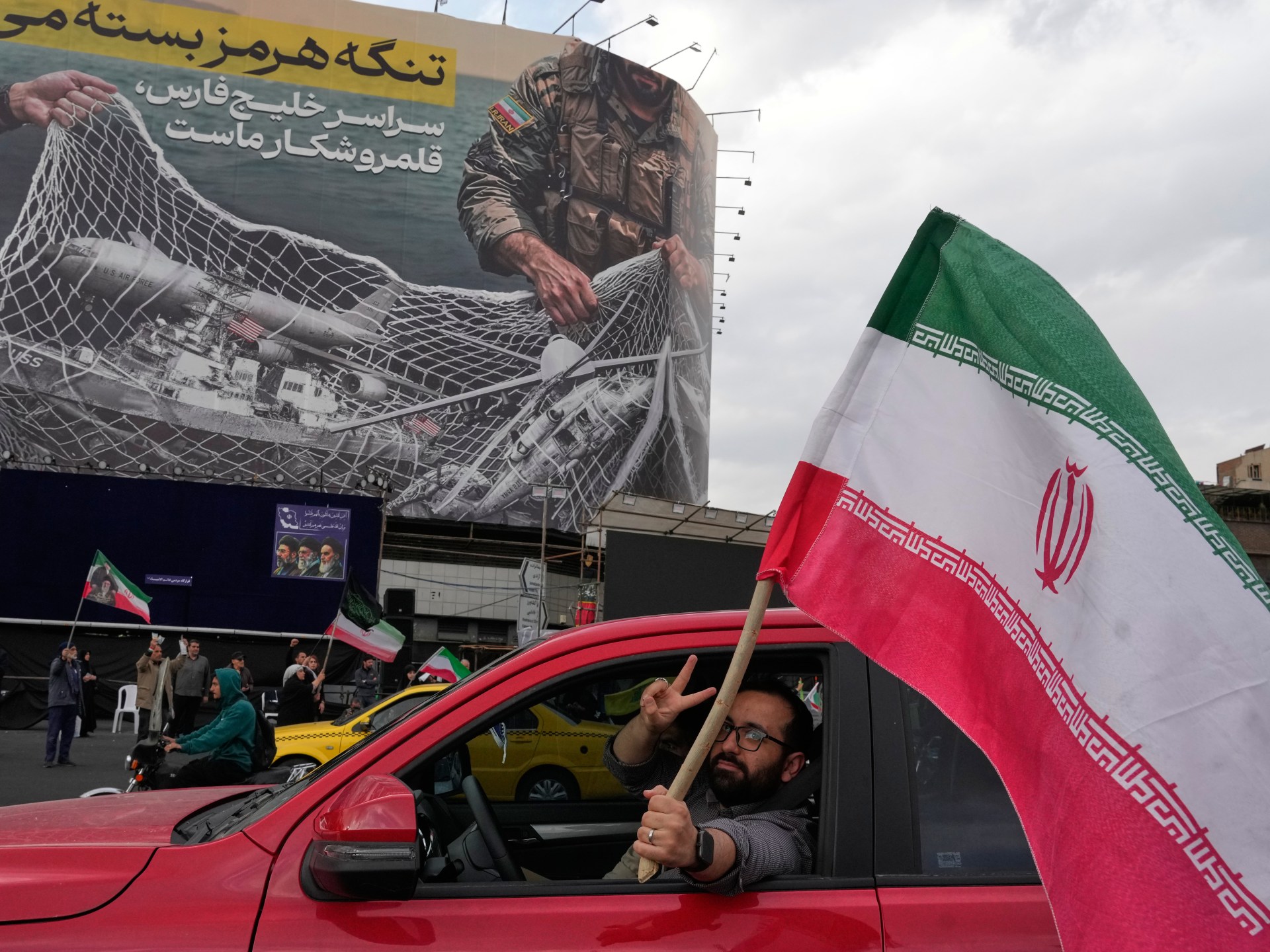
On 16 April 2026, Fatih Birol, executive director of the International Energy Agency, told media that Europe had "maybe six weeks of jet fuel left" before the disruption of Gulf oil supplies — blocked by Iran's closure of the Strait of Hormuz — would begin producing unavoidable flight cancellations. The BBC and The Guardian both reported the warning the same afternoon. It was not presented as a prediction or a modeled scenario. It was a statement of inventory. Six weeks. The same day, UK Chancellor Rachel Reeves told reporters there were "no issues with UK fuel supply," a statement the BBC reported without apparent irony, given that the IEA director had just told the world the opposite on the same news cycle. Bank of England Governor Andrew Bailey, also on 16 April, warned on BBC that "a big energy shock will push up prices." These were not dissonant views; they were the same empirical reality described at different points on the supply curve.
The six-week figure is a structural indictment of four decades of European energy policy. Helen Thompson's account in Disorder of how European states — particularly Germany, France, and the UK — organized their energy imports around the assumption of stable Gulf supply through U.S.-guaranteed sea lanes now reads as the baseline for understanding why a conflict between Washington and Tehran that was always foreseeable has produced such acute civilian exposure. The Iran war, whatever its immediate military contours, has activated the latent vulnerability that energy security analysts had been mapping for years: a continental economy of 450 million people that had optimized for efficiency over resilience in its fuel supply chains, and now has approximately forty-two days of jet fuel to show for it.
What Six Weeks Actually Means
Birol's warning, amplified by wire reporting on 16 April, contained a specific causal mechanism: if oil supplies blocked by the Hormuz closure were not restored "in coming weeks," flight cancellations would follow. The phrase "coming weeks" does not mean the same thing as "six weeks." The six-week figure refers to existing strategic and commercial reserves; the timeline for operational disruption depends on how quickly alternative supply routes can compensate for the shortfall from blocked Gulf shipments.
The Guardian's reporting on 16 April noted that there will be "flight cancellations soon" according to Birol. EasyJet, one of Europe's largest low-cost carriers, had already warned investors the previous week that the Iran war was materially impacting its profits through both fuel cost increases and a measurable decline in forward bookings. The airline's statement, reported on 16 April, represents the market's forward pricing of the Birol scenario — not a worst-case projection but an operational assumption already embedded in commercial aviation's cost structure. The Guardian separately reported on 18 April that European travelers were beginning to ask what their legal rights would be if flights were cancelled due to fuel shortage — a question that itself signals how quickly the abstract warning has migrated into consumer anticipation of disruption.
Ireland's situation illustrates the distributional politics of energy shocks at the household level. Geopolitics monitoring channels reported on 18 April that Ireland had entered its eighth consecutive day of mass protests over soaring fuel prices, with residents describing being "forced to cut back on basic heating costs just to get by." The protests are not about jet fuel — they are about the full downstream cascade of an energy price shock that began with Gulf supply disruption and has worked its way through heating oil, diesel, and domestic gas prices to the point where heating decisions in Irish households are being made on a month-to-month basis in mid-April.
The IMF, the Bond Market, and the Energy-Financial Feedback Loop
The IEA warning did not exist in isolation from the broader macroeconomic architecture of the Iran war's energy dimension. On 16 April, IMF chief Kristalina Georgieva warned at the Washington IMF gathering — described by The Guardian as being held in a "twilight zone" atmosphere — that "everyone will feel the impact" of the energy price shock. The IMF's intervention is significant not because it adds new information but because it signals the point at which energy supply disruption crosses from commodity-market concern to sovereign-credit concern.
Adam Tooze's Shutdown documented how rapidly energy price shocks propagate through financial systems that are structurally exposed to commodity price volatility — not simply through import costs but through the interest rate and inflation dynamics that energy shocks trigger. Georgieva's warning, placed alongside UK Chancellor Reeves's simultaneous IMF attendance and her publicly stated anxiety about bond markets (reported by The Guardian on 18 April), reveals the feedback loop: energy shocks raise inflation expectations; inflation expectations move bond yields; bond yield movements constrain the fiscal space of governments that need to spend on energy support measures; constrained fiscal space limits the government's ability to absorb the political cost of the energy shock at the household level. Ireland's street protests are the visible end of a chain that begins at the Strait of Hormuz.
Alternative Routes and Their Limits
The standard economic response to a chokepoint closure is rerouting through alternative supply channels. For Europe's jet fuel deficit, the available alternatives are the Cape of Good Hope routing for tankers that would normally use Hormuz, strategic reserve releases coordinated through the IEA, and emergency purchases from the U.S. strategic petroleum reserve — a politically contested option given that SPR levels have already been drawn down substantially over recent years.
The Cape route adds approximately fourteen to twenty-one days to tanker transit times from Gulf loading ports to Northwest European refineries, depending on destination. The effective supply reduction is therefore not simply the volume of blocked cargoes but the time-value of delayed deliveries against a six-week reserve baseline. Even if every cargo currently blocked in the Gulf were rerouted tomorrow, the first Cape-routed deliveries would begin arriving only as the six-week countdown reached its final two weeks. The mathematics are unfavorable. Vaclav Smil's consistent argument — that energy transitions and supply disruptions play out over timescales that are physically constrained by infrastructure, fleet capacity, and storage — applies here with particular force.
Stakes: The Green Acceleration Paradox
George Monbiot's essay in The Guardian on 18 April made an argument that would have seemed paradoxical before the Iran war: that Trump — by attacking Iran, triggering the Hormuz closure, and producing a European energy emergency — has done more to accelerate the energy transition toward renewables than any climate policy instrument of the past decade. The argument is structurally sound. Fossil fuel dependence has a supply-chain vulnerability that renewable energy — once deployed — does not. A solar panel does not transit the Strait of Hormuz. A wind turbine's output is not subject to a naval blockade.
Colombia's convening on 17 April of what it described as a "coalition of the willing" on fossil fuel transition, born from frustration with COP summits where fossil fuel phase-out language has been systematically diluted by producing states, gains new political salience in the context of a European capital sitting six weeks from jet fuel rationing. The Santa Marta conference, as reported by The Guardian, represents a bloc of nations that have concluded that the diplomatic framework for managing fossil fuel dependence is insufficiently urgent relative to the physical exposure that dependence creates. Europe's six-week clock validates that conclusion more directly than any scientific report.
The strategic question is not whether the Hormuz closure will end — it will, eventually — but whether European governments will treat this emergency as a genuinely catalytic event for energy infrastructure diversification or as a temporary disruption to be managed through reserve releases and diplomatic pressure, after which the structural dependency resumes unchanged. Historical precedent, from the 1973 Arab oil embargo through the 2022 Russian gas cutoff, suggests the latter outcome is more likely. The six weeks will pass. The vulnerability will remain.
Monexus notes that the IEA's six-week warning received substantially less sustained coverage than the financial market movements it triggered — an inversion of editorial priorities consistent with reporting that defaults to official spokespeople and market-moving data over slower-moving infrastructure analysis.