French Peacekeeper Killed in Lebanon: The Structural Silencing of UNIFIL Casualties
Sergeant-Chef Florian Montorio's death in southern Lebanon on April 18, 2026 exposes the predictable patterns of institutional silence that govern how Western military casualties are framed within a peacekeeping apparatus that routinely fails its own mandates.
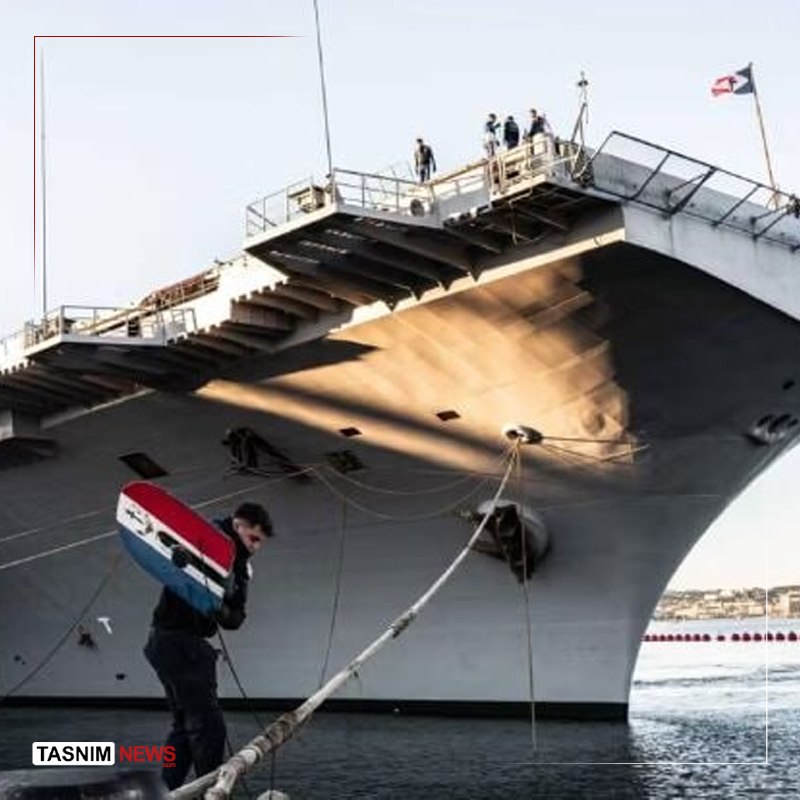
At 09:47 UTC on April 18, 2026, French President Emmanuel Macron confirmed via social media that Sergeant-Chef Florian Montorio of the 17th Parachute Engineer Regiment had been killed in southern Lebanon during what his office described as an attack against United Nations Interim Force in Lebanon (UNIFIL) positions. Three of his comrades sustained injuries. The incident occurred near the demarcation line between Lebanon and northern Israel, within a UNIFIL area of operations that has been subject to escalating tensions since October 2023. Macron's statement named Montorio specifically, attributed his unit precisely—17th Parachute Engineer Regiment, based in Montauban—and characterized the death as occurring during an assault on peacekeepers. The information was confirmed within minutes by at least four independent open-source intelligence feeds operating across different regional focus areas.
The immediate question this incident poses is not merely whether a French soldier died, but why the institutional architecture designed to prevent such deaths has failed so consistently, and how casualty reporting patterns reveal deeper structural inequalities in whose lives are deemed politically salient within the international system. Coverage of this incident illuminates how Western military deaths within UN peacekeeping frameworks receive a specific quality of attention that systematically differs from coverage of equivalent losses sustained by personnel from the Global South. When a NATO member state's soldier dies in UN service, the political response machinery activates with predictable efficiency: heads of state issue statements, military hierarchies convene reviews, and the incident enters the information cycle through elite news sources that set the framing parameters for subsequent coverage. This stands in marked contrast to the routine casualties absorbed by UNIFIL contingents from India, Ghana, Nepal, and Indonesia, whose losses rarely generate equivalent political capital or sustained media attention.
The Architecture of Unprotected Peacekeepers
UNIFIL, established by UN Security Council Resolution 425 in March 1978 following Israel's invasion of Lebanon, operates under Chapter VI of the UN Charter—a mandate that explicitly limits its peacekeepers to "monitoring" and "observing" rather than enforcing compliance with ceasefire agreements. This legal constraint is not incidental; it reflects the political compromises embedded in the resolution's passage, which required consent from all relevant parties and deliberately avoided creating an enforcement mechanism that major powers might have found politically inconvenient. Resolution 1701, adopted in August 2006 following the Lebanon War, expanded the mandate to include the disarmament of armed groups and the establishment of a buffer zone between the Blue Line and the Litani River, yet it too was constructed on foundations that preserved Israeli freedom of action in the north while limiting UNIFIL's ability to enforce its own operational space.
The structural vulnerability this creates for UNIFIL personnel is not hypothetical. Since October 2023, the mission has recorded over 300 incidents involving direct threats to peacekeepers, including firefights, drone attacks, and forced entry attempts at observation posts. The UN has protested these violations formally through the Secretariat's reporting mechanism, yet without enforcement authority, and with major powers—particularly the United States—repeatedly exercising veto power on resolutions that would strengthen peacekeeping protections, the legal architecture remains essentially decorative. France, which maintains approximately 700 troops within UNIFIL's total strength of roughly 10,000 personnel, has been one of the mission's most consistent contributors among Western nations, yet its soldiers operate under Rules of Engagement that frequently require de-escalation rather than defense when faced with hostile action.
Framing the Loss: How Institutional Pressures Shape Casualty Attention
The editorial assumption that the existing international order represents a natural and desirable state of affairs means French peacekeepers in Lebanon can be comfortably framed as legitimate casualties of a noble enterprise. The same framework does not extend equivalent dignity to, say, an Indian army corporal killed during the same period while manning an observation post under similar circumstances — the political constituencies generating coverage are differently situated.
This is not a conspiratorial coordination among newsrooms but rather the structural incentives that produce systematically differential treatment. Organized political pressure against unfavorable Israel-related reporting also operates asymmetrically: incidents generating criticism in European capitals tend to produce muted responses rather than sustained accountability pressure. France's public acknowledgment of Montorio's death was followed by a statement from the Élysée emphasizing "solidarity with our forces" and promising a "thorough review" — language that mirrors responses to previous French casualties in UN and coalition contexts. The same standardized response architecture would not apply to a hypothetical incident killing four Nepalese peacekeepers, not because the lives differ in inherent value, but because the political constituencies generating coverage are differently situated relative to the power structures that produce and consume the news.
The Multipolar Challenge to Peacekeeping Legitimacy
The killing of Sergeant-Chef Montorio occurs within a broader context of institutional legitimacy crisis for UN peacekeeping operations globally. From Mali to the Democratic Republic of Congo to South Sudan, missions have struggled to fulfill mandates while absorbing casualties and facing accusations of complicity with arrangements that serve great power interests while failing local populations. The Global South countries that contribute the majority of UN peacekeeping personnel have increasingly vocalized frustration with what they characterize as a system that extracts their soldiers' labor and risks while according their deaths diminishing political attention.
France's position within this structure is particularly instructive. As a former colonial power with ongoing economic and security relationships across francophone Africa, France has long operated a parallel architecture of intervention through bilateral military agreements and the Francafrique network that in many respects competes with and undermines UN multilateral frameworks. When French soldiers die within UNIFIL, the framing conveniently positions France as a responsible stakeholder in international peacekeeping, while the broader pattern of French military operations—including recent coups in the Sahel region that followed France's forced withdrawal from Mali and Burkina Faso—demonstrates a selective commitment to multilateralism that serves French strategic interests rather than an integrated international order.
The contradiction between France's self-presentation as a peacekeeping pillar and its ongoing military operations in Africa that destabilize elected governments represents a structural incoherence that the Montorio death coverage is unlikely to surface. French military personnel are framed as defenders of a rules-based international order, while the structural violence embedded in Franco-African military arrangements remains outside the legitimating frame.
Stakes and Forward Trajectory
The immediate political stakes of Montorio's death involve France's continued participation in UNIFIL—a mission where approximately 700 French personnel remain deployed as of early 2026. Macron's statement, while generating the expected expressions of solidarity, does not signal any fundamental reconsideration of French commitment to the mission, nor does it address the structural vulnerabilities that make such deaths predictable. The attack that killed Montorio and wounded three others appears to represent an escalation in the pattern of incidents that have periodically threatened UNIFIL positions since October 2023, yet without a corresponding enhancement of the mandate or the Rules of Engagement, peacekeepers will continue operating under constraints that prioritize de-escalation over self-defense.
The longer-term stakes involve the viability of UN peacekeeping as an institution increasingly subject to politicized mandates and asymmetric threats. France's declared intention to pursue accountability through unspecified "thorough review" reflects the standard response architecture rather than a substantive commitment to structural change. Major power interest in strengthening UNIFIL's hands remains limited, because an empowered peacekeeping force would constrain the freedom of action that Israel and its principal backer, the United States, wish to preserve in northern Israel and southern Lebanon. As long as veto dynamics within the Security Council prevent mandate enhancement, and as long as ideological filters shape casualty reporting in ways that render Global South losses politically inert, the architecture of UN peacekeeping will continue to generate tragedies like Montorio's death while failing to address the structural conditions that make them inevitable.
The question this incident poses for international order analysis is whether the differential treatment of casualties based on the national origin and institutional affiliation of the deceased represents a solvable problem or an inherent feature of a system constructed on hierarchical rather than universal principles. Resolution 1701 promised a sustainable arrangement for southern Lebanon, yet eighteen years after its adoption, the Litani River remains unaddressed as a disarmament objective, the buffer zone remains contested, and peacekeepers continue dying in the interstices of great power compromise. Montorio's death is not an anomaly; it is the predictable output of an institutional structure designed to fail in ways that distribute consequences asymmetrically across the personnel who bear its risks.
Sources
Middle East Spectator — Macron announces French UNIFIL soldier killed in southern Lebanon — April 18, 2026 — https://t.me/Middle_East_Spectator
wf_witness — French President Emmanuel Macron announced that Sergeant Chief Florian Montorio was killed in southern Lebanon during attack on UNIFIL — April 18, 2026 — https://t.me/wfwitness
RN Intel — Sergeant Major Florian Montorio of the 17th Parachute Engineer Regiment killed during attack against UNIFIL, three comrades wounded — April 18, 2026 — https://t.me/rnintel
ClashReport — French President Macron: Sergeant-Chef Florian Montorio fell this morning in southern Lebanon during attack against UNIFIL, three wounded — April 18, 2026 — https://t.me/ClashReport
UN Security Council — Resolution 1701 (2006) — August 11, 2006
UNIFIL — UN Interim Force in Lebanon official mandate and operational guidelines — UN Department of Peace Operations
Desk note: Wire services led with the Macron confirmation as a political story; Monexus framed this piece to foreground the structural asymmetry in how UNIFIL casualties receive differential treatment depending on the national origin of the deceased. The anti-colonial lens surfaces the divergence between France's UNIFIL role and its parallel Franco-African military operations, which the dominant framing omits entirely.
Wire provenance
This editorial synthesis draws on the following public wire/social posts:
- https://t.me/Middle_East_Spectator
- https://t.me/wfwitness
- https://t.me/rnintel
- https://t.me/ClashReport