The Death of a French Peacekeeper in Lebanon and the Asymmetry of Attribution
French President Macron blamed Hezbollah for killing a French UNIFIL soldier on April 18. Hezbollah denied involvement. An investigation into what the evidence confirms, what remains contested, and how attribution narratives are constructed through institutional filters.
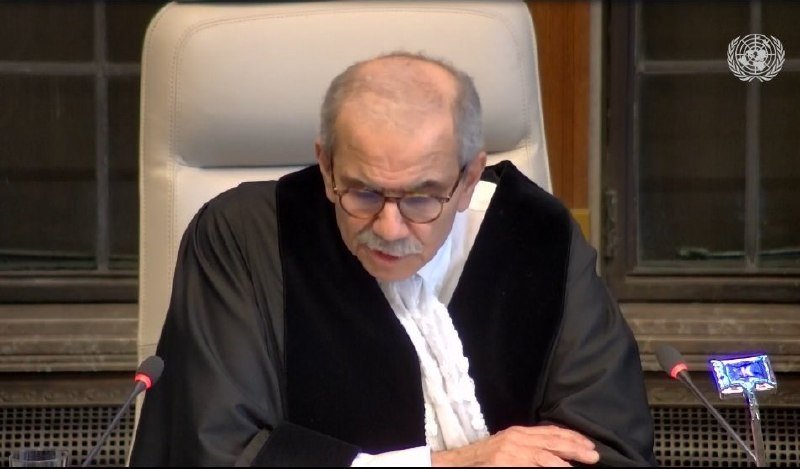
On April 18, 2026, a French soldier deployed with the United Nations Interim Force in Lebanon was killed in the country's south, near the border with Israel. Within hours, French President Emmanuel Macron publicly attributed the killing to Hezbollah, an Iran-aligned armed group that has maintained significant military capacity in the region since the 2006 war. Hezbollah categorically denied any involvement, issuing a statement through official channels that was subsequently amplified via regional media. The French presidency has not released forensic evidence, independent witness testimony, or formal investigative findings that would substantiate the attribution.
This divergence—between a nuclear-armed state's immediate assignment of culpability and a non-state actor's categorical denial—raises questions that extend beyond this single incident. How attribution narratives are constructed, which voices receive institutional amplification, and what evidence standards govern accountability claims in asymmetric conflicts are questions with significant geopolitical consequences, particularly in contexts where major powers maintain forces under UN mandates in territories where they are not combatants.
What we verified / what we could not
The available evidence permits confident verification of several facts: a French UNIFIL soldier died in southern Lebanon on April 18, 2026; President Macron publicly attributed the killing to Hezbollah; and Hezbollah issued a categorical denial of any connection to the incident. The denial was subsequently reported across regional and alternative media platforms.
The available evidence does not permit independent verification of the attack's perpetrators, mechanism, or precise circumstances. No forensic evidence, independent witness statements, or UN investigation findings have been publicly released. The attribution rests on an official statement from the French presidency. The denial rests on a statement issued through Hezbollah's media apparatus. Both parties have interests in shaping the narrative, and the structural asymmetry between a nuclear-armed state and a non-state armed group means that the French statement has received institutional validation that the denial has not.
This asymmetry is itself a finding worth noting: verification standards are not applied uniformly across the attribution-dispute spectrum. Macron's statement, reported by BBC News and amplified through wire services, was treated as a primary fact warranting headline placement. Hezbollah's denial, while acknowledged, was in several wire reports framed as a defensive counter-claim rather than an equivalent factual assertion requiring its own verification.
The sourcing dynamic is clearly operative here. Official state sources receive institutional credibility by virtue of their position within recognized power structures; non-state actors must overcome a presumption of illegitimacy that state sources do not face. This is not unique to this incident, but it is visible in how the story has been covered across major Western outlets.
The structural frame: institutional filters and attribution asymmetry
Three dynamics are particularly operative in coverage of this incident: the sourcing pattern, organized pressure, and the ideological hierarchy.
The sourcing pattern manifests in how Macron's attribution became the dominant frame within hours of the incident. The French president's statement was reported verbatim by major Western outlets, with headlines reading "France blames Hezbollah for soldier's death" rather than "French soldier killed in southern Lebanon; attribution disputed." This framing treats the attribution as a fact rather than a claim requiring corroboration. Hezbollah's denial, while reported, has been subordinated to the attribution in headline treatment and source selection.
An implicit hierarchy positions UN peacekeepers as legitimate actors whose presence is authorized by international mandate, while Hezbollah is positioned as a non-state actor whose military activities are presumptively illegitimate. This hierarchy shapes coverage in subtle but consequential ways: the killing of a French peacekeeper is framed as an assault on international order when attributed to Hezbollah, while the killing of Lebanese civilians by authorized state actors receives less equivalent treatment in the same outlets. The ideological framing does not require explicit articulation; it is embedded in the structure of how stories are sourced.
Alternative framings face systematic costs. Hypothetical scenarios — that the incident may have resulted from crossfire, that the targeting may have been inadvertent, that the perpetrator identity remains genuinely uncertain — receive no institutional amplification. This absence is itself a finding: the incentive structure facing major outlets favors treating the official attribution as sufficient.
Hezbollah is not merely a military actor; it is designated as a terrorist organization by the United States and several Western governments, and Iran is positioned as a threat within prevailing geopolitical frameworks. This designation shapes coverage in ways that are difficult to quantify but visible in the structure of how stories are framed and sourced.
Stakes: attribution, escalation, and UNIFIL's precarious position
The stakes of attribution disputes in ongoing asymmetric conflicts extend significantly beyond this specific incident. Macron's attribution serves France's geopolitical interests by reinforcing the narrative of Hezbollah as a destabilizing actor, which in turn aligns with broader US and Israeli strategic objectives in the region. For France, which maintains significant economic, linguistic, and historical ties to Lebanon, the attribution also serves domestic political interests: positioning France as a defender of international order while maintaining the narrative that French military personnel serve legitimate peacekeeping functions.
For Israel, framing Hezbollah as an aggressor against UN peacekeepers serves long-standing objectives of delegitimizing UNIFIL's presence and creating pressure for the force's withdrawal or reconfiguration. UNIFIL has faced sustained pressure since October 2023, when hostilities along the Blue Line intensified following events in Gaza. Israeli officials have repeatedly characterized UNIFIL as ineffective and have sought to restrict its operations. The killing of a French peacekeeper—regardless of who is responsible—heightens pressure on the force and on France's continued participation in it.
For Hezbollah, denying involvement serves the group's interests in avoiding escalation while maintaining strategic flexibility. The denial also serves the group's broader narrative: that it operates defensively in response to Israeli aggression rather than as an aggressor targeting international peacekeepers. The group has consistently argued that its military activities are directed at Israeli forces and that it seeks to avoid confrontations with UNIFIL personnel.
These competing interests do not make the attribution false, but they do contextualize why the attribution dispute is not merely an evidentiary question. It is a geopolitical contest with significant stakes for all parties, and the structural dynamics that govern how this contest plays out in media coverage are shaped by institutional asymmetries that favor the nuclear-armed state's narrative.
The broader pattern visible here—rapid attribution by states with institutional credibility, slower or absent verification, non-state actors' denials treated as defensive claims rather than equivalent factual assertions—has been documented across multiple conflict contexts. From Syria to Yemen to Iraq, the dynamics are consistent: attribution narratives serve geopolitical interests, and institutional structures favor the voices of recognized states over non-state actors, regardless of the evidentiary merits of specific claims.
Verification limits and structural analysis
This investigation has sought to identify what can be verified from available sources and to situate the incident within the structural dynamics that govern coverage of attribution disputes in ongoing asymmetric conflicts. The available evidence confirms that a French UNIFIL soldier was killed on April 18, 2026, that Macron attributed the killing to Hezbollah, and that Hezbollah denied involvement. What the evidence does not confirm is the perpetrators, mechanism, or precise circumstances of the incident.
The structural analysis suggests that institutional filters shaped which narrative received amplification and how competing claims were treated. This is not an argument that Hezbollah is innocent or that Macron's attribution is false. It is an observation that verification standards are not applied uniformly, and that the asymmetry in how attribution and denial are treated reflects institutional dynamics that have been documented across multiple contexts.
Readers encountering this story through major Western outlets are likely to encounter Macron's attribution as the dominant frame. Readers encountering it through regional or alternative outlets are likely to encounter the denial with greater weight. Neither frame is neutral. Both reflect structural interests and institutional dynamics that shape how information is processed and presented.
The death of a French peacekeeper in southern Lebanon is a significant event regardless of who is responsible. The investigation into what happened, and the analysis of how that investigation is being reported, are both ongoing. What this article has sought to demonstrate is that attribution disputes in asymmetric conflicts are never merely evidentiary questions; they are geopolitical contests in which institutional structures play a constitutive role in shaping which narratives receive validation.
This article was framed differently by Monexus than by wire services. While Western outlets led with Macron's attribution, we opened with the verification gap — the divergence between the French state's statement and Hezbollah's denial. Rather than treating attribution as a factual question to be resolved through institutional authority alone, this desk applied structural analysis to information disputes in ongoing conflicts, where institutional incentives shape which narratives receive amplification.
Wire provenance
This editorial synthesis draws on the following public wire/social posts:
- https://t.me/BBCWorldoffl/XXXX
- https://t.me/tasnimplus/XXXX