Klingbeil's Reckoning: Germany's Energy Dependency, Supply-Chain Decoupling, and the Return of Industrial Policy in Europe
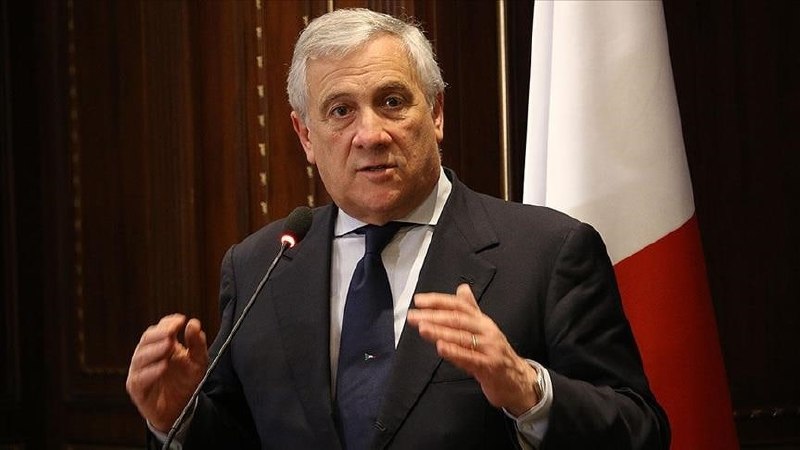
Lars Klingbeil, Germany's Finance Minister and vice-chancellor in the SPD-led coalition, published an op-ed in The Guardian on 17 April 2026 that reads, in retrospect, as a declaration of intellectual departure from the framework that governed European economic policy for the better part of thirty years. "The war in Iran has exposed our dependencies," he wrote. "Europe, including the UK, must be bold about change, so nobody can blackmail us." The language is diplomatic — Klingbeil is a politician, not a heterodox economist — but the structural implication is radical: the model of deep globalisation, cheap energy imports, and lean supply chains that made Germany the world's export champion has produced dependencies that its adversaries can exploit as leverage. That model must change.
The concession is historically significant. Germany's export-led growth model — what economists have variously called Exportweltmeister capitalism and, more critically, a form of mercantilism that transferred internal demand deficits to trading partners — was the template against which peripheral European economies were benchmarked during the eurozone crisis. German workers accepted wage restraint; German manufacturers captured global market share; German banks recycled the resulting surpluses into loans to Southern European consumers who purchased German goods. The architecture that is now acknowledged to have produced strategic vulnerability is the same architecture that produced the surpluses that Berlin long defended as virtuous.
The Just-In-Time Supply Chain and Its Political Economy
The concept of just-in-time supply chain management — developed in Toyota's production system in postwar Japan and globalised through the 1980s and 1990s as trade liberalisation reduced friction costs — is simultaneously a triumph of capital efficiency and a compression of resilience. Minimising inventory reduces working capital requirements and improves return on assets; it also means that any disruption in input supply propagates immediately to production. The COVID-19 pandemic demonstrated this at scale: semiconductor shortages idled automotive plants across Germany, France, and the United States for months. The Iran war's disruption of Hormuz oil flows has demonstrated it again, with fuel costs adding directly to the cost of goods whose energy-intensive production was a key source of German competitive advantage.
The "entrepreneurial state" thesis — the argument that major technological transformations, from the internet to pharmaceuticals to the green energy transition, have been underwritten by patient public investment that private capital, with its shorter time horizons and preference for appropriable returns, systematically underproduces — provides the intellectual architecture for the policy response Klingbeil is gesturing toward. The European Commission's embrace of strategic autonomy language, the proposed European Sovereignty Fund, and the ongoing debate about whether EU fiscal rules should exempt green and defence investment from deficit calculations all reflect, however imperfectly, this logic of mission-oriented public investment.
Ha-Joon Chang's Ladder and the Hypocrisy of the Current Moment
Ha-Joon Chang's historical analysis is instructive here. In Kicking Away the Ladder, Chang documented how every now-developed economy — Britain, the United States, Germany, France, Japan, South Korea — built its industrial base through activist state policy: tariffs to protect infant industries, subsidies to key sectors, technology transfer requirements for foreign investors, state-owned enterprises in strategic industries. These economies then, once they had achieved competitive advantage, campaigned vigorously through multilateral institutions for trade liberalisation and the prohibition of precisely those industrial policies that had enabled their own development.
Europe now finds itself in a peculiar position: it needs the kind of active industrial policy it spent decades persuading developing economies to abandon. The EU's new frameworks for semiconductor production, battery manufacturing, hydrogen infrastructure, and defence industrial capacity are industrial policy in everything but name — and the political difficulty of acknowledging them as such reflects the ideological inheritance that Chang's analysis excavates. Germany, which for years lectured Greece and Italy about structural reform, is now making the case for state-directed investment in strategic supply chains. The intellectual about-face is substantial, even if the language used to describe it is carefully moderated.
Decoupling from China and the Limits of Strategic Autonomy
The supply-chain conversation cannot be conducted without reference to China, which is simultaneously Germany's largest single trading partner and the principal target of the decoupling rhetoric emanating from Washington and, increasingly, Brussels. Germany's automotive industry — BMW, Volkswagen, Mercedes-Benz — generates a substantial share of revenues from Chinese sales. Its chemical industry — BASF's Ludwigshafen complex alone consumes more energy than the city of Frankfurt — is deeply dependent on input costs that energy decoupling would fundamentally alter.
Klingbeil's call for European boldness is genuine, but it confronts a Rodrik-style trilemma of its own: deep integration with Chinese supply chains, European industrial competitiveness, and the geopolitical alignment with Washington that the US increasingly demands cannot all be simultaneously maximised. Berlin's traditional response — preserve economic ties with China while maintaining transatlantic political alignment — is under pressure from both directions. The Iran war has added urgency to the energy dependency dimension of this calculation without resolving the underlying structural tensions.
The Stakes of Getting Industrial Policy Wrong
The return of industrial policy in Europe is not inherently progressive. The entrepreneurial state thesis specifies that the state must not only take risk but also capture returns, directing the gains from publicly underwritten innovation back into public goods rather than privatising them into shareholder value. Most of what currently passes for industrial policy in Europe fails this test: the subsidies, tax credits, and preferential procurement that constitute the EU's de facto industrial strategy largely direct public money toward private firms with limited conditionality about where those firms locate jobs, how they structure supply chains, or whether they pay tax in the jurisdictions that supported them.
The US Inflation Reduction Act — often cited as the model for European industrial policy revival — is instructive here. Its domestic content requirements and the pace of its green energy deployment are genuine achievements. But its primary mechanism is subsidy to private capital, not public investment in capacity; its design reflects the political constraints of a system in which state ownership of productive assets is not politically available. The result is a programme that accelerates the green transition but does so by creating vast new streams of public subsidy flowing to corporations, rather than by building publicly owned clean energy infrastructure whose returns flow back to the public balance sheet.
Germany's Zeitenwende — the "turning point" announced after Russia's 2022 invasion of Ukraine, which involved massive increases in defence spending and a belated reckoning with energy dependency — has similarly been characterised more by the direction of public money toward private contractors than by genuine public capacity-building. Klingbeil's call for boldness will require confronting this pattern: the question is not only whether Europe invests in strategic supply chains and energy independence, but whether the structure of that investment produces publicly owned, democratically accountable capacity, or simply inflates the balance sheets of the defence and energy corporations that are already the primary beneficiaries of the current crisis. The intellectual framework Klingbeil's op-ed gestures toward — strategic autonomy, reduced dependency, industrial renaissance — is correct in diagnosis. The policy architecture required to realise it in the public interest remains, in most European capitals, unbuilt.