The Strait as a Weapon: How Iran Codified A2/AD Doctrine in the Hormuz Crisis
Iran's closure of the Strait of Hormuz on April 18 is not a tactical improvisation — it is the operational proof of a decade-long anti-access/area-denial doctrine that Washington's naval planners long warned about but repeatedly under-resourced the counter-architecture to defeat.
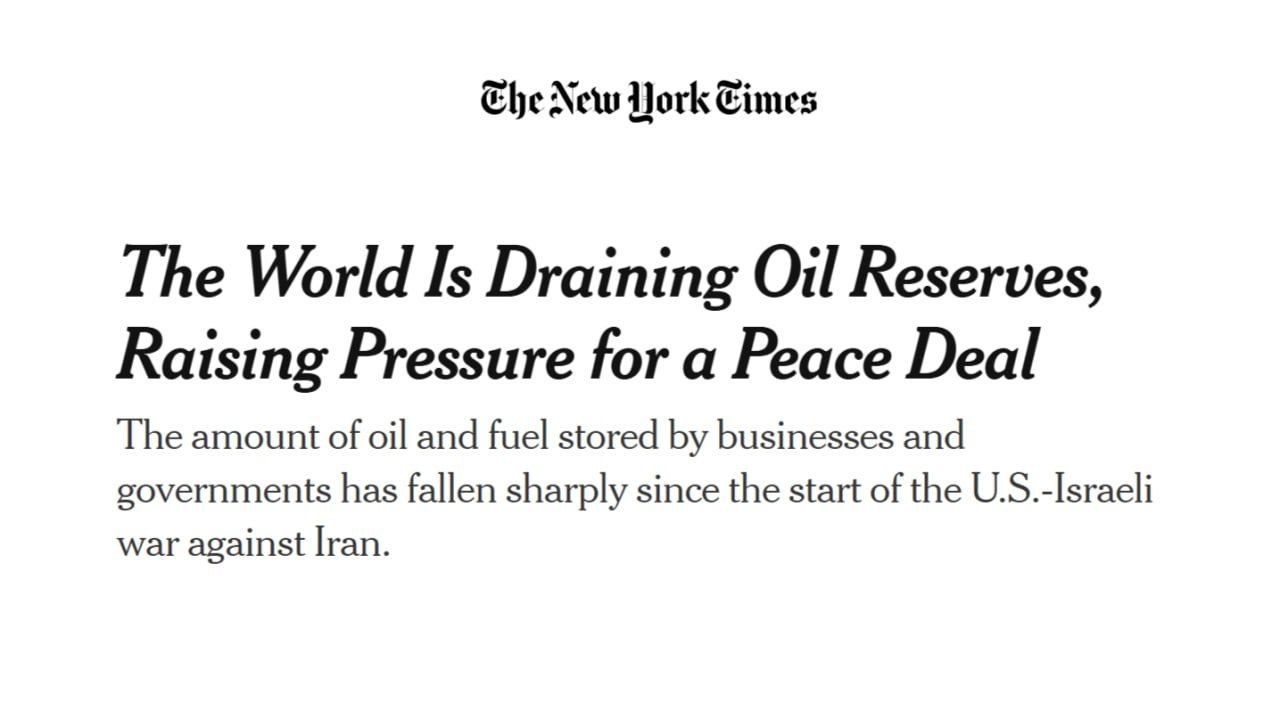
On the morning of April 18, 2026, Iranian authorities announced that the Strait of Hormuz — through which roughly 20 percent of global oil and 17 percent of liquefied natural gas transits — was closed to vessels lacking explicit Iranian authorization. Bloomberg ship-tracking data confirmed within hours that five LNG tankers had reversed course. The BBC and Al Jazeera reported Iranian attacks on commercial shipping as Tehran blamed a U.S. minesweeping operation it characterized as a ceasefire violation. In a televised address, Parliamentary Speaker Mohammad-Bagher Ghalibaf framed the closure not as desperation but as vindication: the Islamic Republic had, he argued, survived and outlasted a technologically superior adversary by weaponizing geography itself.
The Strait of Hormuz closure is the operational proof of an anti-access/area-denial (A2/AD) architecture that Iran has been building, drilling, and refining since the early 2000s. What analysts at the RAND Corporation and the U.S. Naval War College described as a "paper threat" a decade ago has now demonstrated real-world coercive force — halting global energy flows, challenging U.S. carrier strike group freedom of maneuver, and extracting diplomatic leverage Iran could not achieve through conventional force parity. Regional powers denied hegemonic status through conventional arms will invest asymmetrically in denial systems: geography, missiles, and the credible threat of interdiction. Offensive realism has long predicted this dynamic, and Iran has spent twenty years doing exactly that. April 18 is the invoice.
The Architecture of Denial: Mines, Missiles, and Swarm Doctrine
Iran's Hormuz A2/AD complex is not a single weapons system — it is a layered operational concept integrating anti-ship ballistic missiles (ASBMs), fast-attack boat swarms, sea mines, and shore-based cruise missile batteries across a geography that narrows to roughly 33 kilometers at its chokepoint. The IRGC Navy's doctrine, refined through repeated exercises in the Persian Gulf, centers on denying freedom of navigation rather than defeating an adversary fleet in open-water engagement — a strategic calculus that exploits the U.S. Navy's Achilles heel: the institutional requirement to keep sea lanes open for allied commerce.
Ghalibaf's April 18 statement that IRGC forces confronted U.S. minesweeping operations in the strait — and that Iran would "attack any vessel that does not have permission to pass" — signals that the closure is backed by credible interdiction capability, not mere declaration. U.S. intelligence assessments leaked to the New York Times on the same date confirmed that Iran retains approximately 60 percent of its missile launchers and 40 percent of its attack drone inventory despite weeks of strikes. The survivability of Iran's denial architecture under direct U.S. military pressure is itself the strategic message: A2/AD zones, once established, are difficult to suppress without costs the American public has signaled it will not tolerate.
The mine threat is particularly consequential. Iran is assessed to possess thousands of influence mines — contact, magnetic, and acoustic variants — that can be sown rapidly by surface craft, submarines, or aircraft. Clearing a minefield of any scale in contested waters requires dedicated minesweepers operating at close range, presenting exactly the kind of slow, vulnerable target that Iran's fast-attack doctrine is optimized to exploit. The U.S. Navy's minesweeping capacity has been chronically underfunded since the Cold War; the service currently operates a fleet of Avenger-class minesweepers commissioned in the 1980s.
The F-35 Signal: What Ghalibaf's Boast Actually Reveals
Ghalibaf's claim that a missile "exploded near an F-35" during the conflict — and that this detonation revealed to Iran the "level of our capabilities and the direction of their development" — carries analytical weight independent of its propaganda value. The F-35's stealth profile was designed to render it near-invisible to legacy radar systems; Iran's apparent ability to bring a missile within proximity-detonation range of the aircraft suggests either significant Iranian radar advancement, information leakage about sortie patterns, or a combination of both. Defense analysts interviewed by international wire services have declined to confirm or deny the specifics, which is itself a form of acknowledgment that the claim cannot be dismissed.
The broader doctrinal implication is significant. Iran has invested heavily in passive radar systems — systems that detect aircraft not by emitting radar pulses but by exploiting ambient radio-frequency energy from commercial broadcasts, satellites, and adversary communications. Passive radar is inherently difficult to suppress because there is no active emission to target with anti-radiation missiles. If Iran has operationalized passive radar-cued fire control at a level capable of prosecuting stealth aircraft, the cost calculus of flying strike missions through Iranian-controlled airspace changes materially — and with it the entire logic of U.S. air supremacy as the default opening move in Persian Gulf contingencies.
William Hartung's Warning: The Arms Pipeline That Built the Threat
The weapons systems Iran deployed against U.S. and allied forces in the recent conflict did not emerge from a vacuum. Scholar William Hartung, whose work on the arms trade documents the unintended consequences of U.S. export decisions, has long argued that American weapons proliferation in the Gulf created the strategic environment Washington now struggles to manage. Iran's drone program benefited materially from reverse-engineered U.S. systems — most notably the RQ-170 Sentinel captured intact in 2011 — as well as from extensive technology transfer through Russian and Chinese intermediaries who themselves acquired U.S. designs through third-country diversions.
The export control regime that was supposed to prevent this diffusion — centered on the International Traffic in Arms Regulations (ITAR) and the Arms Export Control Act — has been systematically weakened by successive administrations eager to maximize defense industry sales to Gulf partners. Those same Gulf partners have, in turn, transferred technology, components, and know-how to actors the U.S. State Department designates as adversaries. The Hormuz crisis is therefore partly a product of U.S. arms export decisions stretching back decades: the same liberal export posture that enriched Lockheed Martin, Raytheon, and Boeing created the adversary the U.S. Navy is now attempting to suppress in a 33-kilometer strait.
Stakes: The NATO Fracture and the Doctrine Without a Counter
Trump's April 18 call for NATO to participate in "opening" the Strait of Hormuz was rebuffed, according to Ghalibaf. The rejection is diplomatically significant: NATO allies, already alarmed by U.S. reliability signals following years of burden-sharing pressure, have no appetite to subordinate their energy supply security to U.S. military escalation management in the Gulf. Secretary General Mark Rutte's concurrent statement that U.S. withdrawal from NATO was "unlikely but the Alliance must strengthen" underscores the contradiction — Washington simultaneously demands allied deference and provides declining security guarantees, a dynamic Andrew Bacevich has identified as the structural rot at the center of the American imperial compact.
The deeper strategic problem is doctrinal: the United States has no operationally validated counter-A2/AD concept for the Hormuz geography. Distributed Maritime Operations, the U.S. Navy's theoretical answer to adversary denial networks, remains a planning construct rather than a trained, equipped, and rehearsed capability at the force levels required to suppress Iranian interdiction. Carrier strike groups — the iconic expression of U.S. naval power — are precisely the high-value, low-signature targets that Iran's ASBM doctrine was designed to deter from entering the Persian Gulf in the first place. The gap between doctrine and capability, in the Hormuz crisis of April 2026, is being measured in closed shipping lanes and reversed tankers.
The Monexus defense desk frames this story through operational doctrine rather than diplomatic incident; wire coverage has emphasized the ceasefire-violation framing without adequately examining the A2/AD architecture Iran has validated under fire.