Targeting the Invisible Fleet: AI, Intelligence Fusion, and the New Architecture of Naval Coercion
The US Navy's plan to board Iranian-linked tankers across multiple ocean regions simultaneously is only operationally feasible with AI-assisted vessel tracking and intelligence fusion. The convergence of surveillance data infrastructure with lethal military targeting raises accountability questions no current legal framework adequately addresses.
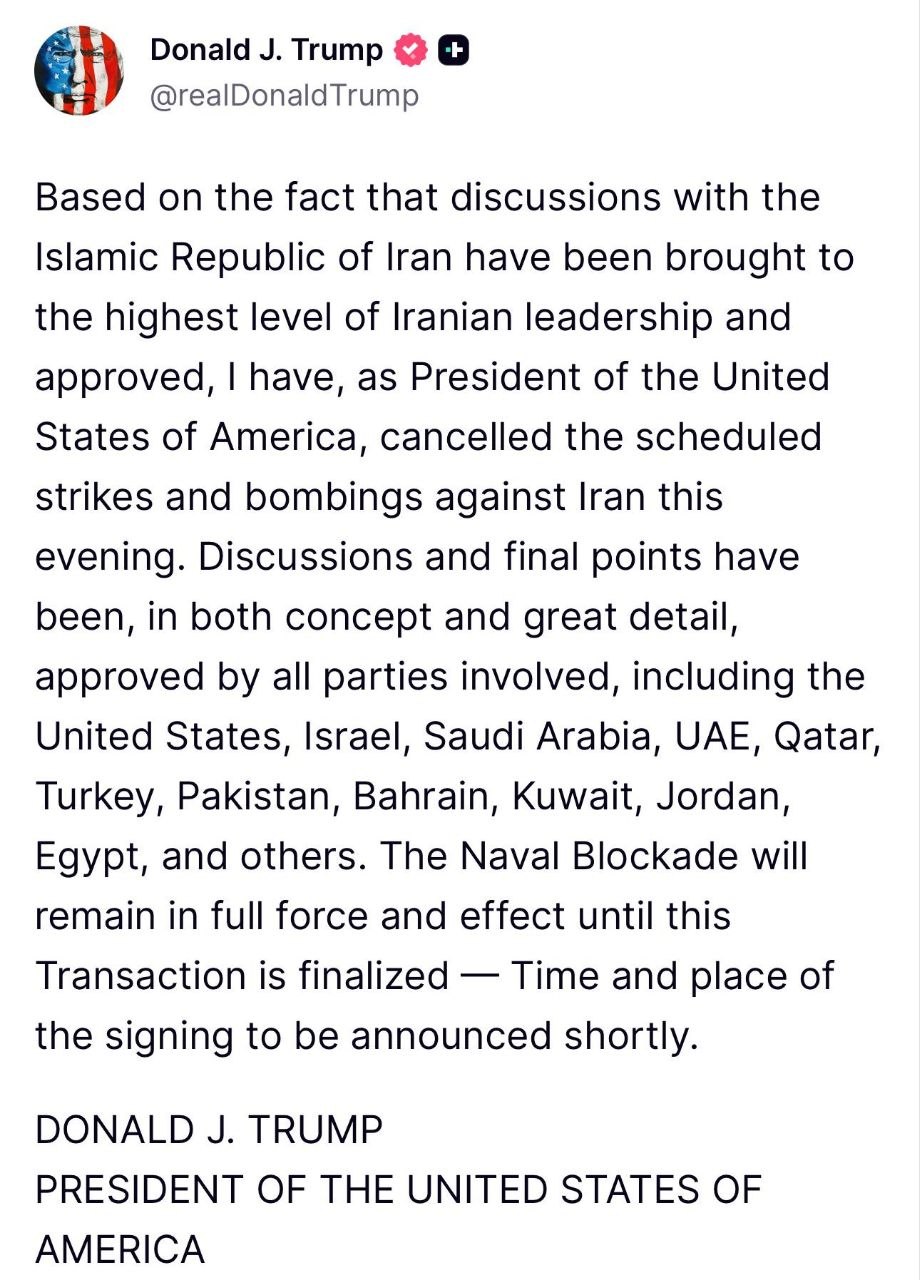
On 18 April 2026, the Wall Street Journal and multiple OSINT aggregators reported that the US Navy was preparing in the coming days to board Iranian-linked sanctioned crude oil tankers and seize commercial ships in international waters across "several areas around the globe." The scale of the planned operation — simultaneously targeting vessels in the Persian Gulf, the Sea of Oman, the eastern Mediterranean, and potentially the Atlantic — is not operationally conceivable without the kind of AI-assisted maritime domain awareness infrastructure that the US Navy and its intelligence partners have been building, systematically and with limited public acknowledgment, since at least 2018.
The convergence of artificial intelligence with military intelligence targeting architecture is the defining structural shift in great-power competition of the 2020s. It is happening faster than democratic oversight mechanisms can track, faster than military lawyers can construct doctrine, and in ways that fundamentally transform both what intelligence agencies can know and what militaries can do with that knowledge at speed. The Hormuz crisis of April 2026 is not merely a confrontation between the United States and Iran over straits and sanctions. It is a live exercise in a new form of global maritime coercion made possible by the fusion of commercial surveillance data, machine-learning targeting systems, and signals intelligence — and conducted with almost no public accountability for the algorithmic architecture that makes it operationally possible.
The Infrastructure of Simultaneous Maritime Targeting
Identifying, tracking, and simultaneously tasking boarding operations against multiple Iranian-linked tankers across different oceanic regions requires the integration of at minimum four distinct data streams: Automatic Identification System transponder data from vessels that are transmitting, synthetic aperture radar imagery from commercial and classified satellite constellations for vessels that have disabled their AIS, signals intelligence from communications between vessels and their operators, and financial intelligence linking corporate entities to sanctioned actors.
The first two of these streams — AIS and SAR imagery — are primarily commercial data. Companies including Spire Global, HawkEye 360, Maxar Technologies, and Planet Labs have, over the past decade, built commercial satellite constellations that together provide near-continuous coverage of global maritime surface traffic. The US Navy and National Geospatial-Intelligence Agency have contracted extensively with these commercial providers, supplementing their own classified satellite coverage with commercial data at a fraction of the acquisition cost of dedicated intelligence satellites.
The integration of these streams into an actionable targeting picture for simultaneous multi-theatre operations requires machine-learning systems that can flag anomalies in vessel behaviour — dark ship periods, AIS spoofing, ship-to-ship transfers — and correlate them against financial sanctions databases, corporate registry records, and signals intelligence metadata to produce a prioritised list of vessels linked to Iranian oil export networks with sufficient confidence for a naval boarding operation. This is not a capability that human analysts running manual databases can provide at the operational tempo the WSJ report describes.
Kate Crawford's analysis in Atlas of AI of the material infrastructure underlying artificial intelligence systems is directly applicable here: the compute substrate, the training data, the commercial data pipelines, and the classified integration architecture that together produce "AI-assisted intelligence targeting" are not abstract algorithmic achievements. They are built on a specific material and institutional base — commercial remote-sensing companies, US government contracts, DARPA research programmes, and a classified integration layer that operates without public accountability and largely without legislative oversight adequate to its capabilities.
The Blurring of Commercial Surveillance and Military Targeting
What makes the intelligence-military-AI convergence structurally significant — rather than merely a more capable version of traditional signals intelligence — is the directness of the pipeline from commercial surveillance infrastructure to lethal or coercive military effect. The AIS data that Spire Global collects is simultaneously sold to shipping companies for route optimisation, to commodity traders for oil market intelligence, to sanctions compliance firms for regulatory screening, and to military and intelligence customers for targeting. The same data stream that a Norwegian shipping insurer uses to price risk on a cargo vessel is, with appropriate correlation against NGA satellite imagery and OFAC sanctions databases, the same data stream that generates the targeting package for a US Navy boarding operation.
This is the structural logic of data extraction extended into the military domain: the extraction of behavioural data at scale, originally justified by commercial utility, creates an infrastructure whose most powerful applications are not commercial at all. The commercial satellite companies that have transformed maritime domain awareness did not build their constellations primarily to serve the Pentagon's targeting requirements. But the targeting requirements are now substantially dependent on the commercial infrastructure — and this dependency has been built without the kind of public deliberation or legislative authorisation that conventional military weapons programmes require.
The companies supplying this surveillance-to-targeting pipeline include publicly traded corporations — Maxar was acquired by Advent International in 2023, Planet Labs trades on NYSE — whose commercial and government revenue streams are substantially intertwined. The defence and intelligence contracting relationships are disclosed in SEC filings but receive minimal journalistic attention relative to their operational significance, partly because the technical complexity of the systems involved creates a barrier to coverage that itself constitutes structural filtering of accountability journalism.
What Existing Legal Frameworks Cannot Address
The legal framework for US naval operations — the Law of the Sea Convention, customary international law on the right of visit and seizure on the high seas, and the domestic legal authorities under IEEPA and International Emergency Economic Powers Act sanctions — was constructed for a different operational environment: one in which the identification of a suspect vessel required physical reconnaissance or confidential intelligence, and in which the decision to board a vessel in international waters was made by a commander with time to deliberate.
AI-assisted maritime targeting compresses this decision cycle to a degree that raises fundamental due process questions. If a machine-learning system flags a vessel as Iranian-linked with 85 percent confidence based on AIS pattern analysis, SAR imagery correlation, and sanctions database matching, and that determination flows through an automated workflow to a naval commander who approves a boarding order within a forty-minute window, the procedural legitimacy of the operation is substantively different from a boarding order based on months of human analytic work and deliberate legal review.
The question is not whether the US Navy has legal authority to board sanctioned vessels in international waters (it does, under specified conditions). The question is whether the algorithmic confidence assessment that generated the targeting determination is subject to any external legal review, independent audit, or adversarial challenge. It is not. The classified, proprietary character of military AI targeting systems — shielded by state secrets doctrine — is the intelligence-military-AI convergence's democratic accountability deficit made concrete.
Stakes: Doctrine, Precedent, and the Algorithmic Laws of Armed Conflict
The precedent being set in the Persian Gulf in April 2026 will not remain confined to Iranian-linked tankers. The operational architecture being tested — simultaneous multi-theatre maritime coercion at scale using AI-fused intelligence targeting — is the architecture that every significant naval power will study, replicate, and deploy against adversarial shipping in the next decade. China has been building its own maritime domain awareness infrastructure, including the BeiDou satellite navigation system's AIS integration and the PLA Navy's commercial satellite partnerships. Russia has been developing its own AI-assisted targeting architecture, partly from information derived from studying Western operations in the Black Sea.
The international law of armed conflict — particularly the principles of distinction, proportionality, and precaution — was developed in an era when the primary accountability mechanism was the human commander who ordered a strike and faced subsequent legal review. AI-assisted targeting creates a distributed accountability structure in which the original data collection is commercial, the algorithmic correlation is classified, the confidence assessment is machine-generated, and the human decision is made in a compressed timeframe based on outputs whose generation cannot be independently verified.
The Human Rights Watch and International Committee of the Red Cross have both published frameworks for evaluating the legality of autonomous and semi-autonomous weapons systems, but these frameworks assume that the humans reviewing them have access to the technical specifications of the algorithms involved. In the current classification environment, no such access exists for independent legal analysis, congressional oversight, or international monitoring.
The ceasefire negotiation set to expire on 21 April 2026 is, on the surface, a diplomatic conversation about sanctions relief and enrichment limits. Beneath the surface, it is also a negotiation about whether the United States can maintain the global maritime targeting architecture it has constructed — and whether adversarial states will adapt to it or contest it. The outcome will shape the intelligence-military-AI convergence for the decade that follows.
The Monexus Intelligence Desk notes that coverage of the US Navy's tanker interdiction plans focused almost exclusively on the diplomatic and economic dimensions. The AI targeting infrastructure that makes simultaneous multi-theatre maritime coercion operationally feasible received no mainstream wire coverage on 18 April despite being the operationally significant story.