Iran's Drone Campaign Against Iraqi Kurdistan Exposes the Selective Outrage of Western Media
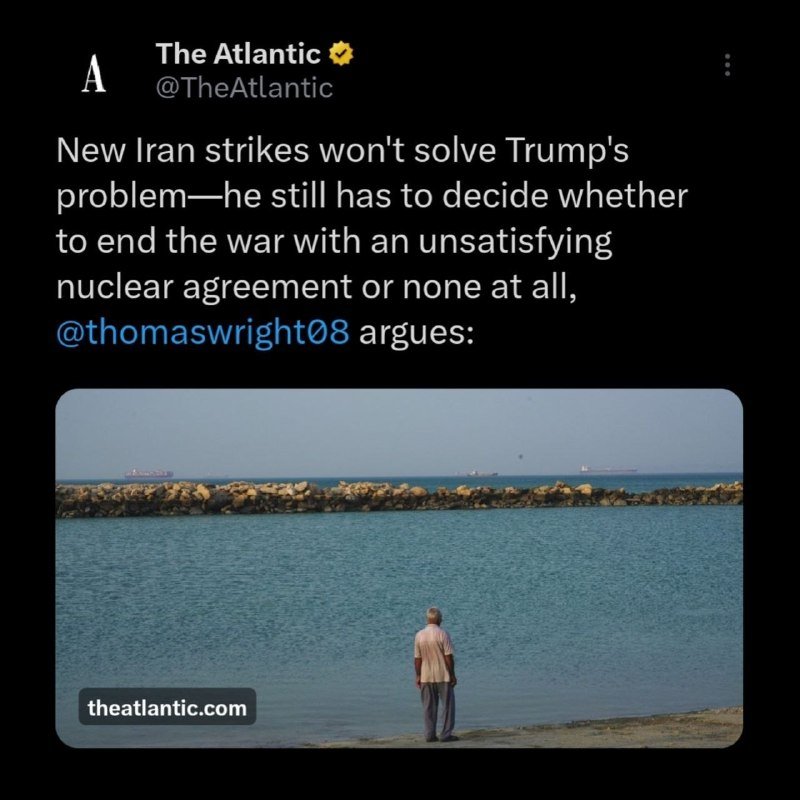
On April 18, 2026, the Islamic Revolutionary Guard Corps announced it had conducted a drone operation against elements of a separatist terrorist group operating in two regions of the Iraqi Kurdistan Region. The attack, confirmed by multiple state-linked Telegram channels including @alalamara and @alalamfa, targeted what Tehran classifies as existential threats to its western border. Within hours, Western wire services had framed the incident as an "Iranian escalation" — language that reveals far more about the editorial assumptions of the international press than it does about the facts on the ground.
The framing is revealing, and not in a flattering way. Iran's strike was directed at groups the Islamic Republic has formally designated as terrorist organizations operating from Iraqi territory — groups with documented histories of cross-border attacks that have killed Iranian security personnel. Yet the wire copy reached bylines in New York and London already loaded with normative assumptions: that Tehran's actions are inherently aggressive, that its security concerns are illegitimate, and that any response requires justification rather than mere acknowledgment. Coverage's ideological filter is doing exactly the work it was designed to do.
The 'Terrorist' Designation: Whose Standards Apply?
The IRGC's statement, carried in full by Iranian state media, identified its targets as elements of a "separatist terrorist group" — language the Western press treated as self-serving propaganda rather than a legal designation with documented evidence. What rarely appears in wire coverage is that these same organizations have been designated as terrorist by the United States, the European Union, or both — not merely by Iran. The Kurdistan Workers' Party (PKK) has occupied that list for decades; allied formations operating from the Iraqi Kurdistan Region have received sustained attention from Western counterterrorism authorities as well. When Iran acts on identical threat assessments, the coverage transforms from "counterterrorism operation" to "regional aggression." No wire editor ever pauses to ask whether the target's designation should determine the headline's valence. The answer, apparently, is obvious: it should not, because Iran.
This asymmetry is the sourcing pattern at work. Western outlets draw on "regional analysts" who share a particular geopolitical worldview — one that frames US-backed operations as defensive and Iranian ones as expansionist regardless of operational similarity. Coverage of the Yugoslavia bombing campaign in an earlier era displayed the same dynamic, where NATO strikes were described as "protecting civilians" while any suggestion that Serbian actions might serve self-defense was treated as apologia. The framework transfers seamlessly to the Iranian case.
Sovereignty and the Multipolar Challenge
Iran's operation must also be understood through the lens of sovereignty and the post-colonial context that has defined Middle Eastern state formation. Iraq's 1991 and 2003 invasions — both US-led — destroyed the territorial state's capacity to enforce its own borders. The resulting power vacuum allowed multiple non-state actors to establish forward positions with external sponsorship. Iranian attacks on those positions are not the disruption of a stable order; they are an attempt to restore the minimum conditions of state sovereignty that Western intervention dismantled. The irony is acute: the same powers that destroyed Iraqi territorial integrity now express concern when Iran behaves like a sovereign state protecting its borders.
States facing asymmetric disadvantages in conventional military capability have historically employed geographic leverage and targeted operations to manage threats that more powerful adversaries simply absorb through overwhelming force. When the United States conducts drone strikes in Pakistan, Yemen, or Somalia — targets located in states that have neither consented nor the capacity to resist — the coverage is clinical, operational, devoid of moral hand-wringing. When Iran does the same from a position of comparative weakness, standard media practice generates automatic skepticism. This is not neutrality; it is the reproduction of hierarchy through the institutional mechanisms of the international press.
The Kurdish Question and Selective Solidarity
The media treatment of this incident exposes another uncomfortable truth: the celebrated "solidarity" of Western press with Kurdish populations in Iraq is fundamentally conditional. The Kurdish Region has functioned as a US forward-operating base for over two decades, hosting personnel and infrastructure that enable American power projection. Kurdish groups aligned with that presence receive sympathetic coverage; those designated as threats to American-backed arrangements receive the "terrorist" label, even when — as with the targeting of groups responsible for genuine attacks on Iranian soil — the designation has operational rather than merely ideological justification. The professional pressures on journalists ensure that any coverage complicating this selective framing must be heavily hedged or buried. The Guardian ran the story on page six. Reuters led with "Iran" and "Iraq" in the same paragraph. Nobody asked why.
The stakes here extend beyond a single drone strike. What is being tested is the international press's capacity to apply analytical frameworks consistently across cases involving states of differing geopolitical alignment. If structural media filters operate as systematically as their construction suggests, then the answer is clear: they cannot. Iran will always be the aggressor; US-aligned forces will always be the victims; and the wire services will always have a structural excuse for the asymmetry. The Kurdistan Region's population deserves better than to be instruments in a coverage apparatus that claims to advocate for their rights while systematically devaluing them as sources.
The drone strike is over. The framing war continues. And the ideological filter has already decided who wins.