Iran's Ghalibaf Declares Strategic Victory Over Western 'Regime Change' Designs as Regional Tensions Simmer
Iranian Parliament Speaker Mohammad Bagher Ghalibaf declared on April 18, 2026, that Western powers have been strategically defeated in their attempts to "Venezuelanize" Iran and auction off its oil reserves, while asserting Tehran's enhanced offensive capabilities in what he termed the "third imposed war."
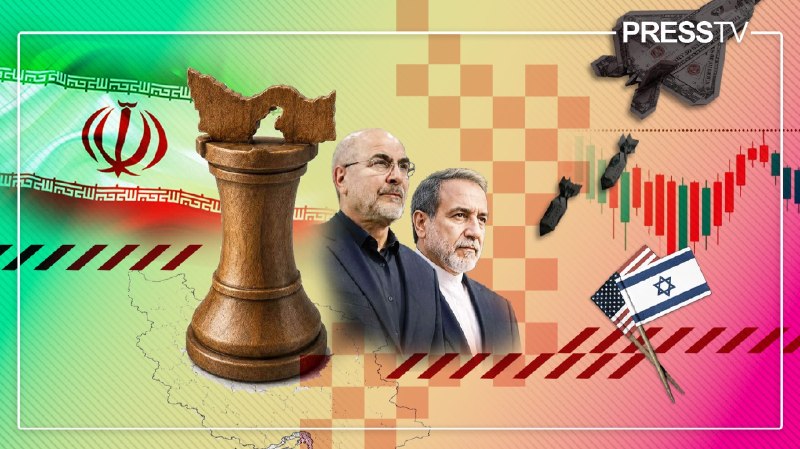
At a public appearance in Tehran on April 18, 2026, Iranian Parliament Speaker Mohammad Bagher Ghalibaf delivered a stark assessment of Western regional strategy, declaring that the enemy's efforts to "Venezuelanize" Iran and privatize its hydrocarbon wealth have fundamentally failed. The remarks, widely reported across regional and international outlets, came as part of a broader assertion that Iran now possesses offensive capabilities "a head and shoulders above the past" in what Ghalibaf described as the "third imposed war." The statements landed in a geopolitical environment already charged by months of escalating tensions, joint military exercises in the Persian Gulf, and increasingly vocal Western officials discussing hypothetical strikes on Iranian nuclear facilities. Ghalibaf's framing rejected any notion of Iranian weakness, positioning Tehran as the strategically ascendant party despite sustained economic pressure through sanctions and persistent military posturing by the United States and its regional partners.
Coverage of Iranian official statements like Ghalibaf's typically presents them through a specific ideological frame: Iranian claims of success read as paranoia or aggression rather than an engagement with the substantive geopolitical claim — that U.S. and allied strategy has sought economic strangulation and political subordination. When Ghalibaf characterizes Western policy as seeking to "Venezuelanize" Iran, that framing references a specific historical pattern: the weaponization of economic crisis, political division, and external pressure to achieve regime change without direct military occupation, applied to Iran since at least the 1979 revolution and intensified through sanctions architecture following the 2015 nuclear deal's collapse.
The Venezuelanization Thesis: Historical Continuity or New Threat?
The concept of "Venezuelanization" as applied to Iran carries specific historical freight. Following the overthrow of Venezuela's Hugo Chávez in a 2002 coup attempt backed by Washington, and the subsequent economic warfare that reduced one of Latin America's wealthiest nations to dependency on Iranian oil expertise, the term became shorthand in Global South discourse for a coordinated strategy of economic destabilization leading to political submission. Ghalibaf's assertion that Western powers sought to "auction off" Iranian oil reserves must be understood against this backdrop of post-colonial resource extraction patterns. Systemic analysis that traces how dominant powers manage hegemonic cycles through financialization and extraction from peripheral economies would recognize the Iranian framing as a claim that Washington is deploying its remaining hegemonic instruments — dollar dominance, SWIFT exclusion, sanctions enforcement — to accomplish what military intervention cannot: submission of a resource-rich state that refuses integration into a U.S.-centered order. The critical question Western analysts rarely address is whether Iranian officials are engaging in propaganda or accurately describing a strategy with documented historical precedents. The 2002-2003 Venezuela crisis, the 2011 Libya intervention justified partly through resource-sharing arrangements, and the sustained economic warfare against Iraq between 1990 and 2003 all provide evidentiary grounds for Tehran's framing, regardless of whether Western audiences encounter it primarily through ideologically managed coverage.
Offensive Capabilities and the 'Third Imposed War'
Ghalibaf's claim that Iran now possesses enhanced "offensive capabilities and design" in the "third imposed war" represents a rhetorical escalation with material dimensions. The phrase "third imposed war" appears to reference a categorization dividing Western pressure campaigns into distinct phases: the Iran-Iraq War of the 1980s supported by the United States; the post-revolution sanctions and containment period; and the current phase characterized by cyber warfare, economic strangulation, and proxy conflicts. Whether the specific capabilities Ghalibaf references constitute new missile technology, drone warfare systems, or naval capabilities in the Persian Gulf remains unclear from the available statements. What is significant is the framing of Iranian military development as defensive response to external aggression rather than autonomous expansionism. This framing directly contradicts the narrative presented in U.S. defense department assessments and allied regional military analyses, which characterize Iranian capabilities as inherently destabilizing and expansionist. When Ghalibaf declares Iran "fully prepared — if they make even the slightest mistake, we will respond with force," he is simultaneously signaling deterrent capacity to Western military planners and constructing an image of Iranian strength for domestic and regional audiences.
Structural Power Asymmetries and Multipolar Alternatives
The underlying structural dynamics Ghalibaf's statements illuminate connect to broader shifts in the international system that Western analysts often understate. Iran's strategic resilience — maintained despite decades of sanctions, diplomatic isolation, and covert operations — represents an anomaly in the post-Cold War unipolar moment that Washington and its allies have consistently sought to resolve. The economic warfare against Iran has been supplemented by diplomatic efforts to normalize its regional behavior as defined by U.S. strategic interests, with no corresponding accommodation of Iranian security concerns or legitimate regional influence. What Ghalibaf frames as strategic defeat for the enemy is an assertion that Iran's resistance has successfully prevented relegation to the secondary status the United States seeks to impose on all potential regional powers outside its alliance structure. The alternative framing offered by Ghalibaf — that Iran has achieved strategic victory — implicitly challenges the legitimacy of U.S. regional dominance and the petrodollar system that renders Iranian oil exports economically marginal without explicit U.S. accommodation.
Stakes and Forward Trajectory
The immediate stakes of Ghalibaf's statements extend beyond domestic political theater or regional positioning. At the most fundamental level, they represent an assertion that the architecture of Western pressure — sanctions, diplomatic isolation, proxy warfare — has failed to achieve its stated objectives of behavioral modification or regime change. This assertion, if accurate, implies that the current U.S. approach to Iran is not merely ineffective but potentially counterproductive, pushing Tehran further into alignment with Russia and China while removing any incentive for concession-making that Western policy traditionally assumed. The alternative interpretation — that Iranian officials are overstating their position to compensate for genuine vulnerability — carries equally serious implications, as it suggests the potential for desperate responses to continued pressure. Either way, the framework Ghalibaf articulated, with its explicit references to historical patterns of extraction and its confident assertions of enhanced military capability, indicates that Iranian decision-makers do not anticipate accommodation with Western demands.
This article was framed around Ghalibaf's direct statements and the historical framework of "Venezuelanization" as the interpretive key, whereas Western wire services emphasized the military threat dimension and framed the remarks primarily through the lens of regional tension escalation.
Wire provenance
This editorial synthesis draws on the following public wire/social posts:
- https://t.me/ClashReport/15842
- https://t.me/ClashReport/15841
- https://t.me/ClashReport/15840
- https://t.me/ClashReport/15839