Iran's Strait of Hormuz Gambit: Ceasefire Acceptance, Energy Markets, and the Architecture of Coercion
Iran's announcement that it has accepted a ceasefire while simultaneously issuing warnings about the Strait of Hormuz has sent shockwaves through global LNG markets, with five tankers altering course within hours of the statement.
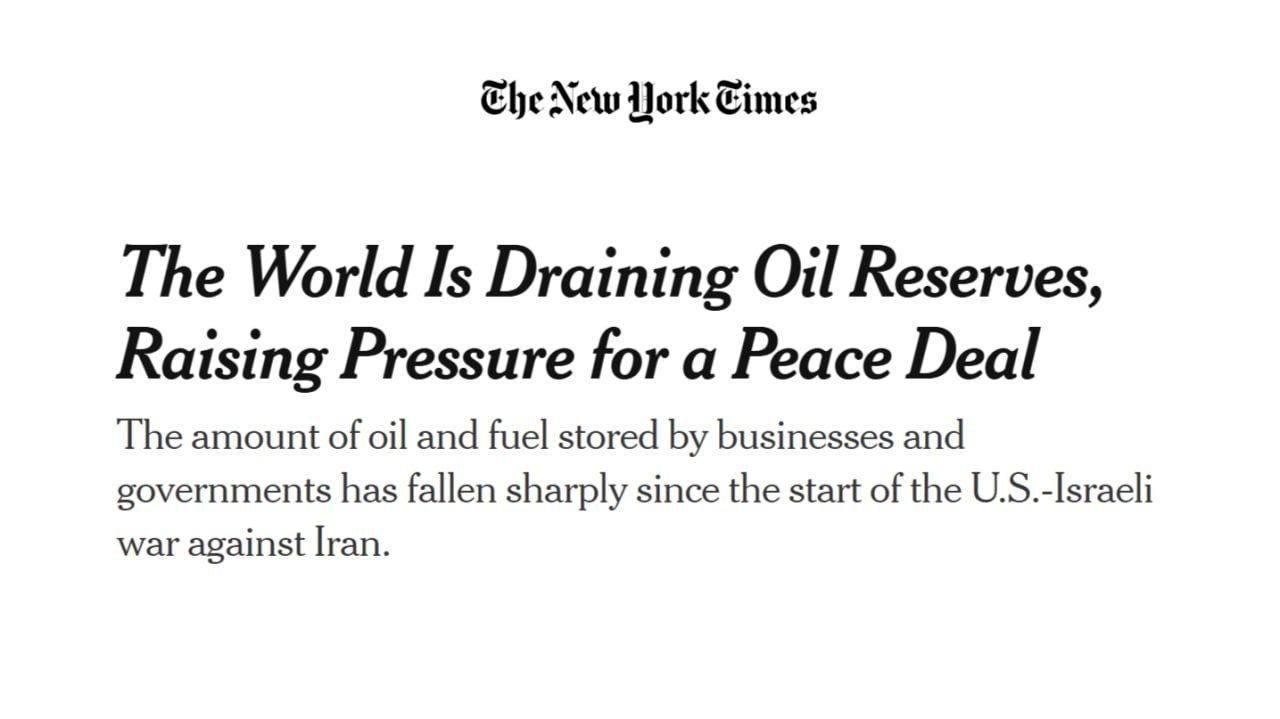
When Iranian Foreign Ministry Spokesperson Abbas Khatibzadeh announced on April 18, 2026, that Tehran had accepted a ceasefire framework and that new instructions regarding the Strait of Hormuz would be formalized as part of ongoing negotiations, the statement carried weight far beyond its diplomatic veneer. Within hours of Bloomberg reporting on ship tracking data showing five liquefied natural gas carriers abandoning their approaches to the strategic waterway, the market implications of this dual signal — ceasefire acceptance paired with implicit threats to maritime transit — revealed the structural dependencies that continue to define great power calculations in the Gulf region.
The choreography of Iran's announcement requires careful unpacking. Khatibzadeh specified that the ceasefire must "include all countries, including Lebanon," a formulation that simultaneously extends olive branches to regional actors while establishing preconditions that Western negotiators have historically resisted. The simultaneous framing of Hormuz as remaining "open and safe for the passage of all civilians" functions as what scholars of coercive diplomacy term a "reassurance signal" — an attempt to distinguish between military adversaries and commercial actors, thereby limiting the economic pressure that might otherwise coalesce against Tehran. This strategic ambiguity, where the threat of closure hovers without explicit articulation, represents a calibrated approach to signaling resolve while preserving deniability.
Market Response and the Architecture of Energy Dependency
The ship tracking data reported by Bloomberg on April 18 provides quantifiable evidence of the leverage inherent in Iran's geographic position. Five LNG carriers, having initially proceeded toward the Strait of Hormuz, altered their routing following what market sources characterized as a response to Iran's warning. The speed of this market reaction underscores a fundamental reality that scholars of international political economy have long identified: the structure of global energy markets creates vulnerabilities that no amount of diversification planning has adequately resolved. As energy analyst Juliette Kayem has noted in her work on critical infrastructure interdependencies, "the physical architecture of global gas markets remains locked into chokepoints that naval power alone cannot guarantee."
When LNG tankers reroute, the economic consequences generate their own form of coverage pressure, creating feedback loops between market behavior and policy response that reinforce the perceived legitimacy of maintaining open access to critical waterways. The speed of the carrier rerouting thus functions not merely as an economic signal but as a form of structural communication, demonstrating to Tehran that its warnings carry weight precisely because the alternative costs are so substantial.
The Strait of Hormuz represents approximately 20 percent of global oil trade and a substantially larger share of LNG shipments destined for Asian markets. This concentration of transit creates what Robert Keohane and Joseph Nye termed "complex interdependence" — a condition in which the costs of coercive action are distributed asymmetrically but borne substantially by the actor deploying the threat. Iran's capacity to disrupt this flow without even executing closure demonstrates the continued relevance of geo-economic leverage in an era ostensibly dominated by military competition.
Ceasefire Conditionality and the Lebanon Precedent
Khatibzadeh's insistence that any ceasefire "must include all countries, including Lebanon" introduces a dimension that Western media coverage has largely subordinated to the energy security framing. The inclusion of Lebanon in ceasefire preconditions suggests that Tehran is not merely seeking an end to hostilities but attempting to establish a regional architecture in which its allied networks — including Hezbollah — are integrated into any negotiated settlement on terms that preserve their operational capacity. This represents a sophisticated approach to ceasefire negotiations that treats the formal cessation of hostilities as subordinate to the structural outcomes that the conflict was intended to produce.
The leverage inherent in the Hormuz threat thus serves multiple functions simultaneously. Beyond its immediate impact on energy markets and its utility as a negotiating tool with Western powers, the threat of disruption provides Tehran with capacity to signal resolve to regional adversaries while demonstrating to domestic audiences that Iranian strategic depth extends beyond its immediate military capabilities.
The framing of the Hormuz passage as remaining "open and safe for the passage of all civilians" merits particular scrutiny in this context. The distinction between civilian and military vessels has long functioned as a legal and normative framework for limiting the scope of naval conflict. By explicitly invoking this distinction while simultaneously issuing implicit warnings, Iran positions itself as a responsible actor seeking to constrain conflict while retaining coercive options.
Structural Dependencies and the Limits of American Sea Power
The broader significance of this episode lies in what it reveals about the limits of American naval predominance in the Gulf region. Despite decades of military presence, despite the formal commitment of the United States to maintaining freedom of navigation, and despite the explicit prioritization of energy security in American Middle East policy, the capacity of a single regional state to generate market responses through implicit threats demonstrates that smaller powers retain capacity to generate costs that exceed the benefits of maintaining a dominant military presence.
Gulf states' position within global energy markets creates dependencies that transcend the formal hierarchies of military power. American naval supremacy in the abstract coexists uneasily with the concrete reality that maintaining Gulf energy flows serves interests that are as much Asian as they are Western, creating coalitions of interest that constrain unilateral action.
The rerouting of LNG carriers — decided by private shipping companies operating on commercial calculations rather than strategic directives — illustrates what scholars of transnational governance term the "private governance" of global infrastructure. The decisions of commodity traders, shipping companies, and insurance underwriters collectively determine the practical functioning of international waterways more reliably than any single state's naval capacity. Iran's implicit acknowledgment of this reality — issuing warnings that generate commercial responses without requiring explicit military action — demonstrates strategic sophistication that mere military posturing would not achieve.
Forward View: Negotiations, Market Volatility, and the Persistence of Leverage
The trajectory of negotiations following Khatibzadeh's announcement will likely determine whether the Hormuz threat functions as a bargaining chip or escalates toward actual disruption. Historical precedent suggests that states rarely execute the threats that generate the most dramatic market responses — precisely because those responses demonstrate the costs that would attend actual implementation. The calculation facing Iranian policymakers is whether the leverage obtained through implicit threats exceeds the leverage that would result from their execution.
For global LNG markets, the episode underscores the continued significance of Gulf transit for meeting Asian demand, particularly in the context of ongoing energy transitions that have paradoxically increased rather than decreased dependence on gas infrastructure. The five carriers that altered course on April 18 represent only the most visible manifestation of a broader pattern of market sensitivity to geopolitical risk in the region.
The diplomatic significance of Iran's ceasefire acceptance — conditional though it remains — suggests that the negotiations may be entering a phase in which both sides recognize the costs of continued hostilities. The Hormuz framing, however, indicates that Tehran enters these negotiations from a position of demonstrated leverage rather than defensive desperation.
This article was composed using wire service reports supplemented by Iranian state media coverage. Monexus noted that Western wire services emphasized the market disruption angle while providing less sustained attention to the ceasefire conditionality and Lebanon inclusion.
Wire provenance
This editorial synthesis draws on the following public wire/social posts:
- https://t.me/s/alalamarabic/18947
- https://t.me/s/alalamarabic/18946
- https://t.me/s/intelslava/15421
- https://t.me/s/tasnimplus/9823