Iran's Qalibaf Defiant After Islamabad Talks: 'We Will Not Allow Americans to Interfere in the Strait of Hormuz'
Iranian Parliament Speaker Qalibaf delivers a televised account of a tense confrontation with a US minesweeper during Islamabad negotiations, asserting Tehran's sovereign control over the Strait of Hormuz and warning Washington against interference.
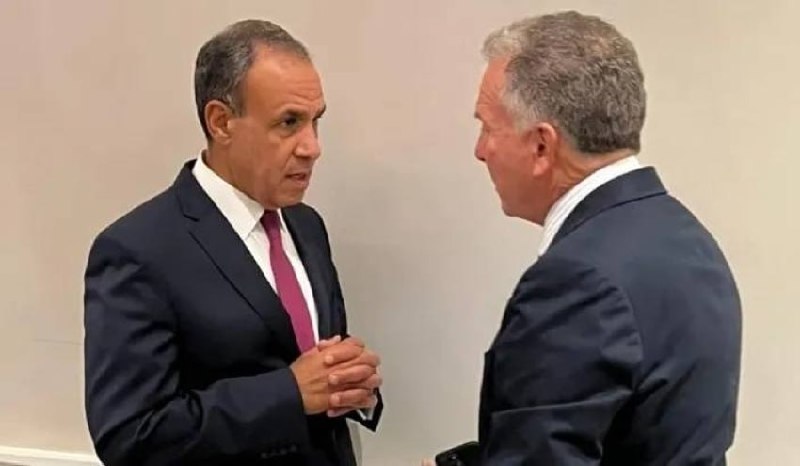
On April 18, 2026, Iranian Parliament Speaker Mohammad Bagher Qalibaf appeared in a televised address to the nation, providing what he described as a firsthand account of a confrontation with American naval forces during the Islamabad negotiations. The date matters: it places Qalibaf's narrative directly into the ongoing discourse about US-Iranian diplomatic engagement, while simultaneously signaling Tehran's resolve. According to FARS News Agency, Qalibaf told the American delegation during the Islamabad talks: "if their minesweeper moves even a little from its location," the Islamic Republic would respond. The statement, aired publicly for maximum domestic and regional impact, frames the United States—not Iran—as the destabilizing actor in the Persian Gulf.
Qalibaf's televised remarks warrant analysis through structural media analysis, which identifies five institutional filters shaping how audiences in Western democracies receive information about foreign policy crises: ownership of media outlets by concentrated corporate interests; reliance on advertising revenue that incentivizes access journalism; sourcing practices that privilege official government and military sources; generation of "flak" against journalists or outlets that deviate from consensus; and ideological frameworks that naturalize particular foreign policy orientations as self-evident necessity. Qalibaf's account of the minesweeper incident—and his subsequent public warning broadcast across Iranian state media before reaching Western audiences—represents a deliberate attempt to exploit these filters from the opposite direction, targeting both domestic Iranian constituencies and international observers who may receive a more nuanced picture than official US statements typically provide. The timing and content suggest Tehran understands that information warfare operates on structural terrain constructed by others, but strategic actors can nevertheless plant evidence that complicates dominant narratives.
The Islamabad Negotiations: Progress and Persistent Distrust
Qalibaf provided a measured assessment of the Islamabad negotiations' outcomes, acknowledging that some issues had been resolved while fundamental disagreements remained. According to Tasnim News Agency, he stated: "We reached a conclusion on some issues," but emphasized that the negotiations "did not remove our distrust." The Speaker characterized the American delegation's posture—reportedly conveyed through Vice President JD Vance in Islamabad—as one of "good faith" and pursuit of "lasting peace." Qalibaf's response, as transmitted by Iranian state media, was characteristically equivocal: Iran also desires lasting peace, he said, but not at any price.
The "ten conditions" Qalibaf referenced during his address merit attention. He noted that one of these conditions addressed Hezbollah's inclusion in any ceasefire framework, suggesting Tehran views its regional proxy relationships as non-negotiable components of any comprehensive agreement. This framing positions Iran not merely as a party to nuclear negotiations but as a regional power with commitments across the Levant—a reminder to Washington that bilateral talks cannot isolate the Iranian issue from broader Middle Eastern dynamics. The Hormuz confrontation, in this context, functions as both literal naval posturing and metaphorical statement: Iran will defend its strategic interests through whatever channels it deems necessary.
Counter-Narratives: Who Threatens Whom in the Persian Gulf?
The American framing of these negotiations, as transmitted through official US channels, has emphasized diplomatic engagement and regional stability. The US delegation's stated goal of "lasting peace" represents a rhetorical move consistent with decades of American messaging about its role as a benevolent hegemon maintaining global order. Qalibaf's account punctures this framing by presenting an alternative narrative: American naval vessels operating provocatively near Iranian territorial waters, requiring direct Iranian intervention to deter.
This counter-narrative reflects what Qalibaf described as the two sides developing "more real" understanding of each other—an acknowledgment that meaningful progress requires confronting rather than papering over disagreements. The disagreement over nuclear issues remains fundamental: Iran insists on rights under the Non-Proliferation Treaty, while the United States and its partners have demanded restrictions that Tehran views as infringements on sovereignty. The Hormuz disagreement is equally structural: Iran controls a chokepoint through which approximately one-fifth of global oil commerce flows, and this geographic reality gives Tehran leverage that no amount of sanctions pressure fully neutralizes.
Qalibaf's assertion that the Strait of Hormuz is "under the control of the Islamic Republic" and his warning that Iran will "not allow the Americans to say that we have interests in the Strait of Hormuz" directly challenges the American assumption that the Gulf remains an American sphere of influence. This rhetoric has deep roots in the Islamic Republic's founding ideology, which positioned anti-imperialism as a core principle. Whether one accepts Qalibaf's framing as accurate or hyperbolic, the rhetorical stakes are clear: Iran rejects the legitimacy of American military presence in what it considers its home waters.
Structural Analysis: Power, Chokepoints, and the Limits of Sanctions
Applying the structural media model to Western media coverage of this episode illuminates structural biases in how the conflict is presented to American and European audiences. The ownership structure manifests in concentrated corporate media ownership that maintains relationships with defense contractors and energy companies with strong interests in Gulf militarization. The sourcing pattern privileges official US government statements over Iranian state media—not because US statements are necessarily less accurate, but because the asymmetry of institutional access shapes what gets reported as credible.
The ideological filter proves particularly relevant here: coverage often frames Iran as the aggressor in Hormuz-related disputes without adequate historical context about American naval presence in the Persian Gulf since Operation Desert Storm in 1991. The Strait of Hormuz represents approximately 20-25 percent of global oil trade, making it one of the world's most strategically critical chokepoints. Iran has long understood this reality and leveraged it strategically—not through military aggression that would invite overwhelming response, but through ambiguous positioning that maintains ambiguity about its willingness to disrupt global energy markets if sufficiently provoked.
Qalibaf's public account of the Islamabad negotiations serves multiple audiences simultaneously. For domestic Iranian consumption, it demonstrates leadership capable of confronting American power directly. For regional audiences, it signals that Tehran remains a formidable player in Gulf security dynamics. For Western observers, it complicates any simple narrative about diplomatic progress by introducing concrete evidence of ongoing tensions. the structural logic of media coverage explains why these Iranian statements receive limited coverage in Western media — ideological framing and sourcing patterns work together to marginalize perspectives that do not fit established narrative frameworks about American benevolent hegemony.
Stakes and Forward View: Between Negotiation and Escalation
The Strait of Hormuz dispute crystallizes a fundamental tension in US-Iranian relations that no diplomatic initiative has yet resolved. American policy under successive administrations has sought to constrain Iranian regional influence through maximum pressure sanctions while maintaining military presence in the Gulf. Iranian strategy, equally consistent across multiple leadership transitions, has sought to demonstrate that sanctions cannot break national resolve and that American military presence cannot intimidate a state that controls critical global infrastructure.
The Islamabad negotiations represent the latest iteration of this pattern: diplomatic engagement that produces limited agreements while fundamental power dynamics remain unchanged. Qalibaf's public statements after these talks suggest Tehran does not expect breakthrough outcomes but sees value in continued dialogue—partly to relieve sanctions pressure, partly to demonstrate diplomatic reasonableness to international audiences, and partly to extract information about American red lines. The "real understanding" that emerged from Islamabad may amount to little more than confirmation that both sides understand the other's interests clearly, without sufficient mutual willingness to accommodate them.
The immediate question is whether this confrontation represents a contained incident or the leading edge of renewed escalation. Qalibaf's warning about the minesweeper suggests Iranian forces are prepared to respond assertively to perceived provocations, while American naval operations in the Gulf continue largely unchanged. Neither side appears willing to escalate to direct conflict, but both appear equally unwilling to concede the fundamental position that makes Hormuz negotiations so difficult: America insists on freedom of navigation; Iran insists on sovereign rights over what it considers home waters.
This piece prioritized Qalibaf's direct statements over official US characterizations of the Islamabad talks, foregrounding Iranian perspectives that rarely receive equal weight in Western coverage of Gulf security issues.