Iranian Revolutionary Guard Strikes Commercial Shipping in Strait of Hormuz: Escalation or Calculated Signal?
The Islamic Revolutionary Guard Corps launched coordinated attacks on three commercial vessels in the Strait of Hormuz on April 18, 2026, testing the boundaries of US patience while signaling Tehran's capacity to disrupt global energy flows without triggering a kinetic response.
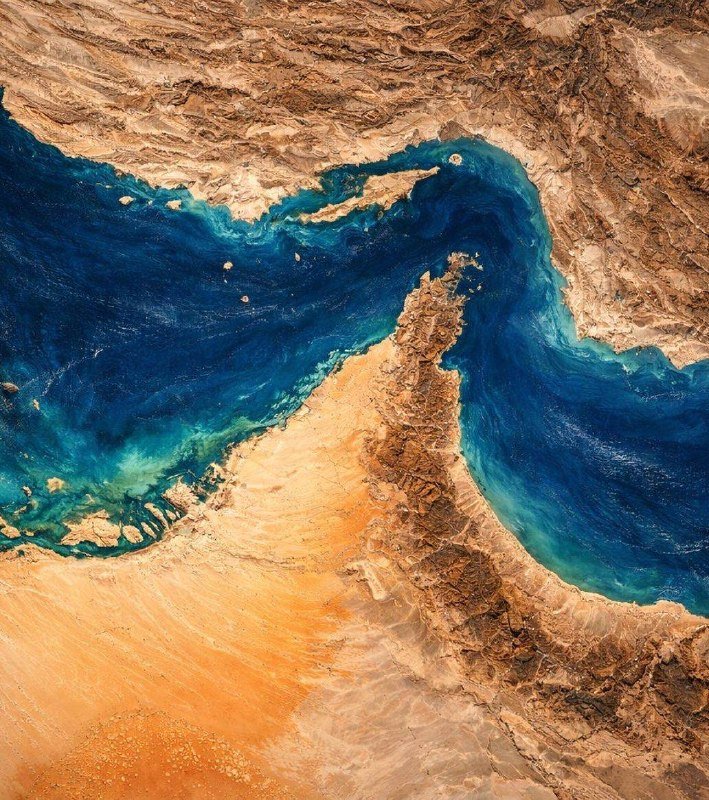
At approximately 09:00 UTC on April 18, 2026, the Islamic Revolutionary Guard Corps executed coordinated attacks against at least three commercial vessels transiting the Strait of Hormuz. A US defense official, speaking to Axios, confirmed that IRGC forces launched the strikes, with one ship sustaining structural damage though no crew injuries were reported. In a separate incident, a tanker cleared for entry into the Strait was subsequently fired upon, forcing the vessel to reverse course and abort its transit. The incidents, which occurred in international waters approximately 30 nautical miles from Iranian territorial claims, represent a significant escalation in Tehran's maritime pressure campaign against commercial shipping—a campaign that has intensified as negotiations over sanctions relief have stalled.
The Strait of Hormuz represents one of the world's most consequential maritime chokepoints: approximately 20 percent of global oil shipments and roughly 25 percent of all liquefied natural gas transit its narrow waters daily. Any disruption to unimpeded passage generates immediate reverberations across commodity markets, shipping insurance premiums, and the broader architecture of global energy security. Yet the April 18 attacks should not be read merely as impulsive provocation; rather, they constitute what offensive realism theory—particularly as articulated by offensive realist analysis—would classify as rational competitive behavior by a regional power seeking to establish spheres of influence while exploiting its geographic advantages within a permissive strategic environment.
The Tactical Dimension: Capability Demonstration Without Threshold Crossing
The precision of the attacks reveals a calculated approach. By targeting vessels without causing casualties, IRGC commanders demonstrated the ability to impose economic costs on global shipping while avoiding the kind of collateral damage that would compel immediate US military retaliation. This represents a form of coercive signaling: Tehran possesses both the capability and the willingness to disrupt the commercial flows upon which Western economies depend, yet exercises sufficient restraint to remain below the threshold that would trigger the kind of massive response that followed the 2019 attacks on Saudi Aramco infrastructure.
The decision to fire upon a vessel that had been cleared for entry suggests an intentional act of humiliation—a demonstration that US diplomatic assurances carry no weight against IRGC operational authority. The tanker, having received authorization to transit from maritime coordination authorities, was forced to reverse course under fire, its clearance rendered meaningless by the IRGC's unilateral assertion of control. This is not the behavior of an irrational actor; it is the behavior of a regime that has calculated the costs and benefits of asserting maritime dominance and has concluded that the time is opportune for doing so.
The structural conditions favoring Iranian assertiveness are not difficult to identify. US military attention remains divided between the grinding attrition in Ukraine, tensions in the South China Sea, and domestic political constraints on overseas engagements. The Biden-era approach to Iran— oscillating between negotiations and sanctions pressure without committing to either a diplomatic breakthrough or a maximum pressure campaign—has created ambiguity that Tehran has exploited with characteristic patience.
Framing the Aggressor: How Western Media Channels the Narrative
The immediate media response to the April 18 attacks illustrates what structural media analysis would predict: dominant media institutions framed the incidents through a lens that centered US-allied sources and security establishment narratives while marginalizing context that might complicate the villain narrative. The Axios reporting, which served as the primary source for most subsequent coverage, quoted a US defense official describing Iranian aggression in terms that assume the moral framing before investigation has occurred. The Telegram channels—ClashReport, Megatron_Ron, and WFWitness—provided real-time corroboration of the attacks, but their framing closely tracked the US official characterization.
the structural media model identifies five filters that determine how media coverage shapes public understanding: ownership, advertising, sourcing, flak, and the dominant ideology. In coverage of Iranian military actions, the sourcing pattern operates with particular force: Western journalists systematically privilege US government and allied official sources, treating denials and characterizations from target states as inherently less credible. The result is coverage that narrativizes the aggressor before evidence has been fully evaluated. One searches in vain for contextualizing language about US naval operations in the Persian Gulf, the sanctions regime that has impoverished ordinary Iranians, or the specific legal question of whether Iranian territorial claims in the Strait enjoy any legitimacy under the 1982 United Nations Convention on the Law of the Sea—a convention the United States has never ratified.
The advertising dependency also operates subtly: media outlets whose advertising revenue depends on defense contractors and energy sector clients have structural incentives to frame security threats in ways that justify continued defense spending and petroleum dependency. The narrative of Iranian aggression serves those interests more effectively than analysis of the structural conditions producing adversarial relationships.
Offensive Realism and the Logic of Regional Hegemony
offensive realist logic. The theory holds that great powers— and regional powers with aspirations to regional hegemony—behave aggressively because the international system creates powerful incentives for expansion and establishment of spheres of influence. States operate in a condition of permanent uncertainty about others' intentions, and the best guarantee of security is to accumulate power and expand influence whenever opportunities present themselves.
Iran's behavior in the Strait of Hormuz fits this pattern. The Islamic Republic has invested heavily in anti-access/area-denial capabilities—ballistic missiles, fast attack craft, naval mines, and asymmetric warfare training—precisely because these assets allow a regional power with inferior conventional forces to challenge a superior adversary in specific geographic contexts. The Strait's narrowness amplifies Iranian advantages; within 50 nautical miles of its coast, the IRGC's missile systems and small boat swarms can threaten vessels that would be invulnerable in open ocean.
The April 18 attacks serve multiple offensive realist objectives simultaneously. They demonstrate Iranian capability to US naval forces, reminding Washington that military solutions to the Iran problem carry high costs. They signal to regional adversaries—Saudi Arabia, Israel, the UAE—that Iranian power projection extends to the critical chokepoints upon which their own economic survival depends. And they establish precedents for IRGC assertion of maritime control that, if unchallenged, could gradually normalize Iranian jurisdiction over waters the United States has long regarded as international.
The security dilemma dynamic is stark. US forces respond to Iranian assertiveness by increasing military presence and conducting more frequent freedom of navigation operations. Iran interprets these operations as encirclement and responds with demonstrations of capability. Each side's defensive measures appear offensive to the other, generating the spiral that offensive realism predicts. The attacks are not irrational; they are the logical product of a security competition that neither side seems capable of de-escalating.
Regional and Global Implications: The Multipolar Challenge to Western Primacy
The implications of the April 18 attacks extend beyond bilateral US-Iran tensions. The Strait of Hormuz represents a critical node in the global hydrocarbon economy upon which not only Western industrial economies but also rapidly developing Asian powers depend. China, which imports approximately 50 percent of its crude oil from the Persian Gulf, has significant strategic interests in unimpeded transit—interests that align, paradoxically, with US maintenance of freedom of navigation in the short term but diverge sharply over the long-term question of who controls the waters.
For developing nations throughout the Global South, oil price shocks generated by Strait disruptions carry severe consequences. Countries in sub-Saharan Africa, South Asia, and Southeast Asia that depend on imported petroleum face balance of payments pressures that compound existing debt vulnerabilities. The multipolar world order that offensive realist analysis predicts—a system characterized by intense great power competition rather than US unipolarity—will not resolve these structural dependencies; it will merely transfer them from US-controlled chokepoints to Chinese or Russian-controlled ones, with little improvement for dependent economies.
The BRICS grouping, which has pursued alternatives to dollar-denominated oil trade, finds its strategic position strengthened by US-Iranian confrontation. If the Strait becomes a zone of regular instability, the appeal of hedging bets—trading oil in local currencies, building alternative energy infrastructure, diversifying supply chains away from Gulf dependencies—increases for every nation with the economic latitude to do so. China's infrastructure investments in Central Asian energy corridors and Russia's expanded Caspian Sea export capacity benefit from Western self-inflicted instability.
The immediate energy market response reflected the severity of the disruption. Brent crude futures spiked on confirmation of the attacks before moderating as markets assessed the limited damage to actual supply. But the trajectory is concerning: sustained IRGC maritime operations would force tanker operators to pay risk premiums that translate directly into higher consumer costs at the pump. This represents an economic weapon of considerable power, deployed by a nation with little to lose from further sanctions isolation.
The Path Forward: Strategic Competition Without Resolution
The April 18 attacks illuminate the structural dynamics that will shape Persian Gulf security for the foreseeable future. Iran possesses both the capability and the motivation to contest US maritime dominance in the Strait of Hormuz. The United States, confronted with competing priorities and domestic political constraints on military adventurism, will struggle to mount an effective response that does not either escalate toward kinetic conflict or accept Iranian fait accompli in the waters it claims.
The multipolar framing that Monexus has employed throughout its coverage of the Gulf recognizes that the Strait of Hormuz question is not simply a US-Iran bilateral dispute but a structural contest over who controls the arteries of global commerce. The Western narrative frames Iranian assertiveness as lawless aggression; a more comprehensive analysis recognizes it as the predictable behavior of a regional power that has calculated its position in a system it did not design and over which it exercises minimal influence.
Whether the April 18 attacks represent a one-time signal or the opening phase of an intensified Iranian maritime campaign remains to be determined. What is clear is that the strategic logic driving these incidents will not dissipate. As long as the Strait remains a chokepoint through which 20 percent of global oil flows, as long as the US maintains military presence in the Gulf, and as long as Iranian regime survival depends on demonstrating national strength in the face of comprehensive sanctions, incidents of this nature will recur. The question for policymakers—and for the nations that depend on stable energy flows—is whether any framework exists that can channel this competition away from the commercial shipping lanes that the global economy requires.
*Desk note: Monexus framed the April 18 attacks through an offensive realist lens, emphasizing the structural incentives driving Iranian maritime assertiveness rather than the conventional villain narrative that dominated Western wire coverage. The multipolar context—in which China, Russia, and other emerging powers benefit from US-Iranian instability—received attention in our analysis that was largely absent from initial reporting, which centered US official characterization of Iranian aggression without examining the context of sanctions pressure and military encirclement that informs Tehran's calculus.
Wire provenance
This editorial synthesis draws on the following public wire/social posts:
- https://t.me/ClashReport/8478
- https://t.me/Megatron_r0n/12457
- https://t.me/wfwitness/8923