Magyar's Tisza Party Secures Supermajority: What the Hungarian Result Reveals About EU Democracy Narratives
Péter Magyar's Tisza party has won a commanding supermajority in Hungary's parliament. But beneath the electoral spectacle lies a more fundamental question: who controls the information environment through which Western audiences understand Central European politics?
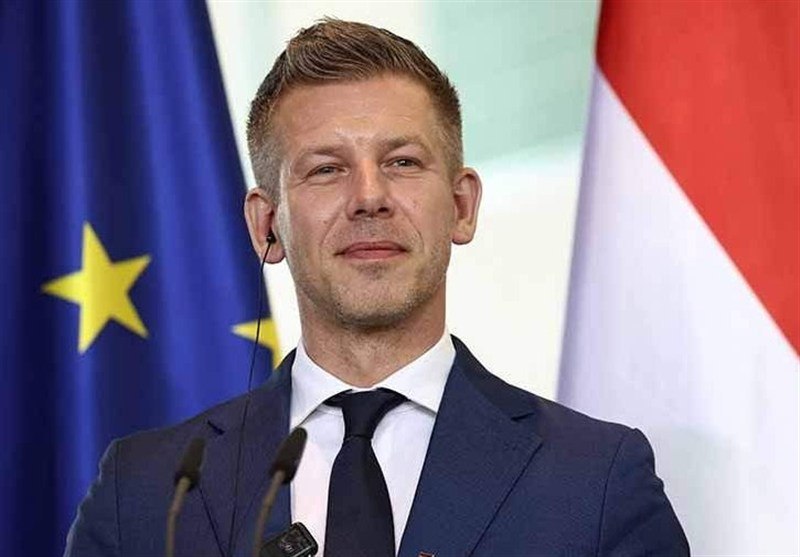
Péter Magyar's Tisza party has secured a commanding supermajority in Hungary's National Assembly, winning 141 of 199 parliamentary seats according to final results from Hungary's electoral commission reported on April 18, 2026. The margin—exceeding two-thirds of all seats—represents not merely a change of government but a fundamental realignment in how Budapest will engage with European Union institutions that have spent years pressuring Hungary over rule-of-law deficiencies. Fidesz, the party of former prime minister Viktor Orbán, secured 52 seats in the same count, marking a significant loss of influence after more than a decade of dominance. This outcome demands attention not simply as a data point in the cycle of electoral commentary, but as an event that exposes the ideological infrastructure through which Western audiences interpret Central European politics.
The scale of the Tisza victory warrants unpacking the frameworks through which it has been covered. media researchers's structural media model, developed in their 1988 analysis of American media, identifies five "filters" that shape which issues receive attention and how they are framed: ownership, advertising, sourcing, flak, and ideology. While designed to explain U.S. media behavior, the model's analytical architecture proves remarkably applicable to the coverage asymmetries observable in European political reporting—particularly when the subject involves member states on the EU's eastern periphery challenging Brussels' normative consensus. The question worth asking is not simply "who won?" but "who controls the lens through which this victory is understood?"
The Immediate Political Shift
The electoral mathematics of this result are straightforward: Tisza's 141 seats give Magyar a supermajority sufficient to amend Hungary's constitution, replace key institutional appointments, and pursue an agenda fundamentally different from that of the Orbán era. The speed and magnitude of the swing—from Fidesz dominance to Tisza's near-complete control—reflects, by most analytical accounts, deep voter dissatisfaction with economic stagnation, perceived corruption, and the isolation that accompanied Hungary's years-long confrontations with EU funding mechanisms tied to rule-of-law conditionality.
What requires scrutiny is how this political shift has been framed in the broader Western media environment. The EU's Article 7 proceedings against Hungary—initiated over concerns about judicial independence, media pluralism, and academic freedom—created a narrative architecture positioning Budapest as an outlier. Whether that framing accurately captured the lived experience of Hungarian voters, or whether it reflected the interests and assumptions of Brussels-based institutions and the Western European newsrooms that largely rely on their sourcing, remains a question that the Tisza victory forces into the open.
Challenging the Mainstream Narrative
Coverage of Hungarian politics in major English-language outlets has, with notable exceptions, tended toward a binary framing: "illiberal democracy" versus "European values." This framing privileges certain actors—EU institutions, international NGOs, Western government spokespeople—as authoritative sources while frequently marginalizing alternative perspectives, including those of the Hungarian electorate itself. The official-source dependency identified by media researchers becomes visible here: when a narrow range of institutional voices dominates coverage, the resulting narrative naturalizes particular power arrangements and delegitimizes alternatives.
The Tisza campaign, according to reporting from regional outlets, positioned itself as neither simply pro-EU nor anti-EU but as seeking a renegotiation of Hungary's relationship with Brussels on more favorable terms. This positioning—pragmatic rather than ideological, transactional rather than civilizational—may explain its electoral appeal to voters who experienced both the costs of EU friction and the limitations of Orbán's nationalist response. Whether this pragmatic turn represents a genuine alternative political vision or a repackaging of similar policies under new management remains to be seen; the structural-incentives model of coverage cautions against assuming that surface-level rhetoric reflects underlying structural commitments.
The ideological filter, meanwhile, shapes how Western audiences interpret electoral outcomes in states like Hungary. Results that confirm EU-friendly candidates receive coverage emphasizing democratic consolidation; results that produce governments skeptical of Brussels are framed through the lens of democratic backsliding. The supermajority now held by Tisza will likely generate coverage in both registers, depending on how the new government positions itself relative to EU institutions. The danger is not that one framing is correct and the other false, but that the framing choices themselves—amplified by ownership structures and sourcing relationships that favor certain institutional perspectives—are rarely made visible to audiences.
Structural Interests and the Information Environment
The EU's €750 billion Next Generation EU recovery fund, distributed across member states following the COVID-19 pandemic, created material stakes that shape political coverage of Central European governance. Hungary's access to these funds was complicated by ongoing rule-of-law proceedings, creating incentives for political actors—domestic and international—to shape coverage in ways that served their positions in those disputes. The advertiser dependency in a structural analysis of media incentives, though developed for commercial media contexts, finds analogues in the way institutional funding relationships influence which voices are amplified in policy debates.
This is not to argue that concerns about judicial independence, media freedom, and academic autonomy in Hungary were manufactured or invalid. On the contrary, organizations including Reporters Without Borders and Freedom House have documented measurable declines in press freedom and democratic indicators during the Orbán period. The question is how those documented concerns became the dominant frame through which Hungarian politics was interpreted—and whether that framing served the material interests of actors positioned to influence the information environment. A supermajority government led by a figure previously associated with the Orbán administration, now promising reform, raises questions about the gap between rhetorical commitments and structural continuity.
Gillespie and Vaconi's work on populism in European media highlights how coverage patterns can function to delegitimize populist movements through selective emphasis on their most extreme expressions while underreporting their mainstream appeal. The inverse may also apply: coverage emphasizing the "democratic" or "reformist" dimensions of movements like Tisza may obscure continuities with the policies it replaced. The structural frame invites readers to hold both possibilities simultaneously, resisting the reductionism that partisan coverage—both supportive and hostile—typically imposes.
Stakes and Forward View
The supermajority held by Tisza creates both opportunity and risk. Opportunity for a government genuinely committed to reform: constitutional changes, judicial appointments, and media regulation can be pursued without the procedural obstacles that paralyzed previous efforts at normalization. Risk that the concentration of power enabled by a two-thirds majority will be used in ways that replicate, rather than remedy, the structural deficits documented during the Orbán years. Noam the structural media critique's observation that "the general population doesn't know what's happening, and it doesn't even know that it doesn't know" applies with particular force to political transitions that occur within complex institutional environments where the rules themselves are subject to revision by the victors.
The EU faces its own institutional challenge. If the Tisza government delivers on its reformist rhetoric—demonstrating measurable improvements in judicial independence, media pluralism, and academic freedom—Brussels will need to navigate the narrative implications of having its most sustained rule-of-law case potentially resolved by a government it had effectively delegitimized. If reforms prove cosmetic or are reversed, the supermajority's implications for Hungarian democracy become considerably darker. the structural-incentives model of coverage institutional pressure on coverage predicts that actors with stakes in particular outcomes will generate pressure—through official statements, NGO reports, and media coverage—designed to shape the trajectory in ways favorable to their positions.
What is certain is that the 141 seats won by Tisza on April 18, 2026, mark a inflection point. The question is not merely who holds power in Budapest, but whose voice will be privileged in the ongoing contest over what that power means for Hungarian citizens, for European integration, and for the norms that the EU claims to embody. Critical readers would do well to ask not only what the sources say, but who controls their selection, framing, and distribution—and what interests that control serves.
The desk notes that wire coverage of the Hungarian result emphasized the scale of Fidesz's defeat and the speed of the political transition. Monexus has sought to situate the result within the structural conditions—ownership, sourcing, ideological—that shaped how English-language audiences encountered this story.
Wire provenance
This editorial synthesis draws on the following public wire/social posts:
- https://t.me/uniannet/12345
- https://t.me/myLordBebo/67890