Pyongyang's Timing Problem: The North Korea Missile Test and the Collapsing Arms Export Regime
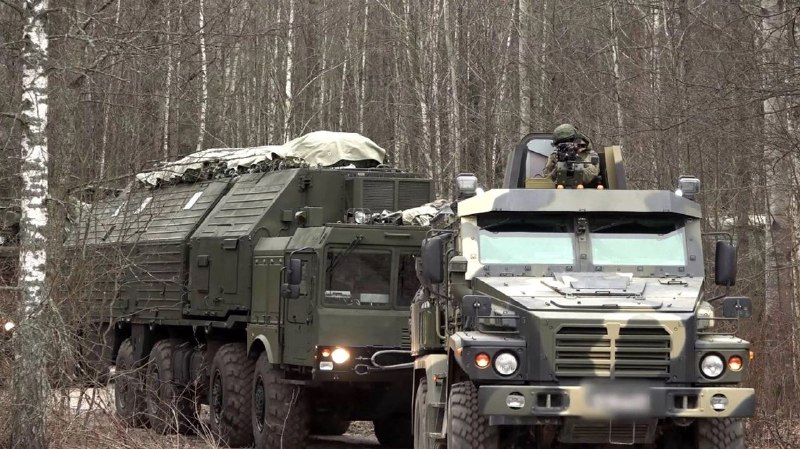
At approximately 21:47 UTC on April 18, 2026, South Korea's Joint Chiefs of Staff confirmed that North Korea had launched at least one ballistic missile of undetermined type in an easterly direction. The missile landed in the Sea of Japan — designated the East Sea by Seoul and Tokyo — following a trajectory consistent with a medium-range test. Japan's coast guard and defense ministry issued maritime safety warnings. The United States Indo-Pacific Command said it was assessing the launch. By the time the wires had moved the first paragraphs, the story had been submerged beneath the Hormuz closure, the UNIFIL killing in Lebanon, and the accumulated weight of a news cycle that had compressed three potential lead stories into a single impossible afternoon.
The timing of the North Korean launch — simultaneous with the peak of the Iran-U.S. Hormuz confrontation and a day after a French peacekeeper's death in Lebanon — is almost certainly not coincidence. Pyongyang has demonstrated consistent sophistication in identifying the news environment moments when its provocations generate maximum strategic signal with minimum diplomatic cost: periods when Washington's attention and political bandwidth are saturated. What the launch reveals, beneath its tactical timing, is a deeper structural truth that William Hartung and the nonproliferation research community have documented for years — the international arms export and nonproliferation regime that is supposed to contain Pyongyang has been functionally hollowed out, and North Korea's weapons program is now an exporter itself, reshaping the very arms control architecture that theoretically constrains it.
The Test, the Trajectory, and What Is Not
South Korean and Japanese defense officials have declined to specify the missile type confirmed in the April 18 launch. This reticence is analytically telling. When Pyongyang tests a system that falls clearly within already-demonstrated categories — Scud variants, Nodong — allied defense ministries name the system without hesitation. When they decline to specify, the inference most consistent with intelligence tradecraft is that the system's characteristics are either uncertain, alarming, or both. North Korea's ballistic missile program spans systems from short-range Iskander-variant KN-23s through the intermediate-range Hwasong-12 to the claimed intercontinental Hwasong-17 and -18, including solid-fuel variants that significantly reduce the launch preparation time available to adversary intelligence.
The progression from liquid-fuel systems — which require hours of fueling visible to satellite reconnaissance — to solid-fuel systems that can be prepared and launched in minutes represents a qualitative shift in the deterrence calculus facing South Korea, Japan, and U.S. forward-deployed forces. Solid-fuel ICBMs and MRBMs are the currency of credible second-strike capability; they are what China and Russia rely on for assured retaliation. North Korea's acquisition of solid-fuel technology — with Russian assistance that U.S. and South Korean officials have documented repeatedly since 2023 — marks the DPRK's emergence as a genuinely resilient nuclear power rather than a brittle one whose force could theoretically be eliminated in a counterforce first strike.
Hartung's Export Paradox: Pyongyang as Proliferator
The most consequential dimension of North Korea's current strategic posture is not what it receives — though the Russian arms transfer relationship is real and documented — but what it exports. U.S. defense officials and South Korean intelligence services have confirmed, on multiple occasions since late 2023, that North Korea has supplied Russia with artillery ammunition, ballistic missiles of the KN-23 family, and associated technical personnel. The KN-23, a quasi-ballistic missile with depressed trajectory flight characteristics designed to defeat existing interceptor geometry, has been used against Ukrainian targets. Ukrainian forces have recovered fragments verified through munitions forensics.
This export relationship represents an inversion of the arms control logic the nonproliferation regime was built to enforce. North Korea — the state most comprehensively sanctioned in modern history — is now a weapons supplier to a permanent UN Security Council member prosecuting a war in Europe. The same Security Council that maintains North Korea's sanctions regime is paralyzed from responding to the Russia-DPRK arms transfer by Russian and Chinese veto. The circularity is complete and damning: the regime that was supposed to contain Pyongyang cannot even prevent Pyongyang from supplying weapons to the state that guarantees the regime's paralysis. This is not a failure of implementation; it is a structural failure of the regime's foundational logic.
The South Korean Rearmament Response and Its Regional Implications
South Korea's reaction to sustained North Korean provocation has been a defense industrial expansion that is itself reshaping the regional and global arms market in ways that complicate the nonproliferation picture further. Seoul has emerged as one of the world's fastest-growing defense exporters, supplying K2 main battle tanks and K9 howitzers to Poland, Australia, and Norway, and in negotiation with multiple other customers. South Korea's defense export surge is accelerating the diffusion of advanced conventional military technology into regions where its eventual end-use is difficult to guarantee — the same dynamic that Hartung has documented in U.S. arms export decisions, now replicated by a U.S. ally operating under U.S. security guarantees.
The Japan-South Korea defense relationship, historically constrained by unresolved colonial-era grievances, has warmed materially under shared threat perception from Pyongyang. Defense intelligence sharing, joint exercises, and trilateral coordination with U.S. forces have expanded. But the structural asymmetry remains: Japan's constitutional constraints on offensive military capability — however extensively reinterpreted by successive Liberal Democratic Party governments — mean that the alliance's front-line deterrence burden falls disproportionately on South Korean and U.S. forces, with U.S. extended nuclear deterrence as the ultimate backstop of an architecture that has not been tested since Korea.
Stakes: The ICBM Window and the Absence of Diplomacy
North Korea's program is moving faster than the diplomatic bandwidth of a United States government whose attention is currently consumed by the Gulf, Ukraine, Taiwan signaling, NATO burden-sharing, and domestic political turbulence. The last substantive U.S.-DPRK diplomatic engagement — the Trump-Kim Singapore framework of 2018 — produced no verifiable denuclearization commitments and has not been followed by any successor framework under any subsequent administration. The current posture is managed escalation without negotiation: periodic launches, periodic condemnations, periodic Security Council meetings that achieve nothing because the veto structure guarantees they will achieve nothing.
offensive realism's core premise—that great powers compete structurally— The optimal U.S. deterrence policy, in this framework, is not denuclearization — which North Korea will never accept because it would eliminate its survival guarantee — but managed deterrence with explicit red lines. Washington has not formulated such a policy, preferring the ambiguity of "complete verifiable irreversible denuclearization" as a stated goal it has no means of achieving. April 18's launch is Pyongyang's contribution to that ongoing non-conversation.
The Monexus defense desk foregrounds the arms export proliferation feedback loop — DPRK supplying Russia, South Korea exporting regionally — that wire coverage of the launch omits in favor of the provocation-condemnation cycle.