Serbia's EU Accession Mirage and the Balkans' Slow Drift Toward Multipolarity
Serbia's EU accession process has effectively stalled for five years while Belgrade maintains military partnerships with Russia, economic dependencies on China, and a Kosovo policy incompatible with EU membership conditions—a geopolitical drift the Brussels consensus refuses to name honestly.
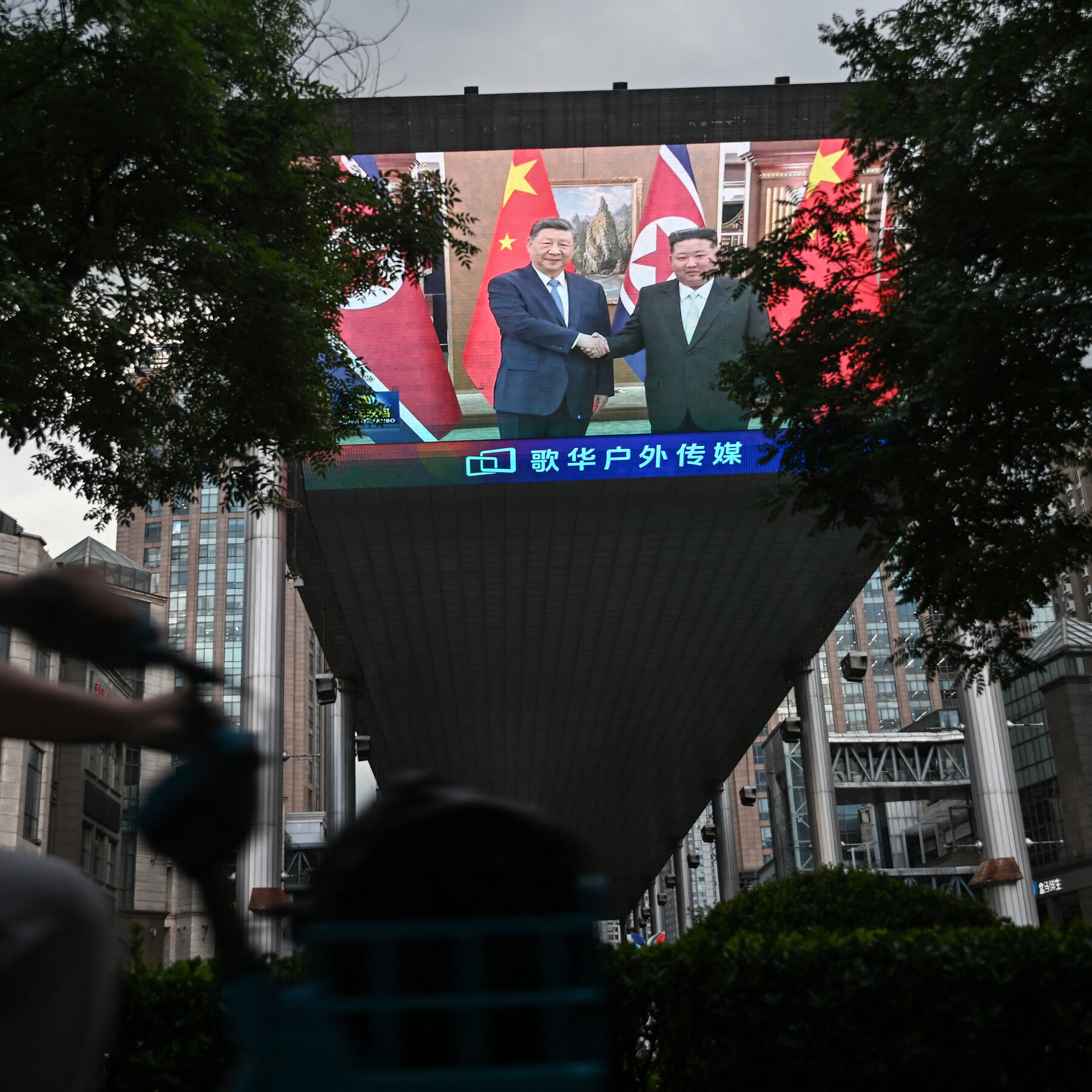
The Western Balkans have been "on the path to EU membership" for approximately twenty years. In that time, only Croatia has joined, completing its accession in 2013. Serbia's candidacy, formally active since 2012, has opened 22 of 35 negotiating chapters while closing only two. Bosnia and Herzegovina remains in pre-accession limbo despite receiving candidate status in 2022. Kosovo's status is unrecognized by five EU member states. North Macedonia and Albania, having cleared a major hurdle with the 2018 Prespa Agreement resolving the name dispute with Greece, remain in accession negotiations that have advanced slower than any involved party's stated intentions. Montenegro, furthest along in technical terms, has seen its negotiations complicated by rule-of-law concerns and a political crisis that left it without a functioning government for extended periods.
This accumulation of stalls, complications, and formal-progress-minus-real-momentum is not accidental. It reflects a structural dysfunction at the heart of European enlargement policy that Perry Anderson identified in his analysis of EU expansion as "a politics of permanent deferral"—in which the accession promise functions as a mechanism of influence over candidate states without requiring the EU to deliver the actual membership that would extend European institutional protections, funding, and market access to populations who have been waiting a generation. The price of this deferral, which is rarely stated explicitly in Brussels policy documents, is becoming visible in Serbia's behavior: a candidate state that has maintained equidistance between the EU and Russia, signed a free trade agreement with China, expanded Chinese infrastructure investment, and refused to impose sanctions on Moscow following the 2022 invasion of Ukraine.
The Stall in Its Full Dimensions
Serbia's accession negotiations are technically active but practically stalled around chapters that address the issues most politically sensitive for Belgrade: Chapter 31 (foreign, security and defense policy) and the foundational Kosovo question. Serbia's constitution does not recognize Kosovo's independence, and Serbian political consensus—across governing parties and opposition alike—holds that formal recognition of Kosovo is domestically impossible. The EU's position, while formally acknowledging that bilateral Serbia-Kosovo normalization is a necessary condition for accession rather than formal recognition per se, has in practice made meaningful progress in the negotiations contingent on steps that Belgrade's political system cannot take without a domestic political earthquake that no Serbian government has been willing to risk.
The structural impasse is therefore not a failure of diplomatic creativity or political will in the narrow sense—it is a genuine conflict between incompatible institutional requirements. Brussels cannot admit Serbia to membership while Belgrade's constitution defines Kosovo as Serbian sovereign territory; Belgrade cannot amend its constitution without political costs that threaten governmental stability. The EU's response to this dilemma has been to keep the accession process formally open while allowing it to stall substantively, maintaining the leverage of the accession prospect while avoiding the costs of either admitting an impossible candidate or formally closing the process and losing influence over Serbian behavior.
This is precisely the architecture that Jürgen critiqued when he warned that EU institutions risk losing legitimacy through gap between stated values and actual practice. If EU enlargement is genuinely about extending European democratic norms and institutional protections to citizens in the Western Balkans—as the official discourse maintains—then twenty years of non-delivery requires explanation. If it is actually about maintaining strategic influence over candidate states at minimal cost to current member states—who would otherwise share EU budget contributions, voting rights, and labor market access with eight new members—then the deferral strategy makes considerable sense. The gap between the two explanations is the gap between Brussels' stated commitments and its structural interests.
Serbia's Strategic Hedging as Rational Response
Against this background, Serbia's behavior since 2022 is not irrational. Faced with an accession process that offers increasingly remote prospect of actual membership while imposing conditions that Belgrade's political system cannot meet, Serbian governments have rationally sought alternative relationships that deliver immediate material benefits. The 2023 free trade agreement with China, the Belt and Road investments in rail and road infrastructure, the Chinese-built Smederevo steel plant, and the Russian energy contracts that Serbia maintained after the 2022 invasion—all of these represent a state acting in its perceived interests when the primary partner it has been oriented toward for two decades has repeatedly failed to deliver.
The EU's response—periodic warnings about "alignment with EU foreign policy," condemnation of Serbia's Russia sanctions non-compliance, implicit threats to slow accession even further—demonstrates the limits of enlargement as a foreign policy instrument. The EU can threaten to slow a process that is already barely moving. It cannot offer positive inducements sufficient to override the political constraints on Kosovo recognition, because the only inducement large enough—fast-track membership on terms that allow the Kosovo question to be managed post-accession—would require unanimity among current member states, including the five that do not recognize Kosovo's independence: Spain, Slovakia, Romania, Cyprus, and Greece. This internal incoherence within the EU itself is a structural obstacle to Serbian accession that neither party to the accession dialogue has an interest in stating publicly.
The accession process functions as an "inclusive exclusion"—it incorporates candidate states into the EU's regulatory orbit, aligns their legal systems, integrates their economies, and subjects their media to scrutiny that would not apply to third states—while indefinitely deferring the political rights and institutional protections that formal membership would confer. For Serbia, as for the other Western Balkan candidates, the EU's single market is already more accessible than it would be for a non-candidate third state, while the political gains of full membership—voting rights in the Council, EP representation, structural funds access—remain hypothetical.
The Chinese and Russian Dimensions
China's infrastructure investment in Serbia—the Budapest-Belgrade high-speed rail project, Chinese wind farm financing, Huawei's telecommunications infrastructure deployment—is often covered in Western media as a "threat" to European influence that requires a more competitive EU response. This framing, which positions Brussels as a well-intentioned actor whose aid is simply outcompeted by China's checkbook, obscures the structural condition that created the opening: twenty years of accession promises not kept, a structural funds access denied to non-member candidate states, and an infrastructure investment gap that private European capital has shown no appetite to fill.
The EU cannot offer competitive infrastructure financing in the Balkans because its institutional architecture—the Stability and Growth Pact, state aid rules, private investor dominance of project financing—does not permit the kind of state-directed investment that China deploys. China's presence in Serbia is therefore not simply a product of Chinese strategic ambition but of a European political economy that creates vacuums for others to fill.
Russia's continued energy relationship with Serbia—including gas contracts that Belgrade has not terminated, and pipeline infrastructure that crosses Serbian territory—is similarly rational from Belgrade's perspective. Serbian industry, including what remains of its manufacturing sector, depends on energy prices that would be dramatically higher under full EU market integration without the compensating price mechanisms available to current member states. The same asymmetry that makes the accession promise attractive in principle makes the actual terms of energy market integration costly in practice for economies at Serbia's level of development.
Stakes: What Continued Drift Means for Europe's South-Eastern Perimeter
The Balkans have been Europe's most consistently conflict-prone region for a century and a half. The 1990s wars that dissolved Yugoslavia created the refugee flows, ethnic geography, and institutional frameworks—including the Kosovo status question—that still define the region's political landscape. EU enlargement to the Western Balkans was explicitly conceived, by its architects in Brussels and by the leaders who designed the Thessaloniki agenda in 2003, as a mechanism to lock in the post-conflict stability gains by integrating candidate states' political economies fully into European institutional structures.
That architecture is failing, and the failure has consequences beyond the region. A Serbian state with deepening Chinese economic dependencies, continued Russian energy relationships, and an EU accession process that both parties are maintaining as a diplomatic fiction has less incentive over time to align its foreign policy with European positions on issues—Ukraine, Taiwan, Iran—where Serbian interests and Brussels' preferences diverge. A Bosnia-Herzegovina that has made candidate status formal but cannot advance substantively due to internal governance breakdown between its constituent entities represents a potential source of renewed ethnic tension that European security planning is remarkably poor at anticipating.
The Kosovo question, meanwhile, remains unresolved in ways that preserve instability. North Macedonia's government, which delivered the Prespa Agreement at enormous domestic political cost, has seen its accession progress remain frustratingly slow—a pattern that diminishes the credibility of the EU's commitment in the eyes of candidate state populations who were told that resolving their bilateral disputes would accelerate the process.
The desk notes that EU enlargement reporting typically frames the Western Balkans through the lens of Brussels' stated commitments and candidate states' compliance deficits; Monexus has sought to invert this frame, situating Serbia's strategic hedging as a rational response to twenty years of structural deferral rather than as a deviation from an otherwise functional integration pathway.