Why Sophie Ingle's 150th Cap for Wales Demands More Than a Footnote
Sophie Ingle's landmark 150th cap for Wales exposes a brutal hierarchy in global sports journalism—one that systematically devalues women's achievements from smaller nations.
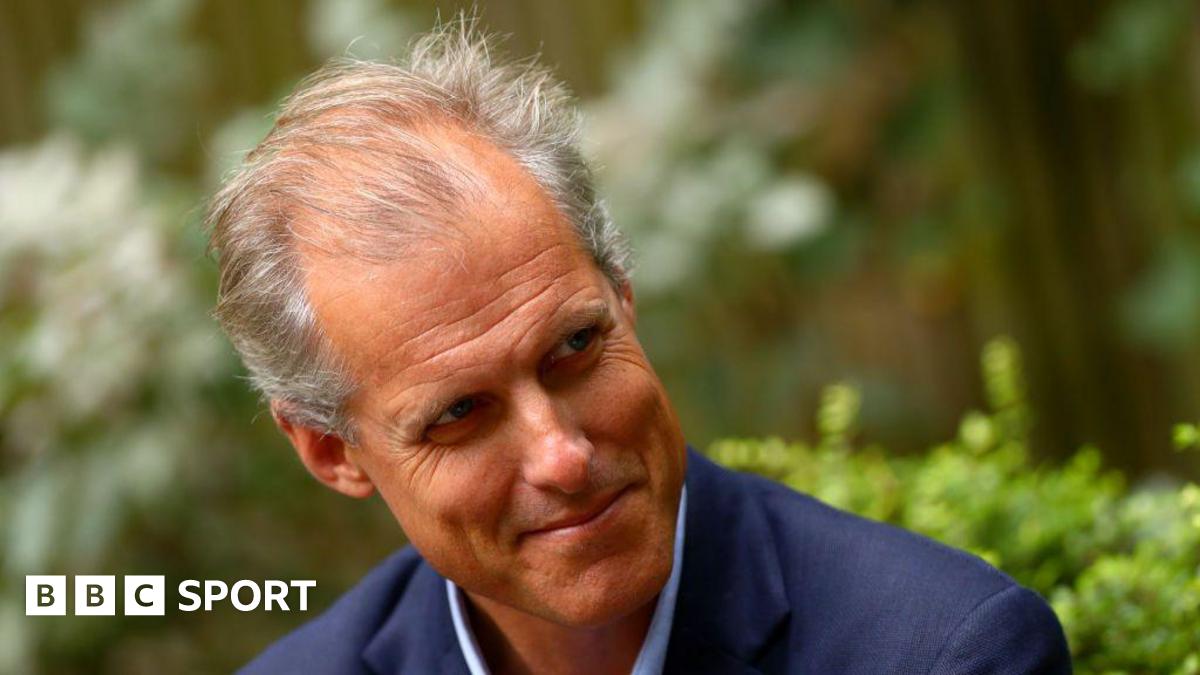
On Saturday, April 18, 2026, Sophie Ingle will run out for Wales in Tirana, collect her 150th cap, and write another chapter in a career that has spanned the better part of two decades. It is a number most footballers—male or female, from any nation—will never approach. Yet the occasion arrives with the muted fanfare reserved for a parish cricket match in August: a brief acknowledgment, perhaps a social media graphic, and then on to the next headline. This asymmetry is not accidental. It is structural.
Sophie Ingle has given approximately fifteen years to Welsh international football, progressing from promising youth prospect to captain to elder stateswoman of a programme that has never reached a major tournament finals. She has seen teammates come and go, managers change, the entire apparatus of women's football evolve around her. Through it all, she has remained—a fixture, a symbol, a living record of commitment to something larger than individual glory. And yet the world's sporting press, its broadcasters, its appetite for narrative, looks elsewhere. Women's international football from nations outside the sport's established elite—outside England, Spain, Germany, the United States—operates largely in a media blind spot. Matches are not broadcast. Records are not celebrated. Careers are not examined. The economics are simple: audiences are smaller, sponsors less interested, and the feedback loop of attention and investment that drives men's football simply does not engage with women's internationals from nations like Wales.
The Coverage Gap and the Invisible Cap
The pattern becomes intelligible once we apply a rigorous analytical framework. the structural critique of commercial media, developed to explain wartime and political media coverage, translates with unsettling precision to the sports industry. The model identifies five institutional filters that determine which information reaches public consumption: ownership concentration, advertiser dependency, sourcing norms, the requirement for flak compliance, and dominant ideological frameworks that naturalise existing power arrangements. Applied to women's international football, these filters work with particular efficiency.
Women's international football fails the profitability filter almost by definition. The advertiser dependency filter ensures that media organisations, many owned by entertainment conglomerates with stakeholding interests in men's sport, have little incentive to build infrastructure for covering women's national teams in smaller footballing nations. Sourcing norms—where institutional information flows through established channels like FIFA rankings, major tournament qualification, and men's media calendars—mean that stories about a Welsh captain approaching 150 caps simply do not enter the news cycle through default institutional pathways. The institutional pressure ensures that deviation from established coverage patterns—publishing a long-form profile of Ingle's career, for instance—carries risk: audiences may not engage, advertisers may not respond, and editorial resources invested in Welsh women's football might be deployed more profitably elsewhere. The result is systematic invisibility, not through active suppression but through the passive operation of incentive structures that make visibility itself unprofitable.
Metrics That Measure the Wrong Things
There is something more troubling in the coverage gap than simple economics. The global sports industry has developed increasingly sophisticated metrics for evaluating athletic achievement—expected goals, win probability added, possession adjusted for opposition strength—and yet these metrics consistently fail to capture what players like Ingle represent. The metrics are designed for contexts where data is abundant, where performance is evaluated against high-stakes competitive baselines, where the individual contribution can be isolated from collective mediocrity. For a player in a national team that has never qualified for a World Cup or European Championship finals, these metrics produce numbers that look, on their face, unimpressive.
This creates a circular problem: women's international football from smaller nations is undercovered because it is underfunded, and it is underfunded because it is undercovered. The attention economy, which drives sponsorship revenue and infrastructure investment, treats women's international football as peripheral at best. The result is that players like Ingle operate in conditions of resource scarcity that would be considered unacceptable for men's football in comparable positions. Training facilities, recovery infrastructure, competitive match exposure—all of these are shaped by the attention economy that determines where investment flows. When Wales women's national team receives a fraction of the coverage that Wales men's under-21 side commands for a routine qualifier, the downstream effects on funding, facilities, and competitive preparation are not hypothetical. They are measurable.
The colonial dimension of this hierarchy deserves acknowledgment. Global sports journalism, like global financial systems, tends to concentrate attention and resources in the already-powerful. The Premier League dominates global football coverage not because it is objectively superior entertainment—though it is excellent—but because decades of accumulated attention, investment, and institutional infrastructure have created a self-reinforcing cycle of dominance. Women's international football from nations like Wales occupies a position analogous to peripheral economies in structural analysis: productive, committed, but systematically denied the inputs that would allow full participation in the system's rewards. The 150 caps Ingle has accumulated are not measured against World Cup trophies or Champions League titles. They are measured against the alternative: not playing at all.
What the World Owes Wales
The stakes of this visibility gap extend beyond sentiment. In an era when women's sport is experiencing unprecedented growth—when attendances at Women's Super League matches regularly break records, when national team players command transfer fees that would have seemed impossible a decade ago—Wales remains largely absent from the narrative. The nation's women's team has never qualified for a major tournament. Its most decorated player, the captain who will earn her 150th cap on Saturday, is barely known outside the borders she has served so faithfully.
This matters because visibility is not merely about recognition. It is about the pipeline of future talent, the girls in Barry who might consider that a career in football is possible, the coaches and administrators who might invest their careers in a programme that receives institutional support proportional to its achievements. When the global game celebrates women's football, it tends to celebrate women's football in wealthy, powerful nations—England, Spain, the United States. When it neglects women's football, it neglects women's football in nations like Wales, which lack the market size, the broadcast reach, and the historical prestige to command attention on their own terms.
Sophie Ingle has said that playing for Wales means more to her than anything she has achieved at club level. This is not false modesty. It reflects a conception of football that the global industry has largely abandoned—one where collective identity, national loyalty, and unselfish service to a community larger than oneself still carry meaning. The men's game has evolved, or devolved, into a hyper-commercial enterprise where players are assets, clubs are brands, and loyalty is transactional. Women's international football, particularly in smaller nations, retains something of what football once was: a space where commitment is measured not in transfer fees but in caps, not in sponsorship deals but in years of service.
The world should be watching on Saturday. Not out of charity, not because the match matters for World Cup qualification in any decisive sense, but because Sophie Ingle has given fifteen years to something larger than herself, and 150 caps is the kind of milestone that deserves more than a footnote. In a sport increasingly governed by the attention economy's logic of spectacle and profitability, her career is a reminder that some things matter precisely because they are not profitable. Wales will play in Tirana. Sophie Ingle will collect her cap. And if the world is paying attention, it should understand what it is witnessing—not the third tier of a global hierarchy, but something rarer: a footballer who chose meaning over visibility, and built a legacy that neither can diminish nor inflate.