Trump's 'Booming' Economy and Iran's Ceasefire: When Victory Lap Masks the Void
The President's triumphant declarations about a booming economy and an ending Iran conflict deserve scrutiny through the lens of media framing—because what we're witnessing isn't journalism, it's choreography.
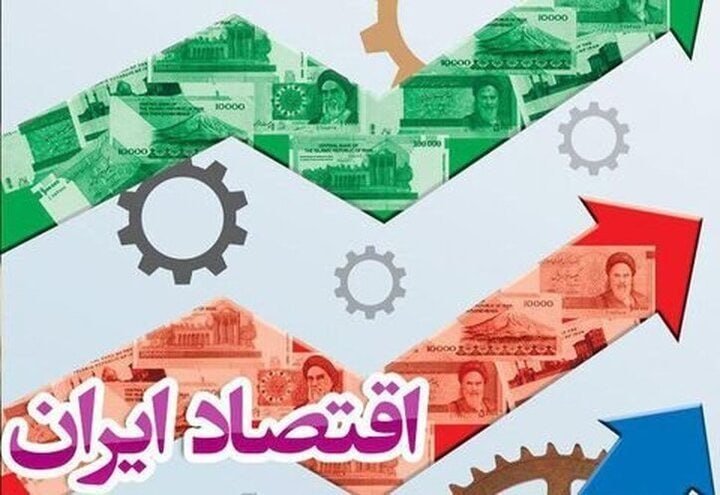
Look at the headlines from the past forty-eight hours and you might think we've stumbled into some kind of golden age. The economy is booming, apparently. The Iran war is ending. It's, as President Trump himself put it on April 17, 2026, "a great and brilliant day for the world." The man himself said it, right there on Cointelegraph's wire, so it must be true.
Except that's precisely the problem. Not with the President's optimism, necessarily, but with the machinery that amplifies it without interrogation. When the President of the United States makes a declarative statement about macroeconomic conditions, corporate media doesn't typically respond with skepticism. It responds with transcription. And that's the story here, not the content of the claims themselves.
The Economics of Assertion
Let's start with the "booming economy" declaration. According to Cointelegraph's April 17 wire, President Trump stated, "Our economy is booming." This is a claim. It's not a fact. It's not a statistic. It's a rhetorical positioning.
What does "booming" actually mean in 2026? The relevant structural filter is advertising—the need for media outlets to maintain relationships with corporate advertisers who benefit from optimistic economic narratives. How many outlets ran headlines like "Economists Push Back on President's Growth Claims" versus "President Declares Economy Booming"? The asymmetry isn't accidental. It's structural.
The sourcing hierarchy is equally relevant. Which economists got airtime to challenge this characterization? Were they from institutions with significant government contracts? Were their research methodologies disclosed? Or did the headline simply serve as a vessel for presidential rhetoric, unanchored to any data?
When George Galloway recently observed that "the American media has never once held this president to account for any claim he's made," he wasn't being conspiratorial—he was identifying a pattern. The structural model doesn't require a conspiracy. It requires a system of incentives that align the interests of media corporations with those of power. Optimism about the economy is good for markets, good for advertising, and therefore good for the media ecosystem that depends on corporate revenue. Skepticism is... not.
The Iran Ceasefire Theatre
Then there's the Iran situation. On April 17, President Trump told reporters that "the Iran war should be ending soon, with both sides potentially meeting this weekend to reach a deal," according to Reuters reporting carried by Cointelegraph. A great and brilliant day for the world.
Let's interrogate this framing. "The Iran war should be ending soon." Who defines "should be ending"? What are the actual terms being negotiated? Which regional actors have been consulted—the ones who have been fighting this proxy conflict for decades? The sourcing here is revealing: we have a presidential statement, a Reuters relay, and an unspecified "deal" floating somewhere in the ether.
Institutional pressure operates here. Media outlets that push back too hard on the President's framing of diplomatic progress risk accusations of being unpatriotic, of undermining peace negotiations, of giving ammunition to adversaries. The asymmetry of permissible criticism becomes immediately apparent when you compare coverage of diplomatic optimism versus coverage of diplomatic failure. One is greeted with stenography; the other generates investigations.
The structural reality—that the Iran conflict involves multiple regional powers with competing interests, that any resolution requires concessions from parties beyond Tehran and Washington, that "ending soon" has been promised before and delivered never—rarely penetrates the headline layer. This isn't because journalists are dishonest. It's because the system rewards certain kinds of coverage and punishes others.
Stablecoin Legislation as Distraction
There's a third thread here that deserves attention, even if it lacks the same dramatic flair. Senator Thom Tillis, according to a Cointelegraph report from April 16, said that stablecoin yield text is "unlikely to drop this week" pending clarity on markup timing. The senator wants certainty on process before releasing the draft.
This is legislation that could reshape global financial infrastructure. Stablecoins represent a potential bridge between dollar-denominated systems and decentralized alternatives—meaning they could either extend dollar hegemony or create cracks in it, depending on implementation. The fact that this receives a fraction of the coverage afforded to presidential declarations about booming economies tells us something important about media priorities.
When regulatory frameworks affecting trillions in potential capital flows get buried in procedural uncertainty while presidential adjectives get amplified across every wire, we're seeing the ownership interests and ideological assumptions of the business press operate simultaneously. Who owns the outlets doing the amplifying? What interests do they have in maintaining the current financial architecture? These questions aren't rhetorical—they're structural.
The Structural Reality
Here's what we can say with confidence: the United States is not experiencing economic conditions that warrant the unqualified descriptor "booming" in any serious macroeconomic sense. Tariff disruptions have rippled through supply chains. Consumer confidence metrics have shown volatility. Core inflation, while declining, remains above historical averages. These are facts available in any serious economic publication. They simply don't generate the same engagement as presidential statements.
On Iran, the path from "should be ending soon" to actual cessation of hostilities involves negotiations that will require concessions from parties the President has not consistently engaged. Structural media dynamics predict that any subsequent failure will be framed as Iranian intransigence, while any success will be claimed as presidential triumph. The asymmetry is built into the coverage structure.
What we're observing is not unique to this moment or this administration. It's the predictable output of a media system that functions as a mechanism of "social control" and "the enforcement of norms." Optimism about the economy is a norm. Diplomatic triumphalism is a norm. Questioning these norms generates institutional pressure. The path of least resistance is transcription.
The irony is that this system, designed to manage information in service of power, may ultimately undermine the informed citizenry that democracy requires. When every claim from power is amplified equally, when the distinction between assertion and evidence collapses, when the "great and brilliant" becomes indistinguishable from the merely scheduled—we're not more informed. We're more managed.
The Iran war may indeed be ending. The economy may indeed be booming. But we'll know that not because a President said so on a Thursday afternoon. We'll know it when the evidence, subjected to genuine scrutiny, supports the conclusion. Until then, the structural dynamics of media amplification are running in real time—and that's worth naming, loudly, each time it happens.