The Vatican's Moral Witness vs. American Unilateralism: Pope Leo XIV and the Fracturing of a Familiar Diplomatic Order
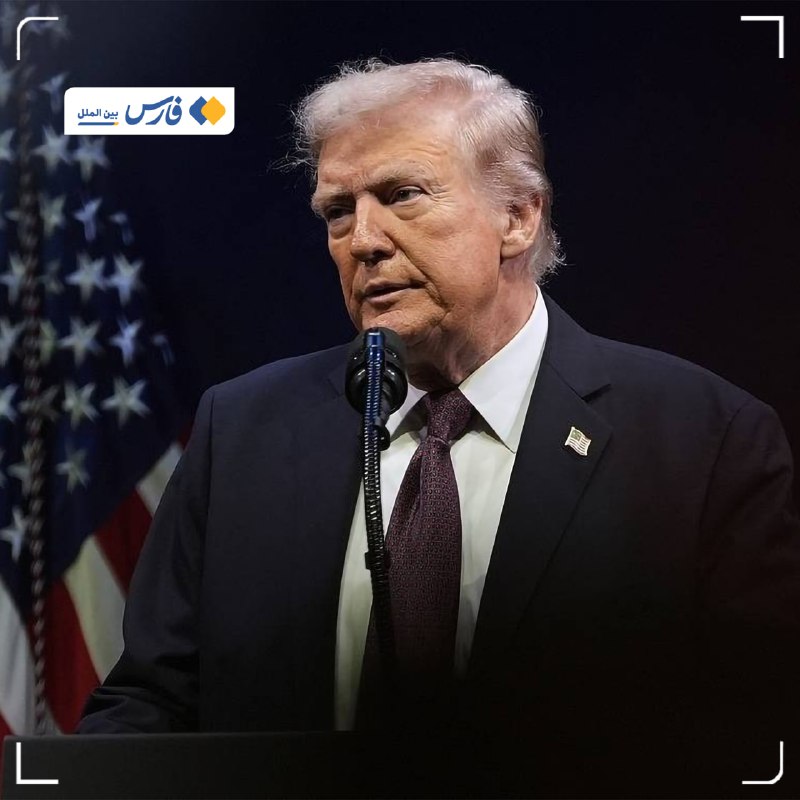
The Boeing 777 carrying Pope Leo XIV descended through grey skies over Luanda on the afternoon of April 18, 2026, the same hours that American cable news networks dissected his earlier remarks about tyranny with the fervor typically reserved for congressional hearings or market crashes. The pontiff, who had spent the flight fielding questions from journalists about his reported spat with President Donald Trump, offered a characteristically measured response: he was not interested in arguing with anyone, least of all the American president. Yet the episode—brief as it was in duration—illuminated something deeper about the Vatican's enduring role as a moral witness in a unipolar world increasingly defined by transactional diplomacy and the exercise of hegemonic power without the encumbrance of multilateral consultation.
The immediate trigger for the controversy was a speech Pope Leo delivered before his departure, in which he addressed the ongoing conflict in Iran with language that Western commentators immediately interpreted as directed at the Trump administration. The pontiff spoke of tyrants who cloak their ambitions in the language of peace while prosecuting wars of choice; he invoked the prophetic tradition of scripture as a lens through which to evaluate contemporary power. The White House responded with characteristic swiftness, and within hours the diplomatic temperature between the United States and the Holy See had risen to levels not seen since the Vietnam War era, when Pope Paul VI's appeals for peace were routinely dismissed by American officials as the pronouncements of an institution out of touch with geopolitical realities.
The Anatomy of a Diplomatic Spat: Immediate Context and Competing Framings
The public exchange between the Vatican and the Trump administration reveals much about how information travels—or is filtered—in the contemporary media ecosystem. According to BBC News, the Pope stated explicitly that his remarks had been misinterpreted, that he had not intended to single out any particular leader, and that his comments were directed at the phenomenon of tyranny in general rather than at any specific head of state. This clarification, while unambiguous in its wording, received substantially less coverage in American media than the original controversy. The asymmetry is instructive: initial outrage generated by perceived papal criticism of American power proved more newsworthy, by established editorial logics, than the subsequent clarification that the criticism had been overstated.
Deutsche Welle reported that Pope Leo, speaking en route to Angola for a three-day visit, emphasized his lack of interest in confrontation while simultaneously "doubling down" on his peace message. The framing choice—"doubling down" rather than "clarifying"—carries connotations of obstinance that may not have been present in the original statement. This is not incidental; it reflects the ideological orientation filter in news selection, wherein language is chosen to reinforce pre-existing narratives about the relative legitimacy of different actors on the world stage. When a religious leader challenges American foreign policy, the framing often defaults to conflict: leader versus leader, institution versus state, tradition versus modernity. When that same leader clarifies or moderates, the language of the coverage frequently softens or recedes entirely.
The Vatican's Historical Position: From Cold War Mediator to Global South Advocate
To understand the significance of this episode, one must situate the Holy See's diplomatic tradition within a longer historical arc. The Vatican has consistently positioned itself as a moral actor independent of the great power system—a role formalized in the 1929 Lateran Treaty, which established Vatican City as a sovereign entity with full diplomatic relations across the globe. This independence was exercised most dramatically during the Cold War, when Pope John Paul II's support for the Solidarity movement in Poland contributed, in ways that are still debated by historians, to the eventual collapse of Soviet communism. The Vatican's leverage derived not from military power or economic size but from moral authority and the capacity to shape narratives about human dignity, justice, and the limits of state violence.
In the post-Cold War era, the Holy See has increasingly oriented itself toward a structural critique of American hegemony. The Vatican's formal diplomatic relations — with Iran, with Cuba, with the Palestinian Authority, with various African and Asian states — reflect a deliberate diversification away from exclusive alignment with Western powers. Pope Francis, and now Pope Leo XIV, have both spoken repeatedly about the "throwaway culture" that characterizes contemporary global capitalism, the plight of migrants and refugees, and the need for a "dialogue of civilizations" that challenges the monoculture of market fundamentalism. These positions have not always sat comfortably with American administrations of either party, but they have been especially discordant with the Trump administration's explicit rejection of multilateralism and its stated preference for bilateral deals conducted from a position of maximum leverage.
Information Control: How the Vatican vs. Trump Narrative Was Constructed
The media coverage of the Pope Leo-Trump exchange offers a case study in structural media dynamics. Five filters through which information passes shaped how this episode was reported and interpreted in the American context: ownership, advertising, sourcing, institutional pressure, and ideology.
ownership bias is less directly applicable here, given that most major American news outlets are not owned by the same entities as the Vatican or the Trump administration. But the ideological alignment between large media conglomerates and the broader foreign policy consensus of American elites is well-documented; the assumption that American power is fundamentally benevolent, or at least necessary for global stability, structures coverage in ways that render challenges to it inherently newsworthy as conflict. sourcing bias is more clearly operative: American officials and their spokespeople were quoted extensively in early coverage, while the Vatican's formal statements were often paraphrased or contextualized by American commentators rather than presented in full. The result was a framing in which the Pope's remarks appeared as an intrusion into a domain — the conduct of American foreign policy — where religious leaders are expected to remain deferential.
The institutional pressure filter also operated, if subtly: the immediate pressure generated by the controversy likely contributed to the Vatican's subsequent clarification, suggesting that the mere threat of negative attention can discipline even the most venerable diplomatic institutions into managing their public communications in ways that minimize conflict with American power. This dynamic has been documented extensively in scholarship on how states and non-state actors alike self-censor in response to anticipated reputational costs.
Structural Stakes: The Vatican's Role in a Multipolar World
The broader significance of the Pope Leo-Trump exchange lies not in the substance of the remarks—which were, by any measure, general in their formulation—but in what the episode reveals about the changing character of moral authority in international relations. As the unipolar moment that followed the Cold War gives way to something more complex—a world in which China, Russia, regional powers, and non-state actors all exercise meaningful influence—the Vatican's traditional role as a mediator independent of great power competition becomes both more relevant and more contested. The Holy See's consistent engagement with Iran, its offers to mediate between Israel and Palestine, its outreach to African churches and Asian religious traditions: all of these reflect a diplomatic strategy premised on the assumption that peace requires dialogue and that dialogue requires the participation of actors who are not embedded in the great power system.
For the Trump administration, which has consistently rejected the value of multilateral institutions and multilateral dialogue, such an actor is at best irrelevant and at worst an obstacle. The rhetoric of "America First" implies that the interests of the United States are not merely one set of interests among many to be accommodated through negotiation, but the primary frame through which global order must be understood. A religious leader who speaks about tyranny, about the moral limits of power, about the obligations of the powerful to the vulnerable, challenges that frame directly. The Vatican's critique, to the extent it is understood as critique rather than miscommunication, strikes at the ideological foundations of the administration's approach to the world.
This is why the structural frame matters. The question is not whether Pope Leo said something about tyrants that Trump took personally. The question is whether the world's remaining genuinely independent moral institutions—the Vatican, the Red Cross, the United Nations, civil society organizations rooted in communities rather than capitals—can continue to exercise meaningful influence in a geopolitical environment that increasingly punishes independence as disloyalty. The answer to that question will shape not only the credibility of the Vatican's peace advocacy but the possibility of any moral check on the exercise of great power in the decades to come.
Forward View: Angola and the Limits of Spectacle Diplomacy
Pope Leo's visit to Angola—a country that, like much of the African continent, has historically been subjected to the economic and political pressures of great power competition—offers an opportunity to observe whether the Vatican's stated values translate into meaningful solidarity with the Global South. Angola's own relationship with the United States is complex: a major oil producer, it has navigated between American and Chinese influence in ways that reflect the pragmatic calculations of a government seeking to maximize sovereignty rather than submit to any single patron. The Vatican's engagement with Angola thus occurs within a broader context of multipolar diplomacy that the American media coverage of the Pope's remarks has largely obscured.
The trajectory of the Pope Leo-Trump relationship will likely follow a familiar pattern: initial tension, mediated by advisors on both sides, followed by a quiet restoration of formal relations. The Holy See depends on the United States for various diplomatic and logistical supports, and the Trump administration has historically shown little interest in sustaining conflicts with institutions that can be managed through private channels rather than public confrontation. But the episode leaves a residue. The fact that the Pope felt compelled to clarify his remarks, the fact that the clarification received less attention than the original controversy, the fact that American media framed the exchange through the lens of conflict between a religious leader and a president rather than as an example of moral critique directed at power: these elements collectively illustrate the structural conditions under which independent moral witness becomes increasingly difficult.
What remains unclear is whether the Vatican—under Pope Leo XIV, a figure whose own background reflects the church's global reach—will adapt to these conditions by becoming more cautious in its public pronouncements, or whether it will continue to exercise the prophetic role that its institutional tradition has long claimed. The answer will be written not in diplomatic communiqués but in the substance of the Vatican's engagement with the conflicts, crises, and inequalities that define the current moment. As Pope Leo concluded his remarks to journalists aboard the flight to Luanda, he returned repeatedly to a single theme: that dialogue, however difficult, remains the only alternative to violence. It was, in its measured way, a statement of purpose—and perhaps a quiet challenge to a world increasingly accustomed to doing without it.
This article was filed from Vatican City and Washington D.C. The wire services framed the Pope's remarks as a diplomatic incident; Monexus has chosen to situate that framing within the longer history of Vatican diplomatic independence and the structural constraints on moral critique in an era of American unilateralism.