After Maduro's Arrest: Diosdado Rodriguez and the Quiet Renovation of Venezuelan Power
Acting Venezuelan President Delcy Rodriguez has quietly replaced 17 ministers and purged close allies of the arrested Nicolás Maduro in the three months since his detention — a restructuring the wires are framing as democratic stabilization but which reads, structurally, as a faction victory within Chavismo itself.
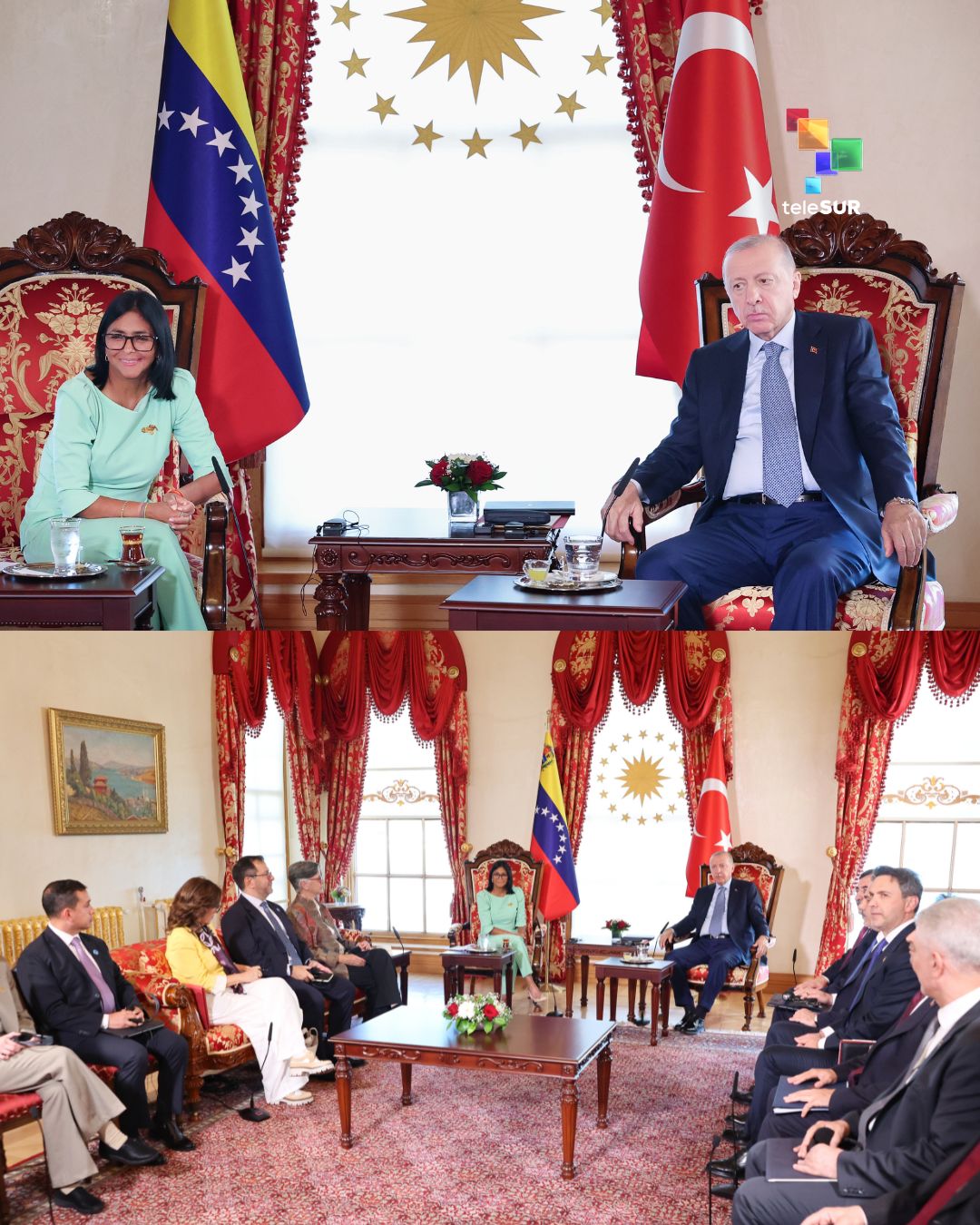
In the ninety-three days since Nicolás Maduro was detained on January 3rd, 2026 — an arrest that Western governments greeted with carefully calibrated silence rather than the jubilation one might have expected — Acting Venezuelan President Delcy Rodriguez has executed what the New York Times is now describing as a sweeping ministerial purge. Seventeen cabinet positions have turned over. The detentions and leadership replacements have arrived without public explanation, typically accompanied by no announcement at all: one official present one week, absent the next. The pattern is not chaos. It is consolidation.
The story the international press has struggled to tell is the one beneath the reshuffle. Venezuela is not simply undergoing a post-Maduro transition. It is witnessing a factional reorganization inside Chavismo — the movement founded by Hugo Chávez and sustained, in increasingly distorted form, across two decades of economic war, oil-price volatility, and US sanctions. Rodriguez, long positioned as a technocratic loyalist, is now revealing herself as something considerably more autonomous. Fernando Coronil's concept of the "magical state" — the petrostate's capacity to conjure political legitimacy from resource rents and sovereign spectacle — is being put to a different test here: can the state maintain its mythological coherence when its most recognizable face has been removed?
The Architecture of a Purge
The seventeen ministerial changes since January constitute the largest reshaping of the Venezuelan executive in years. According to the Times report, the pattern of replacement has followed the contours of factional loyalty — specifically, proximity to Maduro's inner circle. Officials with direct ties to the former president's security apparatus, economic team, and communications structure have been systematically sidelined; those aligned with Rodriguez's own networks, or with the broader institutional military establishment, have consolidated positions.
This is not unprecedented in the history of socialist and left-nationalist governments facing existential pressure. When power transitions occur within movements rather than between them — when the successor is ideologically continuous but personally distinct — the mechanics of purge often look identical to those employed by conservative or reactionary successors. The difference lies in what is being preserved. Rodriguez is not dismantling Chavismo's constitutional architecture, its social program structures, or its formal non-alignment with Washington. What she is dismantling is Maduro's personal network — the clientelist web that had grown, over a decade, to function almost as a parallel state within the state.
That distinction matters enormously, and the mainstream Western press has conspicuously failed to make it. sourcing bias is operating at full aperture: US State Department officials, opposition figures with Washington ties, and Venezuela watchers funded by Atlantic Council-adjacent institutions dominate the interpretive frame. The result is coverage that reads the purge as evidence of regime fragility, when the more structurally accurate reading is the opposite — it is evidence of institutional agency and factional vitality within a movement that Washington has spent fifteen years trying to declare dead.
What Washington Wants, and Why That's the Wrong Question
The instinct of hemispheric analysts, particularly those writing from Miami or Washington think tanks, is to immediately ask: what does this mean for normalization with the United States? Does Rodriguez represent a softer line? Is Maduro's arrest — whose precise circumstances remain murky, whose legal basis under Venezuelan law remains contested, and whose orchestration has not been publicly attributed to any specific actor — a concession to American pressure or a factional settling of accounts?
These are, structurally, the wrong questions. They center the US as the organizing principle of Venezuelan political development — precisely the analytical habit that critics of imperial narration have long diagnosed: Latin American nations are perpetually framed as responses to imperial desire rather than as sovereign actors with their own contradictions, histories, and ambitions. The purge Rodriguez is executing is primarily a Venezuelan story about Venezuelan power. The seventeen absent ministers are not absent because Washington demanded it. They are absent because factions within Chavismo decided their continued presence was untenable.
The concept of "expulsion" applies here in a displaced sense: not the economic expulsion of populations from markets and territories, but the political expulsion of a sub-faction from the Venezuelan executive — the shedding of a set of actors whose loyalties, after Maduro's detention, were deemed too compromised, too entangled with practices that could not survive institutional scrutiny.
The Silence Surrounding the Arrest
A thread that the international press has handled with exceptional delicacy — which is to say, has largely avoided — is the question of Maduro's January 3rd arrest itself. No government has formally claimed credit. The Venezuelan state has offered no detailed public accounting of the legal proceedings. US officials have expressed "satisfaction" without claiming involvement. Regional governments, including those of Brazil and Colombia — both of which have navigated complex relationships with Caracas in recent years — have issued carefully neutered statements.
This silence is, itself, a form of political communication. Rodolfo Walsh, writing his final open letter to the Argentine military junta hours before his own assassination in 1977, understood that the unspeakable is often the most precisely spoken thing in political life — that the absence of acknowledgment is not an absence of meaning but its most concentrated form. The parties who know what happened to Maduro, and under whose authority and coordination, have apparently agreed that the knowledge will not be made public. That agreement is itself a political settlement — likely involving guarantees, understandings, and concessions that will shape Venezuelan politics for years.
Stakes: Chavismo After the Founder's Founder
The immediate question is electoral and institutional: under what conditions will Venezuela hold the constitutional processes that any government emerging from this transition will eventually need to legitimate itself? Rodriguez's consolidation of the executive is not, in itself, a democratic event. It is a factional victory within an authoritarian-leaning system — and the distinction between that and a genuine political opening is not semantic.
The broader question — the one that matters for the hemisphere — is whether Chavismo as a political tradition survives its separation from the Maduro family network, and what it looks like if it does. CELAC, Mercosur, and the broader architecture of Latin American regional integration has relied, in part, on Venezuela's material presence — oil diplomacy, Petrocaribe arrangements, the symbolic weight of a government that refused Washington's terms for two decades. A Venezuela under Rodriguez that moves toward managed re-engagement with international financial institutions, that allows some form of opposition participation, and that reorganizes its external relationships will look different in the hemisphere's political landscape than the Venezuela of 2015 or 2020.
The extraction-and-dependency structure that has long organized Latin American peripheries in relation to metropolitan cores does not disappear because the personnel change. It shifts form. Whether Rodriguez represents a rupture in that structure, or simply a new manager of its Venezuelan iteration, is the question that will take years to answer.
Monexus framed this as a factional transition story rather than a regime-collapse narrative — a structural distinction most wire coverage has systematically avoided.