The $7.3 Trillion Rebound: Wall Street's Post-Hormuz Rally and the Minsky Trap of Geopolitical Relief Trades
The US stock market added $7.3 trillion in market capitalisation between March 30 and mid-April 2026, with the S&P 500 crossing 7,100 for the first time in its fastest turnaround since 1990 — a rally driven primarily by Iran's Hormuz ceasefire announcement and a concurrent collapse in oil prices that raises structural questions about the durability of geopolitically-contingent equity gains.
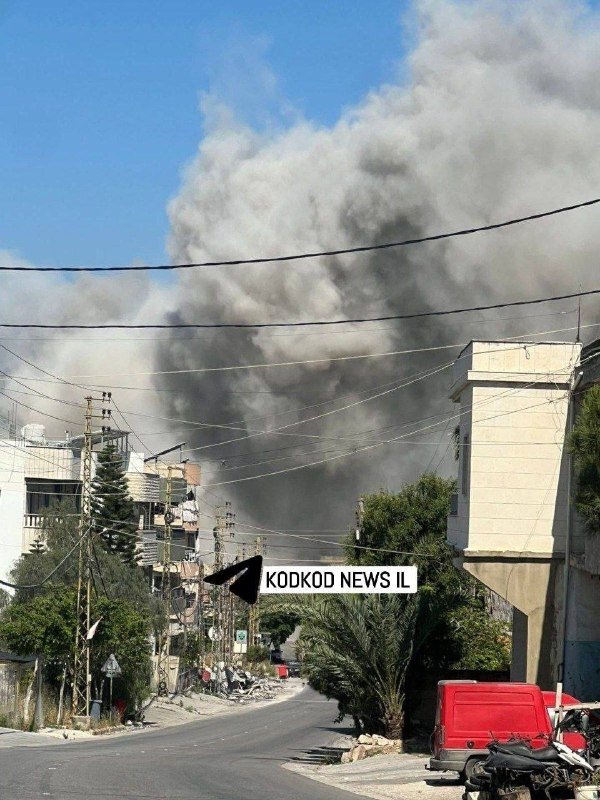
Between March 30 and mid-April 2026, the US stock market added $7.3 trillion in market capitalisation — a figure that, viewed in isolation, appears to represent an extraordinary recovery of economic confidence. The S&P 500 closed above 7,100 for the first time, completing what CNBC characterised as the fastest turnaround since 1990. Oil futures fell more than 10% after Iran's foreign minister declared the Strait of Hormuz "completely open" for the remainder of the ceasefire between the United States, Israel, and Iran; Brent crude dropped below $90 a barrel, petrol prices began to retreat after 46 consecutive days of increases, and equities across major indices surged simultaneously with Bitcoin, which spiked above $77,000. Three forces were widely cited as drivers of the week's performance: the Hormuz announcement, improving sentiment around US-Iran peace talks, and the associated collapse in energy prices that reduced the inflationary pressure constraining central bank policy.
The analytical problem with this narrative is not that it is factually inaccurate — the correlation between the Hormuz announcement and the market movement is real — but that it conflates a geopolitical contingency with a structural improvement. Hyman Minsky's taxonomy of financial positions distinguishes between hedge finance (income covers debt service), speculative finance (income covers interest but not principal), and Ponzi finance (income covers neither, requiring asset appreciation or refinancing to survive). A market rally predicated on the continuation of a ceasefire between belligerent states whose fundamental interests remain unresolved is, by Minsky's definitions, structurally closer to speculative finance than to a genuine recovery of economic fundamentals.
The Three Forces and Their Internal Contradictions
CNBC identified three forces driving the Wall Street record: the Hormuz opening, improving US-Iran peace talk sentiment, and the energy price relief that followed. Each of these forces contains an internal contradiction that the rally's velocity tends to obscure. The Hormuz "opening" was an announcement by Iran's foreign minister during a ceasefire — not a permanent political settlement. Polymarket odds for traffic normalising through Hormuz by end of May spiked to 73%, suggesting the market was pricing a probability rather than a certainty. The peace talk optimism was accompanied by a presidential statement that the war "should be ending soon" — a prediction whose political incentive structure does not guarantee accuracy.
The energy price relief, while real, is a function of supply expectation rather than supply fact. Tankers that had been held outside the strait did not instantly traverse it; energy markets moved on the anticipation of normalisation, which means the price collapse could reverse sharply if the ceasefire frays. The Minsky instability thesis is precisely a theory of how stability — even legitimate stability — breeds over-extension: actors who observe sustained positive conditions reduce their risk assessments and increase leverage, creating fragility that the next disruption will expose. The speed of the $7.3 trillion recovery — occurring over approximately two weeks — suggests that market participants reduced their geopolitical risk premium very rapidly, compressing back toward pre-Iran-war valuations without waiting for confirmation of the ceasefire's durability.
The Prediction Market Complication
The Hormuz rally occurred against the backdrop of congressional concern about suspicious trading in prediction markets before the Iran war's major events. Over $1 billion in what The Guardian described as "perfectly timed bets" — including sixteen separate wagers accurately predicting the timing of the February 27 US airstrikes and a single position that made over $550,000 predicting a leadership change in Iran moments before it occurred — raises questions about the information environment in which equity and commodity prices are being set. If sophisticated actors with privileged geopolitical intelligence are operating in prediction markets, those prediction market signals propagate into conventional financial markets through algorithmic trading and sentiment-based positioning.
The implication of structural power analysis is that the information asymmetry between state actors with intelligence access and market participants without it creates a redistribution mechanism operating beneath the surface of price discovery. Equity rallies that follow from geopolitical announcements that were anticipated by some participants before others are not simply reflections of changing fundamentals; they are redistribution events in which the timing of information access determines who captures the gain.
The Financial Phase of the Cycle
The $7.3 trillion equity recovery also needs to be situated in long-cycle analysis. The financial phase of an accumulation cycle is characterised by the expansion of financial claims — equities, derivatives, ETFs — relative to productive investment, as the material returns on production compress and surplus capital seeks higher yields through financial instruments. The Iran war's energy shock had imposed real costs on production and consumption: 46 days of petrol price increases, supply chain disruptions for energy-intensive sectors, and the beginning of what the IMF characterised at its Washington meeting as the most severe energy shock since the 1970s. A two-week equity rally driven by a ceasefire announcement does not undo those real-economy costs; it represents a reassessment of financial claims on a productive base that has been impaired.
Bitcoin's performance during the same period illustrates the tight coupling that has developed between geopolitical risk sentiment and digital asset prices. Bitcoin fell to $76,000 when Iran briefly shut Hormuz again before recovering to $78,000 when the ceasefire was confirmed, mirroring the oil price movement with remarkable fidelity. This correlation — between an oil supply disruption and a supposedly non-sovereign digital asset — challenges the "digital gold" narrative that animates much institutional Bitcoin allocation. If Bitcoin rises and falls with geopolitical risk sentiment in the same direction as oil, it is functioning as a risk asset, not a hedge.
Stakes: What Comes After the Relief Trade
The forward question is whether the equity gains of this week can be sustained once the ceasefire's contingent nature becomes priced with more precision. Bitcoin bulls were targeting $125,000 as of mid-April, citing the short squeeze conditions created by negative funding rates at 2023 lows; but those targets were explicitly conditioned on US-Iran peace talks progressing, a condition that the prediction market's 73% Hormuz normalisation probability implicitly qualifies. ETF strategies that proliferated during the post-pandemic period — including covered call ETFs, volatility-selling products, and leveraged single-stock instruments — were specifically flagged by MFS Investment Management as potentially vulnerable in a "violent downturn," because their liquidity promises in normal conditions mask concentration risks that only manifest under stress.
The traders who placed over $1 billion in prediction market bets on the Iran war's timeline may already be positioning for the next geopolitical event; the equity market's record-setting week may simply be the interval between two rounds of geopolitical shock repricing. For Global South economies — whose energy import bills determine fiscal capacity and whose currency stability depends on the dollar-oil nexus — the volatility of this interval is not experienced as a relief rally but as continued exposure to a system whose risk generation is concentrated in Washington, Tehran, and Tel Aviv and whose costs are distributed across every energy-importing economy in the developing world.
Monexus framed the record Wall Street week as a financial instability cycle event rather than a recovery confirmation, reading the geopolitical contingency of the gains against the real-economy impairment the Iran shock had already inflicted.