Bitcoin, Oil, and Hormuz: How Iran's Strait Reversal Rewrote Market Logic
When Iran shut the Strait of Hormuz on 18 April 2026, Bitcoin fell hard — but not in the way traditional safe-haven theory predicts. The relationship between Middle East energy politics and crypto markets is proving stranger, and more strategically significant, than either Wall Street or Silicon Valley anticipated.
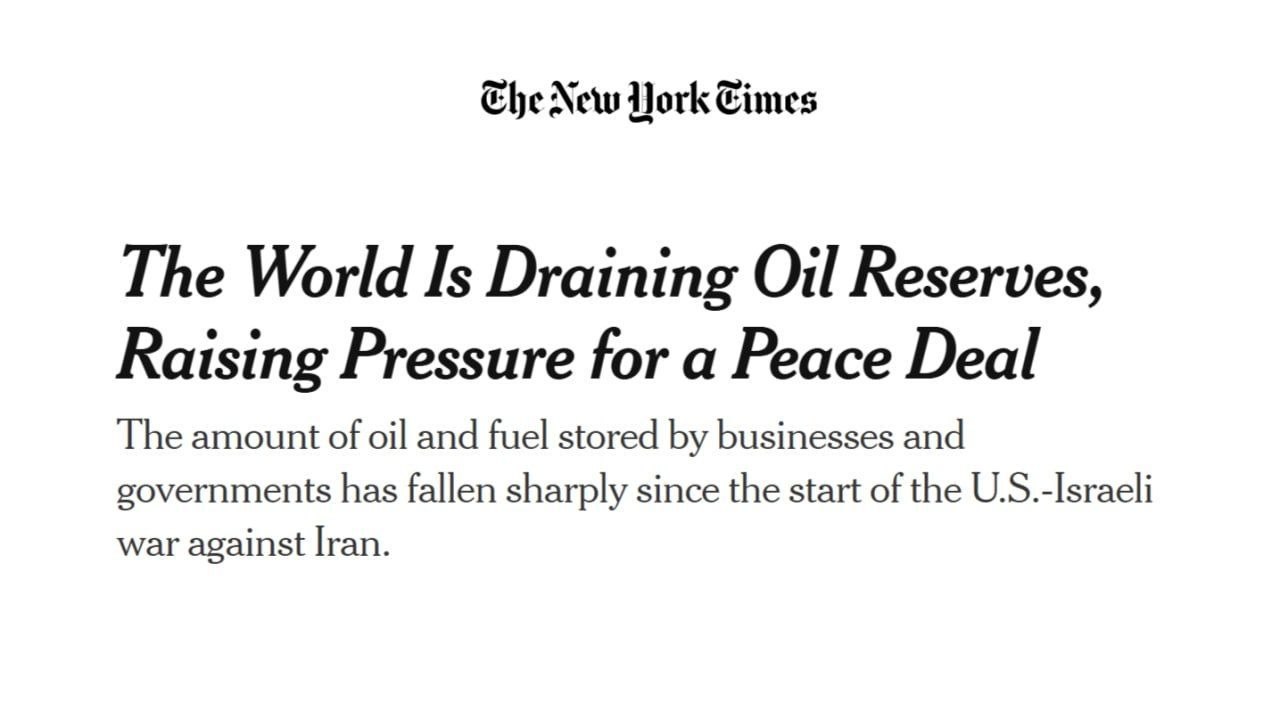
On the afternoon of 17 April 2026, Iran's foreign minister declared the Strait of Hormuz fully open for the remainder of the ceasefire between the United States, Israel, and Iran. Oil futures fell ten percent. Bitcoin surged past $76,000. By the following morning, Iran had reportedly shut the strait again — and BTC reversed course, falling back to $76,000 before dipping further to $75,000 as the news spread. The sequence of events, condensed into a thirty-hour window, exposed something the market had not fully priced: the growing entanglement between Persian Gulf energy politics and the world's most liquid cryptocurrency.
The mechanics of the move were partly mechanical. According to CoinDesk, one of the largest short liquidations of 2026 wiped $593 million in bearish bets overnight on 17 April — a sign that leveraged positioning had run ahead of the actual ceasefire confirmation. When the reversal came on 18 April, the same leverage worked in reverse. But the episode did more than expose speculative overhang. It revealed that Bitcoin has become a contested instrument in a geopolitical struggle neither the US Treasury nor the Iranian oil ministry had fully planned for.
From Strategic Reserve to Strategic Leverage
The Iran situation has pushed the question of cryptocurrency's role in geopolitics from abstract to operational. Iranian officials have publicly framed Bitcoin as a strategic asset, citing its confiscation-resistant properties as a feature for a government subject to extensive US sanctions. But a report from BPI, published on 18 April by Cointelegraph, draws a more complex picture: despite Tehran's stated preference for BTC in settlement, dollar-pegged stablecoins — specifically USDt — have dominated actual oil toll payments. The stated preference and the transactional reality diverge sharply.
The reason is pragmatic. USDt settles instantly, carries no mining hardware logistics, and connects to existing banking rails — even in degraded or grey-market form. Bitcoin, while philosophically aligned with sanctions resistance, requires infrastructure that most Iranian counterparties do not have readily available. The gap between the strategic narrative and the practical settlement layer tells us something important: the dollar's grip on global trade financing is not primarily ideological. It is infrastructural. Changing it requires more than a policy preference; it requires a parallel financial architecture that does not yet exist at scale in Iran.
That does not mean the effort is idle. Tehran has been building toward cryptocurrency independence for years — not because it expects BTC to replace the dollar tomorrow, but because each barrel of oil settled in digital dollars is a barrel that passes through US-monitored rails. Over time, even partial displacement matters. The pattern fits a broader redirection by sanctioned states toward payment networks that route around SWIFT and correspondent banking. Crypto is one lane of that redirection; bilateral currency swap agreements are another. Bitcoin in this framing is less a currency than a reservation asset — a way of holding value outside the dollar system while the alternative infrastructure is built.
The Hormuz Variable and the Ceasefire Window
The strait's repeated opening and closing within days of each other is not random. Iran had already signalled that the ceasefire arrangement came with conditions — and that Hormuz access was part of the leverage package, not a concession granted unconditionally. The foreign minister's declaration on 17 April that the strait would remain open for the remainder of the ceasefire implied a fixed horizon: whatever was being negotiated had a known end date, and the strait's status was contingent on that timeline.
When Iran reportedly reversed that position on 18 April, the market reaction was swift. Bitcoin fell through $76,000 in Asian trading hours. Oil markets, already volatile from the prior day's declaration, repriced accordingly. The sequence demonstrated that a single diplomatic signal from Tehran — delivered via a foreign minister's public statement — could move both energy futures and a cryptocurrency market capitalised in the hundreds of billions. That cross-market sensitivity is new. Five years ago, Bitcoin's correlation with Middle East geopolitics ran primarily through the general risk-off channel: global uncertainty pushes investors toward gold, and sometimes toward BTC as a quasi-gold. What we are seeing now is more specific. The asset is being used as a proxy for ceasefire risk pricing — and that is a distinctly different relationship.
The $593 million in short liquidations on 17 April were the proximate cause of the immediate price spike, but they were themselves a product of positioning that assumed the Hormuz opening was durable. When it was not, the unwind was asymmetric: the drop from $78,000 back through $76,000 and toward $75,000 happened in a market with less liquidity on the long side, because the prior spike had eaten into available speculative capital. The result was a sharper percentage decline than the underlying news alone might warrant.
What Markets Are Actually Pricing
There are two ways to read the Iran-Bitcoin correlation. The first, and most common, treats it as a risk-on / risk-off relationship: geopolitical tension drives money into BTC as an alternative to falling equities or weakening sovereign currencies. This reading is not wrong. Bitcoin and gold have both moved higher in periods of acute Middle East tension in recent months, and the co-movement with oil futures is consistent with that framing.
The second reading is more uncomfortable for traditional finance: Bitcoin may be increasingly functioning as a direct hedge against the specific risk of US financial infrastructure being weaponised against sovereign states. When the US imposes secondary sanctions, or threatens to cut off correspondent banking access for third-country counterparties, the implicit question is whether there exists any large, liquid, non-dollar-denominated settlement asset that a sanctioned state can turn to without converting into fiat first. Bitcoin, for all its volatility, fills that slot in a way euros or yen do not, because its issuance is borderless and its settlement is peer-to-peer.
The tension between these two readings is not resolved by the current price data. What the Hormuz episode made clear is that both dynamics are operating simultaneously — and that the market is not yet sophisticated enough to price them separately. That confusion has a beneficiary: whichever actor understands the dual nature of the relationship earliest has a structural advantage in positioning ahead of the next Strait announcement.
The Structural Stakes
If Iran's framing of Bitcoin as a strategic asset becomes operationalised — not just as a reserve position but as a genuine settlement medium for energy trade — it represents the most significant challenge to dollar-denominated oil pricing since the petrodollar system's formalisation in the 1970s. The US Treasury has treated the dollar's role in oil markets as a core strategic interest; any shift toward non-dollar settlement, even partial, carries implications for the demand side of US Treasuries and, by extension, for US fiscal capacity.
The ceasefire window matters here. A temporary Hormuz opening in April 2026 gives the market a data point: Iran will reopen the strait under certain conditions, and it will close it again if those conditions are not met. That pattern is legible. What is less legible is whether the ceasefire terms include any financial architecture provisions — whether Washington has demanded or offered anything on the settlement-layer question as part of the broader deal. The sources reviewed do not specify this. If the ceasefire terms include renewed access to SWIFT-equivalent channels for Iranian oil proceeds, the Bitcoin-as-sanctions-hedge thesis weakens. If they do not, it strengthens.
For traders, the practical implication is that any headline from Tehran referencing Hormuz, ceasefire terms, or energy infrastructure should be treated as a Bitcoin input — not as an oil market footnote. The correlation is no longer incidental. It is structural.
This publication covered the Iran–Hormuz–Bitcoin story through the prism of cryptocurrency market reaction, where the wire services treated it primarily as an oil-price story. The desk approach foregrounds the financial architecture angle — the settlement-layer implications of using digital assets to route around dollar infrastructure — as the more durable stakes.