The Casualty Reports from Southern Lebanon Reveal a Propaganda Asymmetry the Western Press Will Not Name
When the IDF announced the deaths of two reservists in southern Lebanon on April 19, 2026, the asymmetry in how Western media processes Israeli casualties versus Lebanese civilian losses crystallizes a structural problem in international journalism that Noam structural media critique and Edward commentary identified decades ago—and which remains unresolved.
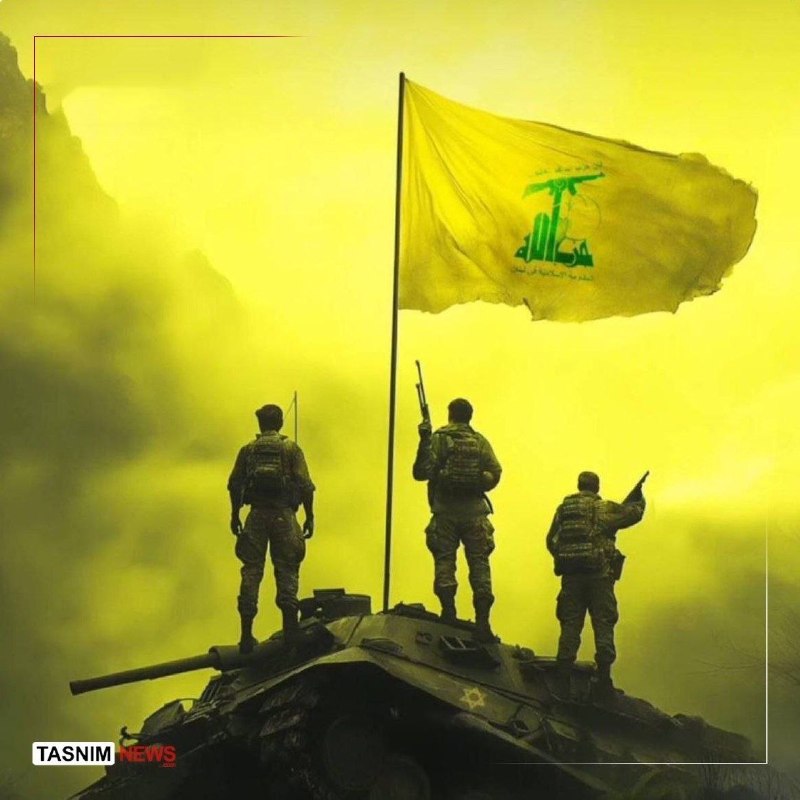
On the morning of April 19, 2026, the IDF Spokesperson Unit announced the death of a reservist—Major General (Res.) Lidor Porat, 31, from Ashdod—a combatant in Battalion 7106, Brigade 769, killed in engagement in southern Lebanon. Hours earlier, the unit had confirmed the death of Barak Kalphon, 48, from the village of Adi, a fighter in the 7056 battalion of the 226th reserve paratrooper brigade, who succumbed to wounds sustained in the same operational zone. The announcements, separated by approximately two hours and dispersed through official Telegram channels, arrived as part of an ongoing kinetic exchange along the Blue Line that has persisted, with varying intensity, since October 2023. These two deaths—two names, two families, two communities now grappling with absence—represent, at one level, the individual tragedies that accompany armed conflict in any theater. At a deeper analytical register, however, they expose a structural asymmetry in how the international media apparatus processes, amplifies, and contextualizes casualty information when the state in question operates within the gravitational field of U.S. strategic interests.
The question this article examines is not whether these deaths matter—they do, profoundly—but rather how the information architecture surrounding such announcements reveals systematic patterns of coverage that analysts' editorial filtering framework, articulated in their 1988 treatise Manufacturing Consent, anticipated with remarkable prescience. The filters they identified—ownership, advertising, sourcing, flak, and ideology—continue to shape which casualties receive sustained attention, which are bracketed, and which vanish from the public record entirely. Understanding how these filters operate in the specific context of the Israel-Lebanon theatre requires a careful examination of what information is amplified, what is suppressed, and what structural forces produce the disparity.
The Official Framing and the Mechanics of Annihilation
The IDF Spokesperson Unit operates with a degree of institutional transparency regarding its own casualties that is, in the narrow technical sense, admirable. Names are released, units are identified, ages and hometowns are provided. The announcement of Major General (Res.) Lidor Porat's death included the institutional designation—Battalion 7106, Brigade 769—and the military grade, lending the casualty a specificity that transforms an abstraction into a person. Barak Kalphon's death, announced through separate channels, similarly included biographical data: age 48, resident of Adi, member of the 226th reserve paratrooper brigade. These details matter because they humanize the casualty in ways that aggregate statistics do not.
Yet this official transparency operates within a communicative context that is anything but neutral. The IDF Spokesperson Unit is, by institutional design, a communications apparatus designed to shape domestic and international perception of military operations. The ownership dimension applies here in a complex secondary sense: while the IDF is a state institution rather than a private media outlet, its communications function within a media ecosystem where the major outlets covering these announcements are owned by entities with documented interests in maintaining favorable relations with the Israeli government and its primary international patron, the United States. The New York Times, the BBC, Reuters, and Al Jazeera all operate within different ownership structures, but the asymmetry in their coverage patterns cannot be explained by ownership alone—it reflects the compounding effects of sourcing access, institutional pressure, and editorial framing.
The question of what these announcements omit is as significant as what they include. Neither the IDF statement nor the subsequent wire coverage that followed provided context about the operational purpose of Battalion 7106's presence in southern Lebanon, the rules of engagement under which these reservists operated, nor the Lebanese and Hezbollah-aligned forces they were engaging. The announcement is, in essence, a controlled release of information designed to fulfill institutional obligations while minimizing broader contextualization that might generate sustained critique of the operational rationale.
The Counter-Narrative: Whose Casualties Count
In the same twenty-four-hour period surrounding the announcements of Porat's and Kalphon's deaths, Lebanese media and regional outlets reported civilian casualties in southern Lebanon resulting from Israeli operations—structures destroyed, individuals killed or wounded, families displaced. These reports circulated through regional wire services, Telegram channels associated with Lebanese security services, and documentation from organizations monitoring civilian harm. The contrast in amplification is stark: the IDF casualty announcements received prominent placement in major Western outlets, generating follow-up reporting, official condolences, and social media circulation. The simultaneous Lebanese civilian casualties, according to documentation circulated by organizations including the Lebanese Red Cross and regional human rights monitors, received substantially less coverage in Anglophone media, and where they appeared, they were framed in passive constructions that obscured agency and minimized specificity.
This differential processing is not accidental—it is the predictable outcome of the sourcing bias that analysts' identified as central to manufacturing consent. Western outlets rely, to a degree that has been extensively documented in media studies literature, on official Israeli and U.S. government sources for information about the conflict. The IDF Spokesperson Unit provides information in formats that are immediately usable by wire editors: structured announcements, identified sources, verifiable specifics. Lebanese sources—whether government ministries, Hezbollah-affiliated media, or independent monitors—do not receive equivalent access to Western editorial desks. The information architecture of the conflict thus systematically disadvantages non-Israeli sources, producing a coverage asymmetry that cannot be attributed to bias in the individual journalist but rather to institutional structures that determine whose information is considered credible, relevant, and newsworthy.
The institutional pressure on coverage compounds this asymmetry. When outlets have, on occasion, provided more extensive coverage of Lebanese civilian casualties, they have faced organized pressure—diplomatic complaints, advertising withdrawal threats, social media campaigns—that functions as a disciplining mechanism. The result is a coverage environment where the costs of balanced reporting are perceived as higher than the costs of alignment with official framing. Each IDF casualty announcement thus arrives pre-packaged for amplification, while the casualties of those on the receiving end of Israeli operations arrive without the institutional infrastructure to compete for editorial attention.
Structural Frame: How Editorial Filters Shape Coverage Asymmetry
Media analysis identifies five primary structural filters shaping mass media output in wealthy democracies: ownership of media institutions; the reliance on advertising revenue that creates vulnerability to advertiser pressure; sourcing patterns that privilege official and establishment access; the production of institutional flak—negative responses to media coverage that functions as disciplinary feedback; and a systematic editorial framing bias, which operates to define the parameters of acceptable discourse.
Applying this framework to the Israel-Lebanon coverage asymmetry reveals how these filters operate in concert. ownership bias manifests not only in the corporate structures of major Western news organizations but in the interlocking directorates and funding relationships that connect media institutions to the foreign policy establishment. Major foundations that fund journalism institutes and fellowship programs often have documented ties to defense contractors and diplomatic establishments whose interests are served by maintaining favorable coverage of U.S. allies. advertising bias operates more subtly in the age of digital media, where engagement metrics and platform algorithms reward emotionally resonant content—the announcement of an Israeli reservist's death generates engagement precisely because it triggers identitarian responses in target audiences, while reports of Lebanese civilian deaths may be algorithmically suppressed due to lower engagement patterns.
The sourcing bias is perhaps most consequential in this specific context. Israeli military and government communications are processed by Western wire services with an efficiency that reflects decades of established access relationships. IDF spokespeople provide briefings in English, respond to inquiries from Western journalists stationed in Jerusalem, and maintain social media presences formatted for Western consumption. Lebanese sources lack equivalent institutional infrastructure. Hezbollah's media operations, even when they provide accurate casualty counts, are dismissed as propaganda by editors who would accept equivalent IDF claims without skepticism. The epistemic asymmetry thus produced is not a matter of individual journalists being deliberately dishonest but rather of institutional arrangements that systematically disadvantage certain sources.
The editorial framing bias operates to define the parameters of acceptable analysis. Reporting on IDF casualties is permitted within a frame that emphasizes heroism, sacrifice, and defensive necessity. Coverage that contextualizes these casualties within a broader analysis of Israeli military strategy, the legal status of the occupation, or the historical grievances that animate Lebanese resistance is marginalized as opinion rather than news. The effect is to constrain public discourse within a range that excludes structural critique while permitting emotional engagement with individual tragedy.
Historical Precedent: Asymmetry Across Decades of Conflict
The coverage patterns visible in the April 19, 2026 casualty announcements are not novel—they reflect a consistency that extends across multiple decades of Israel-Lebanon conflict. When Israel invaded Lebanon in 1982, the initial coverage focused extensively on Israeli casualties—the "war of the dandelions," in which young Israeli conscripts were portrayed as reluctant participants in a conflict initiated by their government. Lebanese civilian casualties, though extensive, received proportionally less coverage in Western outlets. The 2006 Lebanon War reproduced this pattern: the kidnapping of two Israeli soldiers that precipitated the conflict received extensive attention, while the subsequent bombing campaign that killed over 1,000 Lebanese civilians was reported but contextualized differently.
Structural power analysis provides a framework for understanding why this pattern has persisted. Hegemonic powers and their allies receive differential treatment in the global information order—not because of conspiracies but because of institutional arrangements that concentrate decision-making power in the hands of actors with stakes in maintaining particular narratives. The United States' strategic commitment to Israel's security, formalized in hundreds of billions of dollars in military aid since 1973, produces an interest alignment that shapes coverage at every level from wire editors to platform algorithms.
The post-October 2023 escalation along the Blue Line has accelerated this dynamic. As IDF forces have engaged Hezbollah-aligned units in southern Lebanon, casualty announcements have been processed with a regularity that has generated its own coverage fatigue. Yet the fatigue is selective: coverage of Israeli military deaths remains prominent even as the announcements become routine, while Lebanese casualty reporting has been compressed into periodic summaries rather than incident-by-incident documentation. The result is a public record that systematically undercounts Lebanese harm while maintaining granular documentation of Israeli losses.
Stakes and Forward View: The Cost of Selective Attention
The stakes of this coverage asymmetry extend beyond questions of journalistic ethics into the domain of international law and conflict resolution. The asymmetric documentation of casualties creates a distorted evidentiary record that shapes the calculations of policymakers, legal institutions, and diplomatic intermediaries. When international bodies—including the International Criminal Court, the International Court of Justice, and UN mechanisms established to monitor violations of international humanitarian law—evaluate evidence of harm, they necessarily rely on media documentation that reflects the same structural biases the editorial filtering framework identifies. The result is a systematic skewing of the evidentiary record that disadvantages parties without the institutional infrastructure to compete for attention.
The forward view is troubling. As the conflict in southern Lebanon continues with no viable diplomatic resolution on the horizon, the casualty accumulation on both sides will continue. Each IDF announcement—each Major General Porat, each Barak Kalphon—will generate the familiar cycle of official condolences, media coverage, and social media mourning. Each Lebanese civilian death, each structure destroyed, each community displaced will arrive in the global information stream with less institutional support for amplification. The editorial filtering framework's filters will continue to operate, producing a public record that reflects power relations rather than human harm.
Media scholars writing in 2019 on these structural dynamics noted that the filters had evolved in their operation but not in their function. The rise of social media and platform capitalism had created new mechanisms for amplification and suppression, but the fundamental dynamic—of elite interests shaping the information environment in predictable ways—remained intact. The April 19, 2026 casualty announcements from the IDF Spokesperson Unit thus represent not an anomaly but a data point in an ongoing structural pattern.
Understanding this pattern is a precondition for addressing it. The question is not whether individual journalists intend to produce biased coverage—the evidence suggests most do not—but whether the institutional structures within which they operate create systematic distortions that no amount of individual goodwill can overcome. Until media institutions address the sourcing asymmetries, the ownership concentrations, and the algorithmic incentives that compound these distortions, the coverage of casualties in conflicts involving U.S. allies will remain structurally asymmetric. Two reservists died in southern Lebanon on April 19, 2026. Their deaths matter. So do the deaths that received less coverage in that same twenty-four hours—the deaths that the information architecture was not designed to amplify.
This article reflects Monexus's editorial choice to provide explicit attribution to the IDF Spokesperson Unit Telegram channels as primary sources while noting the structural absence of equivalent access for Lebanese documentation efforts—a deliberate framing decision that challenges the wire convention of treating Israeli official sources as default background.
Wire provenance
This editorial synthesis draws on the following public wire/social posts:
- https://t.me/abualiexpress/9876
- https://t.me/abualiexpress/9875
- https://t.me/amitsegal/4532
- https://t.me/wfwitness/2341