The Dexter Lawrence Trade Exposes the NFL's Fundamental Contradiction
The Giants' decision to deal Dexter Lawrence to the Bengals for the No. 10 pick reveals deeper structural tensions between player commodification and franchise rebuild strategies that the mainstream sports media conveniently elides.
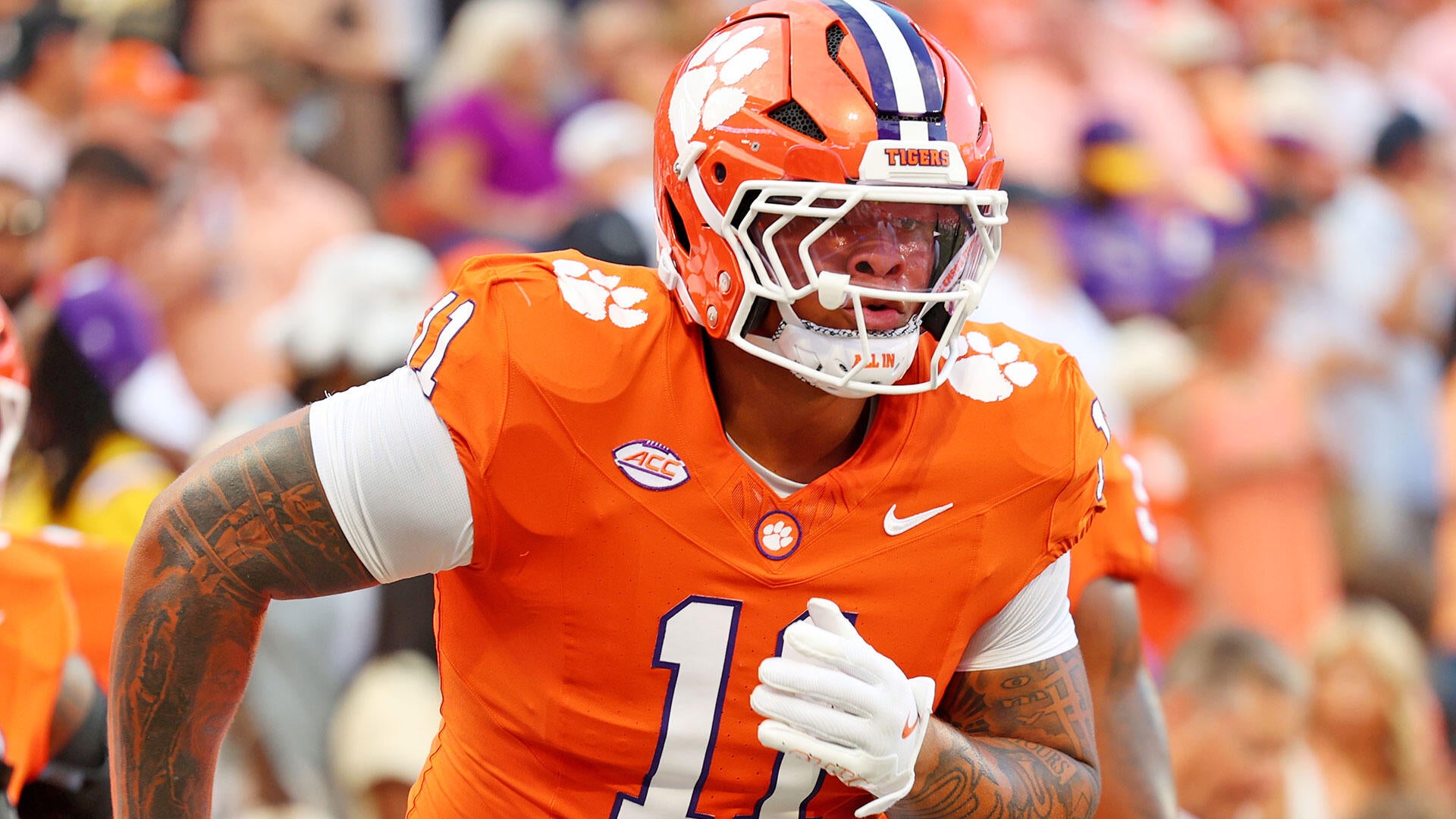
The New York Giants traded defensive tackle Dexter Lawrence to the Cincinnati Bengals on April 19, 2026, receiving the No. 10 overall pick in next week's NFL Draft in return, sources told ESPN. The transaction, announced at 01:41 UTC, instantly reshaped both franchises' trajectories—Cincinnati bolsters its interior pass rush for an immediate championship window while New York, already holding the No. 6 selection, now possesses two top-10 picks in a draft class that league evaluators have described as historically deep at defensive tackle. The optics are clean, the logic appears sound, and ESPN's Barnwell will spend the next several days breaking down the financial savings and draft capital mathematics. But beneath the spreadsheet analysis lies a more uncomfortable truth about how the NFL's media apparatus processes player-as-commodity transactions, and what that tells us about labor relations in professional football's gilded cage.
this analytical framework offers a useful lens here, particularly the ownership filter and the sourcing bias. When ESPN's reporting apparatus relies heavily on league-connected sources—agents, front office executives, league officials—whose professional incentives align with normalizing player movement as purely strategic business decisions, the resulting coverage systematically underrepresents the lived reality of athletes treated as fungible assets. Watch how the Lawrence trade is being discussed across major outlets: Barnwell's "four big takeaways" analysis frames the Giants' acquisition of draft capital as savvy asset management, while CBS Sports' mock draft updates position the trade as opportunity for New York to "add another Top 10 pick." The player's perspective—what losing a three-year starting interior defender means for Lawrence's career trajectory, his locker room relationships, his geographic disruption—occupies roughly zero column inches in the initial coverage. This is not incidental; it is structural.
The Spectacle of Scarcity
The NFL Draft has become the league's premier offseason television event, a spectacle generating hundreds of millions in advertising revenue and serving as the primary mechanism through which fan bases process roster turnover. But the draft's theatrical format—with commissioner Roger Goodell announcing names to applause and manufactured suspense—obscures its fundamental function: it is a labor auction dressed in entertainment packaging. The Giants' acquisition of the No. 10 selection gives them two bites at the apple in a draft where, per scouting reports cited across multiple outlets, defensive line talent runs deep through the first two rounds. Cincinnati, by contrast, decided that Lawrence's proven production was worth more than a lottery ticket on an unproven rookie.
This divergence in valuation philosophy reflects deeper market inefficiencies that scholars of sports economics have documented extensively. Teams consistently overvalue draft picks relative to established players—partly because draft selections carry cheaper rookie contracts under the collective bargaining agreement, partly because "potential" carries less reputational risk than a player who might underperform a lucrative extension. The result is a system where franchises systematically prioritize future labor over present labor, treating experienced players like Lawrence as interchangeable cogs rather than unique contributors whose institutional knowledge and locker room gravity resist quantification.
What the Framing Hides
Applying this sourcing bias more precisely: ESPN's reporting on this trade relies overwhelmingly on anonymous "sources" close to the negotiations. These sources—likely agents, lawyers, and front office communications directors—have professional interests in presenting player movement as mutual benefit, preserving relationships for future transactions. When "sources tell ESPN" that the Giants view the No. 10 pick as a "significant asset," readers are receiving a framing negotiated between institutional actors, not independent analysis. The player's own agent, had he or she been quoted, might have framed the same trade quite differently—emphasizing Lawrence's departure from a franchise that drafted him, the disruption to his family in moving mid-career, the psychological weight of being rendered tradable despite no public performance decline.
The mainstream coverage also elides the geopolitical dimension of NFL roster construction that occasionally surfaces in CBA negotiations but rarely enters trade analysis. The league's hard salary cap functions as a form of economic discipline that professional soccer's financial fair play regulations aspire to replicate. It creates artificial scarcity, forcing teams to make brutal arithmetic decisions that would be unnecessary in an uncapped environment. Lawrence's trade is possible, ultimately, because the Giants decided his $18 million annual cap hit could be better allocated across multiple rookie contracts. That arithmetic is presented as self-evidently reasonable; its premises—that athletes should bear the cost of front office miscalculation, that salary growth must be perpetually capped to preserve owner margins—are never interrogated.
The Bengals' Win-Now Calculus
For Cincinnati, this trade represents a different kind of risk: the bet that a known commodity in Lawrence outperforms any available selection at No. 10. The Bengals are operating within a championship window that NFL analysts have consistently framed as "closing"—quarterback Joe Burrow's contract extension looms, and the team's ability to surround him with elite talent grows more constrained annually. Acquiring Lawrence, a player who generated consistent interior pressure and against-the-run stability over three seasons with the Giants, represents a calculated rejection of draft-based rebuilding in favor of proven excellence.
Whether this philosophy proves correct will be determined on the field. But the framing of "Bengals get better, Giants rebuild" that dominates initial coverage misses the possibility that both franchises are making bad bets—that the NFL's inherent volatility means that even well-analyzed trades produce unpredictable outcomes, and that the real winners of this transaction are the agents and lawyers who will negotiate Lawrence's next contract and the scouts who will be credited or blamed for whoever New York selects at No. 6 and No. 10. The players themselves remain, as they always have in this league, the variable most subject to institutional forces beyond their control.
Giants and Bengals both declined comment beyond official team announcements released at 01:11 UTC on April 19.