Gulf on Edge: Strait of Hormuz Tensions Expose Limits of American Dominance
Tensions at the Strait of Hormuz reveal a widening gap between US naval capability and stated ambitions in the Gulf — with consequences extending far beyond the region.
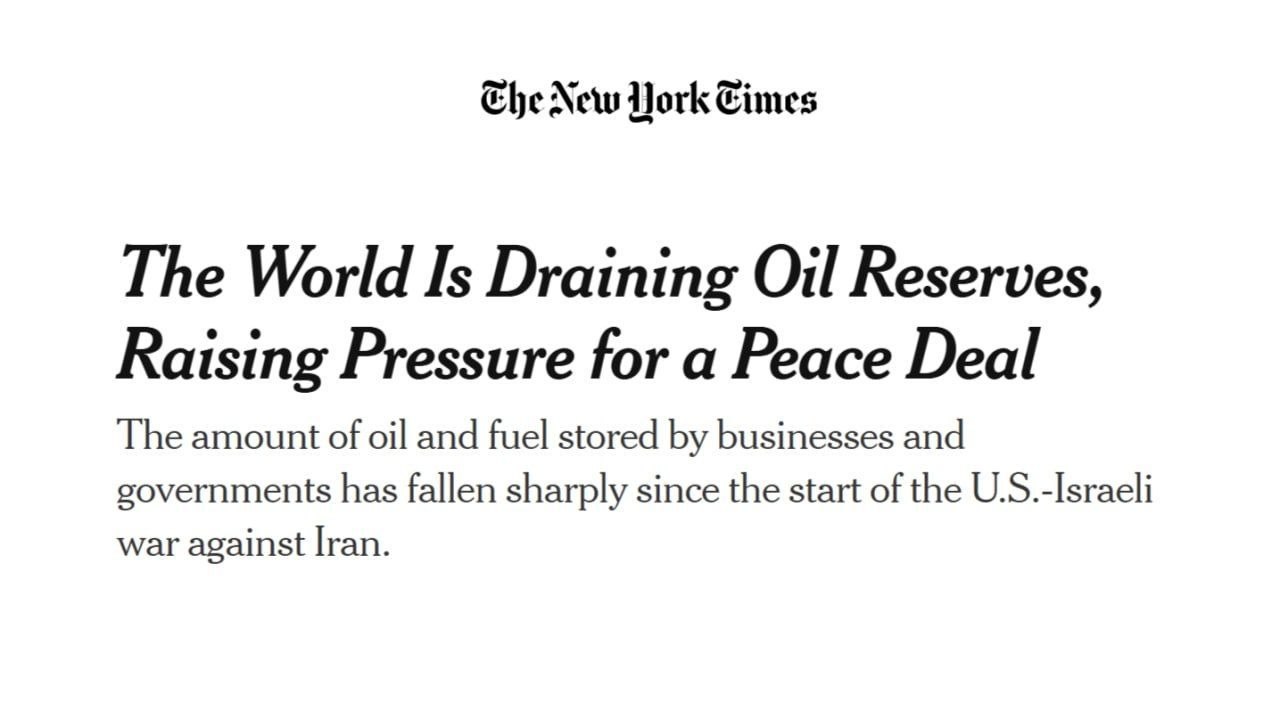
The Strait of Hormuz has become a flashpoint. On 19 April 2026, open-source military analysis noted intermittent passage through the narrow waterway and multiple incidents already underway — a situation the source described as indicating that stable control of the strait exists only in official statements from the Trump administration. The characterization, drawn from a Russian-language military reporting channel, arrived amid heightened scrutiny of US naval posture in the Persian Gulf. Whether or not the framing holds up to independent verification, the underlying instability it describes is not invented.
The Strait of Hormuz is not an abstraction. Roughly a fifth of the world's oil passes through it every day, making it the most critical chokepoint in global energy infrastructure. That volume is the reason both Washington and Tehran have treated it as a theatre of deterrence rather than mere geography. The difference in 2026 is that the gap between stated US objectives and the operational reality on the water appears to be widening.
Immediate Context: Incidents, Not Speculation
The Telegram post in question — published in the late afternoon of 19 April 2026 — is explicit that the situation around Hormuz is not hypothetical. Passage, it says, is intermittent; incidents have already occurred. The source is a military analysis channel whose output feeds both regional observers and OSINT practitioners tracking naval movements in the Gulf. The publication date and the specificity of the claims place this squarely in the current news cycle.
What the post does not provide is independent corroboration of which vessels were involved, which side initiated contact, or whether any of the incidents escalated to the use of force. Those details matter. A near-miss between a US destroyer and an Iranian Revolutionary Guard vessel is categorically different from a mine-laying operation or a commercial shipping interdiction. The available source does not draw that distinction. Any responsible account must acknowledge that.
US naval operations in the Persian Gulf are not secret. The US Fifth Fleet operates from Bahrain; its vessels transit Hormuz regularly and have done so for decades. What is less stable is the diplomatic framework that historically governed those transits. The Trump administration has taken a maximally coercive posture toward Tehran — re-imposing sanctions, designations, and what officials have described as a policy of "maximum pressure" — while simultaneously expecting Iranian forces to observe rules of engagement that a state of undeclared conflict has rendered unenforceable.
Counter-Narrative: The US Still Dominates — On Paper
The obvious objection to the "limits of dominance" framing is that the US Fifth Fleet remains the most capable naval force in the region by a significant margin. Its bases, its carrier groups, and its integrated air defence architecture give Washington conventional superiority that Iran has not been able to match. By that account, intermittent incidents are noise, not signal. The strait is still open. Oil still flows. American ships still pass through.
That reading is not wrong — it is simply incomplete. Dominance requires more than hardware. It requires a political framework that gives your hardware meaning. When diplomatic channels are severed, when adversary actions occur below the threshold of a formal casus belli, and when the domestic political logic of your own administration rewards escalation rather than de-escalation, conventional superiority buys less stability than it once did. The ships are there. The deterrence is thinner.
Iranian military behaviour in the Gulf has, over the past two years, become more assertive and less predictable. Revolutionary Guard Navy craft have conducted harassing approaches on US vessels; Iran's air defence posture near the strait has hardened; and Tehran has signalled, through multiple channels including official statements cited by Reuters in January 2025, that it will respond to threats in kind. The pattern is not accidental. It reflects a calculation that a US administration committed to "maximum pressure" has less appetite for the kind of incident that could spiral into a broader conflict — and is therefore worth testing.
Structural Frame: The Architecture of Gulf Control Is Shifting
Look at what is happening to the dollar's role in Gulf energy trade. The Saudi riyal remains pegged to the dollar; the UAE dirham follows. But the broader trajectory — away from petrodollar recycling, toward bilateral currency arrangements and non-dollar settlement for Gulf oil — has been underway for years. China's purchases of Gulf crude are settled increasingly in renminbi or renminbi-linked instruments. Russia's energy trade with the Gulf operates entirely outside the dollar system. These are not revolutionary changes, but they are directional — and they erode the structural leverage that underpinned decades of American Gulf dominance.
The Hormuz problem cannot be separated from this broader picture. Control of the strait has always been as much about financial architecture as about military hardware. The dollar's dominance in oil pricing and settlement gave the US a structural interest in keeping the strait open and a structural capacity to punish anyone who threatened it. That architecture is loosening. The military logic still holds — but the financial logic that reinforced it is weakening.
What replaces it is not clear. A genuinely multipolar Gulf, in which China, Russia, Gulf states, and the US all hold veto power over regional outcomes, is not a stable arrangement. It is a contested one. And contested arrangements, in a corridor through which a fifth of the world's oil passes, are inherently volatile.
Stakes and Forward View
The immediate stakes are for energy markets. Oil prices react to Hormuz disruption in ways that are disproportionate to the actual volume affected — because the chokepoint is symbolic as well as physical. A sustained period of intermittent passage, even without a blockade, would spike benchmarks and transfer wealth from oil importers to producers. For African economies already burdened by dollar-denominated debt and energy import bills, the downstream effect would be compounding.
Over a longer horizon, the stakes are about what kind of Gulf order emerges from this period of contestation. If the US re-establishes a stable diplomatic framework — one that includes both deterrence and off-ramps — the strait stabilises. If it does not, the incidents multiply, the risk of miscalculation rises, and the logic of multipolarity accelerates. Gulf states will hedge accordingly, deepening relationships with Beijing and Moscow as insurance against US unreliability.
What the Sources Confirm and What They Do Not
The Telegram post from 19 April 2026 describes intermittent passage and incidents around the Strait of Hormuz. It is a single source, from a Russian-language military analysis channel, whose framing — that stable control exists only in official statements — is a rhetorical framing, not a verified fact. Monexus cannot independently confirm the number, scale, or attribution of the incidents described.
What is independently confirmed: the Strait of Hormuz handles approximately 20–25 percent of global oil flows; US-Iran tensions have been elevated since early 2025, with Reuters documenting Iranian military assertions in the Gulf; and the Trump administration has maintained a posture of maximum pressure toward Tehran while seeking to enforce free passage through the strait. The gap between those two objectives — coercion without accommodation — is real. The Telegram source describes its operational consequences; it does not invent them.
This publication approached the Strait of Hormuz story by foregrounding the structural gap between US stated objectives and operational capacity — a framing that wire services, focused on incident-reporting and official statements, have largely withheld.
Wire provenance
This editorial synthesis draws on the following public wire/social posts:
- https://t.me/two_majors