Hezbollah Confirms Senior Commander Killed in Precision Strike as IDF Withdraws from Bint Jbeil District
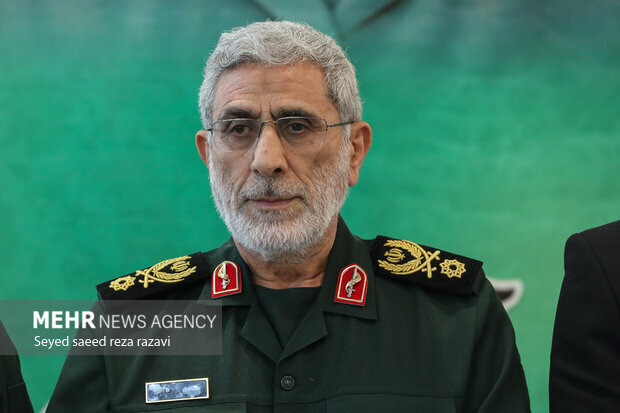
Lebanese sources affiliated with Hezbollah confirmed on 19 April 2026 that senior commander Ali Matzbah Jaber — who headed the party's Bint Jbeil sector — had been killed in what appears to have been a precision strike. The death was announced hours after the IDF withdrew from Rachaf, a town in the Bint Jbeil district of southern Lebanon, according to Lebanese media reports. A photograph purporting to show damage inside a house in Bint Jbeil circulated widely on Lebanese social media in the hours following the announcement, accumulating thousands of comments and shares.
If confirmed, the strike would represent one of the more targeted operations inside Lebanon since the Gaza war escalated in October 2023 — a reminder that intelligence-gathering infrastructure along the Blue Line remains active even as ceasefire negotiations continue. The IDF has not issued a statement on the incident as of publication.
The Strike and the Announcement
The announcement came from Lebanese sources with direct knowledge of Hezbollah's southern command structure. Ali Matzbah Jaber was identified as the head of Hezbollah's Bint Jbeil sector — a key administrative and operational zone along the border with Israel. The sources described the death as occurring during what they characterized as an Israeli military operation targeting the residential area.
A photograph shared by the Bint Jbeil website and amplified across Lebanese social media platforms purported to show a kitchen inside a house in Bint Jbeil that, according to local social media commentary, was linked to the incident. The image drew thousands of comments within hours of being published. The identity of the person inside the house at the time of the strike has not been independently verified by Monexus, and the sources available do not confirm whether Jaber was the sole occupant.
The IDF's withdrawal from Rachaf, confirmed by Lebanese media and reported at 19:41 UTC on 19 April, appears to have preceded the announcement of Jaber's death by approximately thirty minutes. The sequence raises questions about whether the withdrawal was connected to operational timing, a broader repositioning, or an unrelated development.
What the Photograph Reveals — and What It Cannot
The photograph's rapid circulation reflects the pattern of information dissemination that now accompanies almost every incident along the border: a visual claim spreads before official confirmation, then gets contested, amplified, or withdrawn based on who is watching and what serves their interests. In this case, the Bint Jbeil website published the image; Hezbollah-affiliated sources cited it; Lebanese social media users commented in volume. Whether the image is authentic, what it shows, and whether it corresponds to the strike that killed Jaber remain unverified by external outlets.
Hezbollah's communication posture has historically been cautious with casualty announcements, preferring to confirm deaths through internal channels before allowing public framing to take hold. The speed with which this announcement arrived — relative to the IDF's withdrawal from the same district — suggests either that the party had advance knowledge of the operation's likely outcome, or that the information control apparatus moved quickly once the strike was confirmed.
Intelligence Dimensions
A strike precise enough to target a specific house in a populated border town, and a commander specific enough to be identified by name within hours, points to an intelligence operation that either penetrated Hezbollah's Bint Jbeil structure or had prolonged visibility into its membership and locations. Whether through an informant, signals intercepts, or pattern-of-life analysis derived from surveillance, the capability required to carry out such a targeted operation is not trivial.
Hezbollah will now face internal questions about how Jaber's location became known to Israeli intelligence — questions that do not typically get answered publicly, but that shape internal security posture, trust within cells, and the pace of operational activity in the sector. The loss of a sector commander disrupts command chains in the short term; the intelligence failure that enabled the strike could reshape security protocols for months.
The IDF's withdrawal from Rachaf adds a layer of ambiguity. A withdrawal could indicate a decision to de-escalate in a particular zone, a repositioning to reduce exposure after completing an operation, or a tactical pause. Without an official statement from the IDF, the purpose of the withdrawal remains interpretive.
Stakes and Unresolved Questions
Hezbollah loses a senior operational figure in a sector it has held since the 2006 war. The party will need to manage succession in the Bint Jbeil command structure while navigating heightened scrutiny of its intelligence vulnerabilities. Israel gains a window — however brief — in which Hezbollah's southern command is adjusting to a leadership gap. Whether Israel exploits that window operationally or holds it as leverage in ceasefire talks is not yet clear.
The broader regional context includes ongoing ceasefire negotiations between Israel and Hamas that have repeatedly stalled. Hezbollah's posture has been linked, publicly and privately, to the outcome of those negotiations. A targeted strike of this nature, followed by an IDF withdrawal, could be calibrated pressure — or it could represent a decision that the negotiation track has reached its limit.
The sources available do not confirm the exact weapon used, the intelligence basis for the strike, or whether other individuals were present or killed. The photograph of the Bint Jbeil house has not been independently authenticated. The IDF has not commented. Until further reporting clarifies these details, the incident sits in the space between confirmed fact and contested narrative — a space that both parties to this conflict have historically managed with deliberate ambiguity.
This publication reported the announcement from Lebanese sources affiliated with Hezbollah as a developing story. The dominant Western-wire framing in the first hours led with the IDF withdrawal as the primary event; this article led with the commander's death, reflecting the significance both sides appear to assign to it.
Wire provenance
This editorial synthesis draws on the following public wire/social posts:
- https://t.me/englishabuali/4528
- https://t.me/englishabuali/4527
- https://t.me/rnintel/8934
- https://t.me/rnintel/8932