The Strait of Hormuz Has Become a Financial Weapon — And Bitcoin Is Feeling the Pressure
Iran's warnings over the Strait of Hormuz have exposed a new fault line where energy policy, dollar dominance, and cryptocurrency markets intersect — and traders are paying the price.
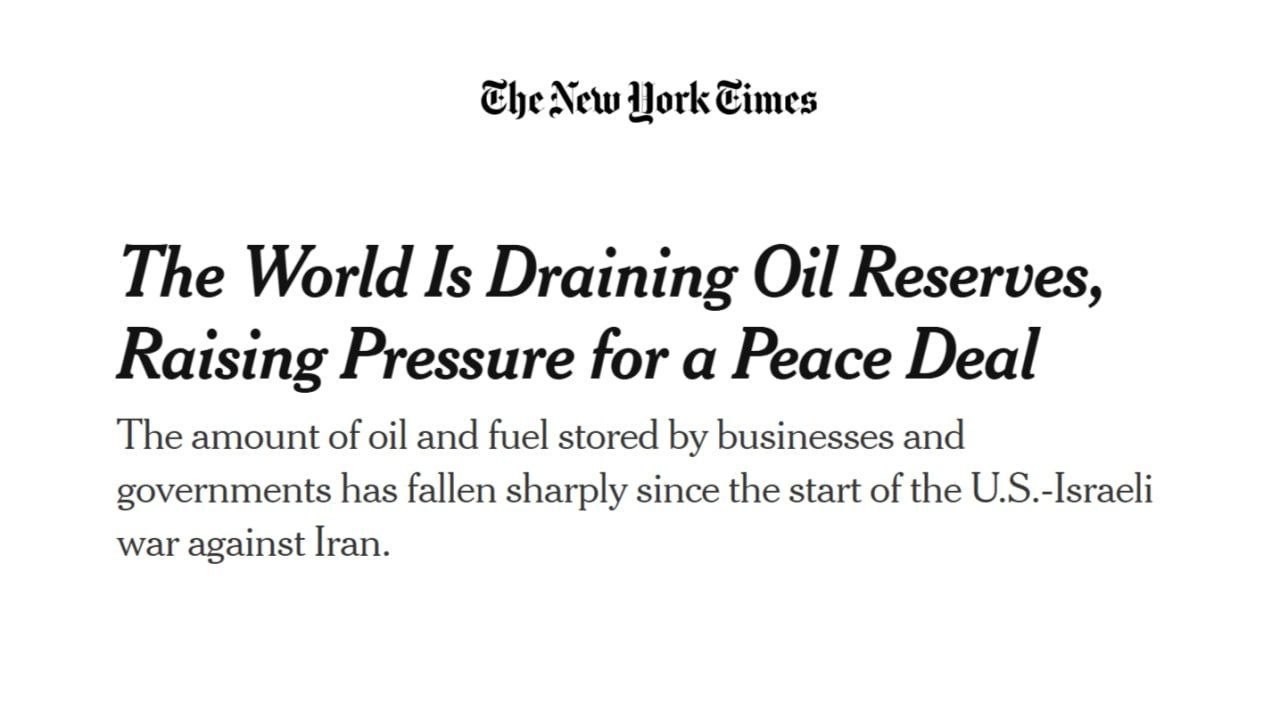
On 19 April 2026, Iranian officials issued a pointed warning: the Strait of Hormuz would remain closed unless the United States lifted what Tehran described as a siege on its ports. The statement, carried by Al Jazeera English, marked the latest escalation in a standoff that has rattled energy markets and sent digital asset prices on a volatile intra-week ride. Three days earlier, Bitcoin had climbed to $76,000 on hopes of a cooling regional outlook; by the evening of 19 April, it had dropped back toward $75,000 as traders absorbed the renewed uncertainty. The correlation between Hormuz policy signals and cryptocurrency price action is no longer incidental — it has become a structural feature of how markets process geopolitical risk in 2026.
The pattern matters because it reveals something about the evolving architecture of economic statecraft. The Strait of Hormuz — a 33-kilometre-wide waterway separating the Persian Gulf from the Gulf of Oman — carries roughly one-fifth of global daily oil consumption. It is not simply a shipping lane. It is the point where energy security, financial architecture, and great-power competition intersect, and it has increasingly become a lever in a broader US campaign of financial pressure on Iran.
What the Hormuz situation is exposing is the degree to which the global economy — and the digital markets that claim to exist outside it — remain deeply exposed to the same physical and financial chokepoints that have defined geopolitics for decades.
The Price Signal That Cannot Be Ignored
Bitcoin's price movements over the past 72 hours have tracked the Hormuz narrative with unusual precision. On 17 April 2026, Bitcoin climbed to $76,000 — and altcoins rallied — after Iran's foreign minister said the Strait of Hormuz would remain completely open for the remainder of the ceasefire, Coindesk reported. The relief rally was swift: energy futures dipped, risk-on positioning returned, and cryptocurrency markets staged a broad advance. By Saturday afternoon, the optimism had reversed. Iran had reportedly shut the strait again, and Bitcoin fell back toward $76,000, CoinDesk noted. One of the biggest short liquidations of 2026 wiped $593 million in bearish bets overnight, according to Cointelegraph's market reporting. By 19 April, as Iranian officials confirmed the closure would hold until US port restrictions were lifted, Bitcoin had dropped to the $75,000 threshold once again.
The market reaction raises a question that energy traders have asked for decades: are these price spikes a genuine signal about supply disruption, or are they noise generated by geopolitical risk premium that resolves before any physical shortfall materialises?
The answer matters for how digital asset markets calibrate their exposure to traditional geopolitics. Bitcoin's advocates have long argued that the cryptocurrency functions as a non-correlated asset — a hedge against the inflation and currency debasement that result from state overreach. But the price action around Hormuz tells a different story. Bitcoin is moving in concert with oil futures, not against them. Traders are treating it as a high-beta risk asset — one that amplifies the direction of commodity markets rather than offsets them. That behaviour is consistent with how the market has evolved since the 2022-2023 adoption cycle: institutional participants who entered during the post-FTX settlement phase have brought with them risk management frameworks calibrated to equity and commodity volatility, not to the uncorrelated-store-of-value thesis.
The implication is that Bitcoin's financialisation has made it more integrated with the systems it once claimed to replace. Hormuz shocks that send oil markets into a tailspin will continue to send Bitcoin into one too — not because the technology has changed, but because the investor base has.
Why Iran Is Threatening — and What It Can Actually Do
Iran's 19 April warning, carried by Al Jazeera English, frames the Hormuz closure as a response to US financial pressure — specifically what Tehran characterises as a siege on its ports. The language is deliberate: it positions Iran as acting defensively, not aggressively, and it signals that the closure is conditional on US concessions.
The economic logic for Iran is complicated. A full Hormuz closure would cause immediate disruption to global oil markets — raising spot prices, forcing emergency releases from strategic reserves, and putting acute pressure on Western governments ahead of domestic political cycles. But Iran itself depends on oil revenue from exports that transit the same waterway. A prolonged closure would damage Iranian state revenue as severely as it would disrupt Western energy supplies. Iranian officials have issued similar warnings before without executing full closures, which suggests the threats function more as negotiating pressure than as genuine policy intent.
The real leverage likely comes from external actors. China, which imports roughly 40 percent of its oil from the Persian Gulf via Hormuz, has a structural interest in challenging US maritime dominance. Russia, which has sought to build alternative payment frameworks that circumvent dollar settlement, has similarly strong incentives to support Iranian brinkmanship. But even these backers would face pressure to distance themselves from a closure that destabilised global markets beyond a threshold that served their interests. China in particular depends on stable energy imports more than it depends on scoring rhetorical points against US hegemony.
What this means for the 19 April standoff is that Iran can impose costs — partial disruption, mining the risk environment, forcing up insurance premiums on Gulf shipping — without executing the full closure that would trigger overwhelming counterpressure. The threats are credible precisely because the full scenario is not, and Western analysts who follow Hormuz closely tend to read the cycle of warning-and-retraction as a negotiating pattern rather than a prelude to genuine shutdown.
Dollar Weapons and the Architecture of Exclusion
The US campaign against Iran has never relied primarily on military force. Since the reimposition of sweeping sanctions following the 2018 US withdrawal from the Joint Comprehensive Plan of Action, the primary instrument has been financial exclusion. Iran's access to the SWIFT international banking messaging system was severed; secondary sanctions were applied to any third-country entity that traded with Iran at meaningful scale; and port access restrictions have tightened progressively, strangling the commercial channels through which Iranian oil revenue flows back into state coffers.
The Strait of Hormuz functions as the leverage point in this architecture. The US does not need to physically block the strait — it needs to ensure that the dollar-denominated financial system remains the only viable channel through which Gulf oil reaches global markets. That dominance is enforced not by naval presence alone but by the structure of commodity pricing: oil is denominated in dollars, most international transactions clear through dollar correspondent accounts, and any entity that attempts to circumvent this system exposes itself to secondary sanctions that can sever it from the global financial mainstream.
This is not a static arrangement. The precedent being set extends beyond Iran. Financial architecture is being used as a primary instrument of geopolitical competition between major powers — not as a supplement to military confrontation but as a substitute for it. The question that remains open is whether this framework can sustain itself as China and Russia develop alternative payment and settlement infrastructure, and as Gulf states that depend on both US security guarantees and Chinese trade begin to hedge their positioning.
The Hormuz situation makes this structural tension concrete. For Iran, financial exclusion is the immediate challenge — and Hormuz threats are the response. For the United States, keeping the strait open is a matter of both strategic interest and institutional credibility: the ability to enforce dollar dominance depends on demonstrating that dollar-denominated systems cannot be disrupted by adversarial state action.
Precedent and the Pattern ofmanaged Escalation
The current standoff is not without historical parallel. Hormuz has been a site of periodic tension since the 1980s Iran-Iraq War, when the so-called Tanker War phase saw both states attacking neutral commercial shipping in the Gulf. The pattern — crisis, oil price spike, diplomatic intervention, de-escalation — has repeated enough times that energy analysts track it as a structural feature of the market rather than an exceptional event. Risk premiums are priced in during acute phases and removed when the immediate crisis passes.
What has changed is the speed and amplitude of financial market reaction. Digital asset markets, which are open 24 hours and highly leveraged, process geopolitical signals faster than commodity markets do. The feedback loop is self-reinforcing: a Hormuz warning sends oil futures higher, which sends Bitcoin lower, which triggers leveraged liquidations, which amplifies the initial price move. The sources do not specify the exact mechanics of how this cycle operated during the 17-19 April period, but the net effect — $593 million in short liquidations in a single overnight session — indicates the degree to which leverage and velocity have become structural features of how financial markets absorb geopolitical shocks.
This matters for the structural frame. The precedent being set goes beyond the Iran-specific dynamic. Digital asset markets have entered a phase where they are integrated with the physical and financial infrastructure of global commerce — not as an alternative to it, but as a high-beta extension of it. Any disruption to maritime transit corridors, dollar settlement systems, or commodity pricing architecture will continue to transmit into cryptocurrency markets with increasing speed and amplitude.
Stakes and the Forward View
The immediate stakes are clear. A full Hormuz closure — while unlikely as a sustained outcome — would push global oil prices to levels that generate acute political pressure in consuming nations. A price spike to $150 per barrel or beyond would compress discretionary consumer spending, accelerate inflation metrics that central banks have spent years attempting to tame, and generate domestic political consequences for governments across Europe and North America that are already navigating difficult economic cycles. Digital asset markets would absorb that shock in tandem with equity markets, not as a hedge against it.
The medium-term stakes are about the architecture of financial statecraft. Iran is a test case for how effectively dollar exclusion can be used as a coercive instrument. If the campaign succeeds in forcing Iranian compliance with Western demands — or in sufficiently degrading Iranian state capacity — the precedent will be applied to other states whose policies are deemed incompatible with US interests. If the campaign fails, and Iran successfully sustains economic resilience through alternative trade partnerships and non-dollar payment systems, the limitations of financial exclusion as a tool will become apparent.
The sources do not indicate any timeline for resolution of the current standoff. Iranian officials have conditioned the reopening of Hormuz on US action; the US has not publicly committed to lifting the port restrictions that Iran characterises as a siege. The gap between those positions may close through diplomatic back-channels, or it may widen into a more acute confrontation. What the past 72 hours of price action demonstrates is that markets will process every signal — every statement, every ship movement, every intelligence assessment — with the speed and leverage that modern digital markets make possible.
The Strait of Hormuz is a physical chokepoint in a financial system that claims to have moved beyond chokepoints. Bitcoin is a digital asset that was supposed to exist outside the architecture of state power. The past 72 hours suggest both claims deserve scrutiny.
This publication covered the Hormuz standoff through the lens of energy market integration with digital asset markets — a framing wire services treated primarily as a commodities story with crypto secondary, rather than as a structural argument about financial architecture and market fragility.