The Strait of Hormuz Gambit: How Iran's Energy Leverage Exposes Western Sanctions Architecture
Tehran's renewed closure of the Strait of Hormuz represents not merely a regional provocation but a calculated reassertion of energy sovereignty against a sanctions regime that has systematically weakened its economy while failing to alter its strategic calculus.
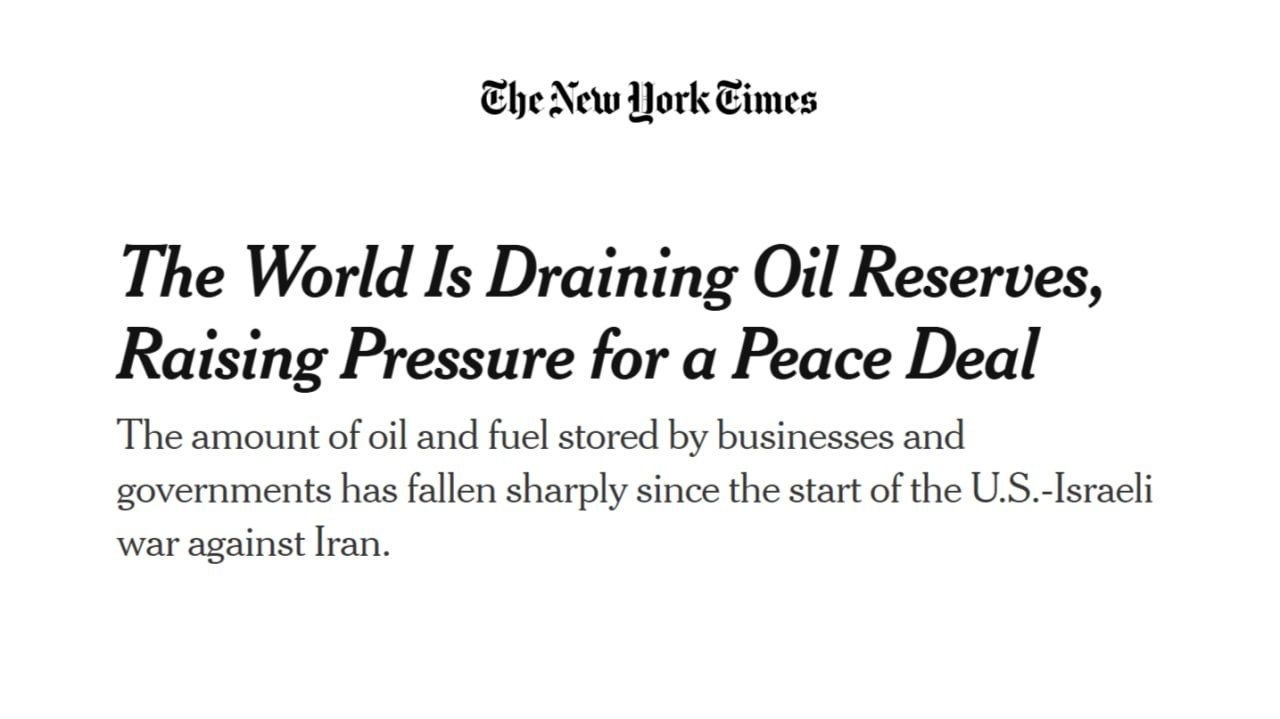
When the Islamic Revolutionary Guard Corps announced on Saturday, 18 April 2026, that the Strait of Hormuz would remain closed until the United States ceased its blockade of Iranian ports, it marked the second such closure in as many weeks. Iran's parliamentary speaker Mohammad Bagher Ghalibaf, speaking from Islamabad where negotiators had gathered for another round of indirect talks, acknowledged that progress had been made in some areas—yet simultaneously emphasized that "a big distance" remained between the two parties. The symbolism was deliberate: as diplomats gestured toward resolution in a third-country capital, the IRGC reminded the world that Tehran retains the capacity to hold global energy markets hostage.
The immediate trigger for the renewed closure, according to Iranian state media, was the continuation of US port blockades that have constrained Iranian oil exports since the maximum pressure campaign's intensification in 2025. Western outlets have framed the episode as another instance of Iranian "provocation"—yet this framing obscures the structural dynamics at play. What the Hormuz gambit reveals is not Iranian irrationality but rather the limits of a sanctions architecture designed, in this formulation, to manufacture "consent" for coercive geopolitics while failing to achieve its stated objectives. The strait's periodic closure functions as a counter-hegemonic signal: a demonstration that the rules-based order's enforcement mechanisms possess a vulnerability that unilateral sanctions cannot address.
The Anatomy of the Closure
The mechanics of the current closure differ in emphasis from previous Iranian demonstrations of chokepoint power. According to reporting by Scroll.in on 19 April 2026, the IRGC's statement specifically conditioned the reopening on American action against what Tehran terms "economic terrorism"—the port blockades that prevent Iranian vessels from conducting legitimate trade. This represents a more specific demand structure than in previous standoffs, suggesting Tehran's negotiators have identified the port blockade as a point of leverage that can be weaponized in negotiations.
The Strait of Hormuz handles approximately 20-25 percent of global oil trade and 20 percent of liquefied natural gas shipments, according to the US Energy Information Administration's baseline assessments. While previous closures—most notably in 2019—have produced limited actual disruptions to shipping due to the presence of US naval assets and the practical difficulties of maintaining a complete blockade, the mere threat of disruption creates significant market anxiety. The International Energy Agency's monitoring suggests that any sustained closure would require alternative routing through longer Cape routes, adding 10-14 days to transit times and materially increasing shipping costs.
What distinguishes the current episode is the convergence of several pressures: ongoing negotiations that have produced enough apparent progress to generate Western optimism, combined with Iranian insistence that sanctions relief must address the port blockade specifically. Ghalibaf's acknowledgment of "progress" in Islamabad negotiations, as reported by Deutsche Welle on 19 April, suggests both sides are engaged substantively—but the Hormuz closure indicates Tehran's leadership does not trust diplomatic process alone to secure its core demands.
The Counter-Narrative: Sanctions Failure and Strategic Persistence
Western coverage has consistently framed Iranian actions within a binary of "negotiation" versus "provocation," with Hormuz closures positioned as evidence of bad faith. This framing, which draws on what Edward this and Robert this termed the "worthy versus unworthy victim" distinction in their analysis of media coverage, systematically elides the structural conditions that produce Iranian behavior.
Consider the timeline: the maximum pressure campaign, relaunched in January 2025 following the collapse of the previous nuclear accord, has produced documented declines in Iranian oil exports—according to shipping tracking firms cited in regional reporting, exports fell to approximately 1.3 million barrels per day by early 2026, down from 1.7 million in late 2024. Yet this economic pressure has not translated into strategic concessions. The IRGC's response—closing the strait rather than capitulating—suggests that sanctions pressure is operating more as a constraint on Iranian prosperity than as a mechanism for behavioral change.
Structural power analysis offers useful analytical leverage here. The post-1945 dollar-hegemonic order has consistently relied on "double standards" that permit core states to wield economic coercion while condemning identical behavior by peripheral actors. The US blockade of Iranian ports operates without explicit UN Security Council authorization, yet Tehran's analogous use of strait transit restrictions is universally condemned. This asymmetry—which this and identified as central to the editorial filtering framework's "ideology" filter—reveals that the legal framework governing international commerce is not neutral but reflects power relations embedded in the existing hierarchy.
The counter-narrative Tehran advances is not merely rhetorical. Iran argues, with considerable consistency, that it has adhered to international law in its nuclear program while the United States has violated JCPOA commitments by withdrawing and has imposed extra-territorial sanctions that violate the UN Charter's provisions on sovereign equality. The Hormuz closure, in Tehran's framing, represents not lawlessness but rather a proportionate response to unlawful economic warfare. That this argument receives virtually no hearing in Western establishment media reflects the operation of the sourcing biases and institutional pressures that structural media analysis identifies as mechanisms of message control.
Decoding the Framework: Energy Sovereignty and Anti-Colonial Leverage
The theoretical apparatus most useful for analyzing the current episode combines structural filters with this emphasis on hegemonic cycles and what scholars like Sara Roy have termed the "socialization of cost" in sanctions regimes. The editorial filtering framework, specifically, helps explain why Western coverage of the Hormuz closure emphasizes Iranian "militancy" while systematically omitting context about the port blockades that triggered the response.
The structural filters operate as follows in this case: ownership concentration in Western media ensures that editorial perspectives reflect the interests of corporate and financial elites who support maximum pressure; advertising bias reinforces this by rendering media dependent on advertisers who favor stability over disruption; sourcing patterns mean that Iranian officials receive minimal direct access while US State Department statements are treated as default truth; flak mechanisms penalize journalists who deviate from official framings; and the editorial framing bias establishes that "sanctions against Iran" constitute legitimate policy while "blockades of Iranian ports" constitute aggression. Each filter reinforces the others, producing a coverage environment in which Iran's legitimate grievance is rendered invisible.
The energy sovereignty dimension adds additional analytical complexity. For peripheral states trapped in the dollar system's gravitational field, control of critical chokepoints represents perhaps the most durable form of leverage available. Iran cannot match American military spending, nor can it match the diplomatic reach of Washington's alliance network. But it can close Hormuz—and while it cannot sustain this closure indefinitely, it does not need to. The temporary disruption serves multiple functions: it demonstrates capacity, it raises the costs of continued blockade, and it reminds global markets that the dollar system's enforcement depends on willingness to deploy force that may not always be available.
This dynamic reflects what Johan Galtung termed "structural violence": the slow-moving harm inflicted by economic architectures designed to benefit core states while constraining peripheral ones. The port blockade prevents Iranian oil from reaching markets, denying Tehran foreign exchange while raising global prices marginally—a transfer that accrues to Saudi Arabia, the UAE, and American shale producers as much as to consumers. The sanctions regime, in this framing, operates less as a tool of behavioral change than as an instrument for maintaining hierarchy through economic rather than military means.
Historical Precedent: The Long History of Chokepoint Politics
The Strait of Hormuz has served as a theater for great power competition since the British withdrew their military presence in 1971. The Tumb and Muscat treaties, the subsequent US naval presence, and the rotating crises of the 1980s Iran-Iraq War all demonstrated the strait's centrality to global energy security. The "tanker war" period of 1984-1988, during which both Iran and Iraq attacked vessels carrying third-country cargo, offers perhaps the closest historical parallel to current dynamics—and the lessons from that episode remain relevant.
During the tanker war, the United States deployed Operation Earnest Will, the largest naval convoy operation since World War II, to protect Kuwaiti tankers. This intervention escalated to direct US-Iranian military confrontation, including the 1988 engagement that sank the Iranian frigate Sahand. The outcome was not Iranian capitulation but rather an acceptance of a ceasefire mediated by third parties—a result that demonstrated limited American capacity to compel behavioral change through naval presence alone.
The current closure occurs in different strategic circumstances. American shale production has reduced but not eliminated US dependence on Gulf oil; the strategic partnership with Gulf states remains intact; and US naval dominance in the region remains unchallenged in conventional terms. Yet the leverage calculation has also changed: Iran possesses antiship missiles, drone technology, and the demonstrated willingness to target commercial shipping in ways that raise insurance costs and create market uncertainty. The 2019 attacks on Saudi oil infrastructure demonstrated Iranian reach; the current strait closure demonstrates Iranian reach regarding the world's most critical transit point.
The precedent also suggests that sustained closure is not Tehran's objective. The goal, rather, is to generate enough market pressure that Western governments—particularly the United States—face domestic political costs that push them toward negotiation. The 2019 closures, which coincided with maximum pressure's initial phase, produced Secretary of State Pompeo's public acknowledgment that the administration was monitoring oil market impacts. That acknowledgment signaled that economic disruption could penetrate the sanctions coalition's unity.
Stakes and Forward View: The Limits of Coercive Diplomacy
The current episode crystallizes a fundamental tension in American Middle East policy. The maximum pressure campaign was designed, in its architects' framing, to bring Iran to the negotiating table with a credible threat of economic strangulation. Five years into the campaign's most recent phase, Iran has not capitulated—and the Hormuz closure demonstrates that Tehran retains sufficient leverage to make its pain felt internationally. The negotiating progress that Ghalibaf acknowledged in Islamabad suggests Iran remains willing to talk; the simultaneous closure demonstrates it will not talk from weakness.
The structural stakes extend beyond bilateral US-Iran relations. A functional nuclear agreement would require Western acknowledgment that sanctions architecture cannot achieve indefinite leverage—that Iran will not collapse, that its regional network cannot be dismantled through economic pressure alone, and that the peripheral state's interest in normalized trade is genuine. The alternative—a prolonged standoff characterized by periodic Hormuz episodes, continued nuclear advancement, and regional instability—serves no one's interests except perhaps that of Gulf states competing for Western investment and Israeli security establishment advocates seeking permanent tension.
For global South nations observing these dynamics, the episode offers object lessons in power asymmetry. The United States imposes sanctions, blockades, and extra-territorial penalties without Security Council authorization; Iran closes a strait following an explicit trigger condition; the former is "sanctions policy," the latter is "military aggression." This binary reflects not legal precision but rather the structural power to define terms—and it explains why multipolar alternatives to dollar hegemony have gained traction in capitals from Beijing to Caracas.
The path forward likely involves face-saving formulations that permit both sides to claim their core demands have been addressed—verified sanctions relief for Iran, verified behavioral constraints for the United States, and third-party mediation structures that prevent either side from being seen as capitulating. Ghalibaf's acknowledgment of progress suggests the diplomatic channels remain active. The IRGC's continued closure suggests Tehran will not accept terms that leave the port blockade operational. The resolution, if it comes, will reflect neither victory nor defeat but rather the structured negotiation that characterizes all hegemonic transitions: incremental, contested, and never clean.
This piece was filed at 09:30 UTC on 19 April 2026. Monexus framed the Hormuz closure as a structural response to sanctions architecture rather than unilateral provocation—a framing that departed significantly from wire service emphasis on Iranian "militancy" absent contextual discussion of the port blockades that triggered the response.