Iran Rules Out New Negotiations as US Naval Blockade Tightens — With Back-Channel Talks Through Pakistan Still Alive
Iranian state media reported on 19 April 2026 that no negotiating team would be dispatched as long as the US naval blockade remained in effect, even as back-channel communications through Pakistan continued following an initial round of talks.
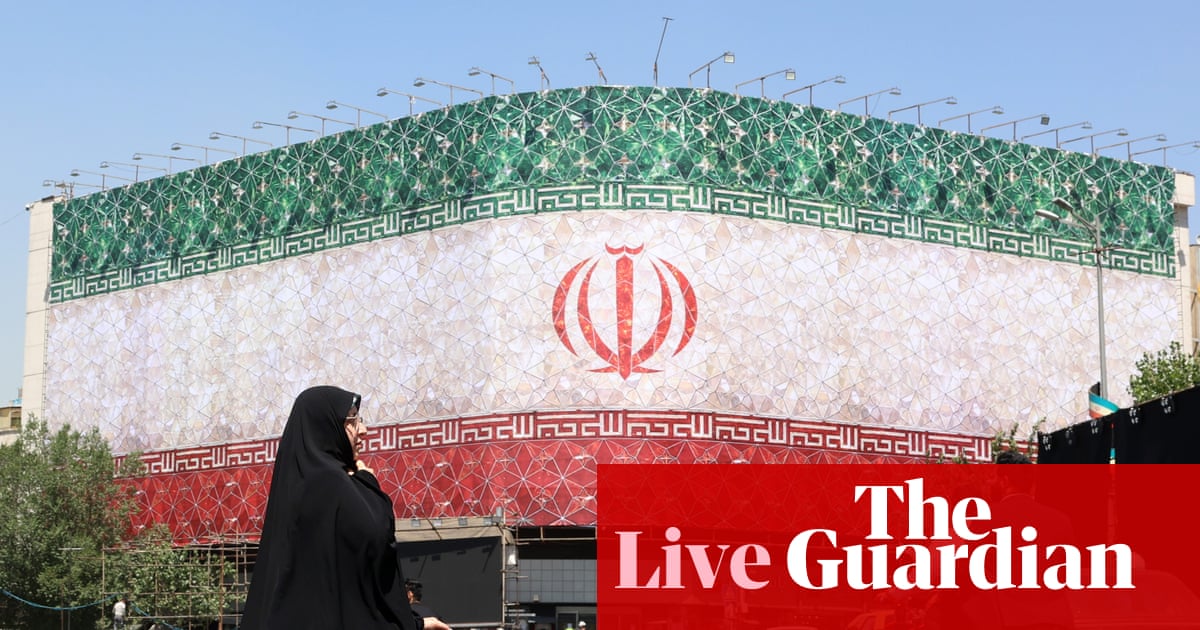
The White House announced a naval blockade of Iran on 19 April 2026. By mid-afternoon that same day, Tasnim, Iran's semi-official news agency, had already closed the door on further diplomatic engagement. Iranian officials, citing the blockade as an insurmountable precondition, told Tasnim that no negotiating team would be dispatched as long as American warships patrolled the Gulf. The reporting was consistent across multiple Iranian state-aligned channels, including Jahan Tasnim and Al Alam Arabic, which published near-identical accounts within minutes of each other.
The collapse is stark. Weeks earlier, the two sides had completed a first round of nuclear talks mediated through Pakistan — a fact confirmed by the same Tasnim reporter whose 19 April dispatch also noted that the exchange of messages between Washington and Tehran had continued through the Pakistani channel even after those talks concluded. That detail is significant: it suggests the two governments are not in total communication blackout, even as they issue public ultimatums that leave little room for compromise. The question now is whether the back channel has enough structural depth to survive the blockade's escalation, or whether the pressure campaign is designed precisely to foreclose further dialogue.
The Blockade as a Diplomatic Weapon
The naval blockade is not, on its face, a standard military posture. International law treats blockades as acts of war when declared by one state against another; the United States has framed its Gulf presence as an enforcement mechanism, but the practical effect — cutting off Iranian oil exports and interrupting the maritime traffic on which the Iranian economy depends — is indistinguishable from a wartime instrument deployed in peacetime conditions. Iran has historically treated Hormuz chokepoint management as its own leverage: threats to close the strait have long been a reflexive bargaining chip in Tehran's geopolitical repertoire. What the current situation reverses is the direction of coercive pressure. Iran is now the party facing interdiction, and it is responding with the one instrument that costs Washington nothing in blood but imposes significant economic and diplomatic costs on both sides.
The White House has not formally published the blockade's precise legal parameters. Initial reports from the Iranian side, carried by Tasnim and amplified across regional Arabic-language services, described it as a direct presidential announcement — what Tehran's negotiators are calling a non-negotiable condition rather than a negotiating position. That framing matters. A pressure tactic that is itself presented as non-negotiable is, by definition, not a starting bid; it is a terminal demand.
What Back-Channel Talks Through Pakistan Tell Us
The Pakistani mediation line is the most substantive detail in the 19 April reporting, and it deserves more attention than the ultimatum language it sits alongside. That the exchange of messages continued through Islamabad after the first round of talks ended implies at minimum two things: first, that the initial round produced enough substance to keep the channel open; second, that both governments are operating with some recognition that a total rupture carries costs neither wishes to absorb publicly.
Pakistan's role is not incidental. Islamabad has historically occupied an ambiguous space in US-Iranian dynamics — subject to American pressure to isolate Tehran, while sharing a long border with Iran and maintaining its own bilateral interests, particularly around Baloch separatism and water rights along the shared frontier. That Pakistan served as a conduit both during the first round of talks and after they concluded suggests the two governments have established at least a procedural channel that does not require simultaneous public face-to-face negotiations. Whether that channel can sustain diplomatic momentum while the blockade remains in effect is the central operational question.
The Nuclear Dimension
Iran's nuclear programme is the underlying subject of every negotiation that has taken place over the past two years, and it is the stated reason for the American pressure campaign. The Trump administration has framed the blockade as a response to Iran's accelerating uranium enrichment activity — a position consistent with statements from American officials who have characterized Iran's nuclear progress as a red line. Tehran, for its part, has consistently maintained that its programme is peaceful and subject to International Atomic Energy Agency oversight, while simultaneously expanding enrichment capacity in ways that Western analysts say have shortened the time needed to produce weapons-grade material.
The blockade complicates the IAEA verification framework in ways that are rarely discussed in the initial coverage. Inspectors require physical access to facilities; Iranian scientists require movement; international monitors require safe passage through international waters. A sustained maritime interdiction regime creates administrative friction at minimum, and at maximum, grounds for Iran to argue that external conditions make continued cooperation with the atomic agency impossible. Whether Tehran frames its next move in those terms will signal whether it is preparing a technical justification for suspension of IAEA access — a step that would dramatically escalate the crisis.
The Regional Dimension
The blockade is not occurring in a vacuum. Iran's allied networks across the Levant and the Red Sea corridor remain active: Hezbollah in Lebanon, Houthi forces in Yemen, and Shia militias in Iraq all maintain varying degrees of operational coordination with Tehran. American and allied naval assets in the Gulf and the Arabian Sea are already engaged in interdiction operations against Houthi-bound shipments — a campaign that predates the blockade declaration and has placed American sailors in direct confrontational postures with Iranian-adjacent maritime actors.
Regional actors beyond Iran are watching closely. Saudi Arabia, the UAE, and Qatar have direct interests in Gulf maritime stability; their state-owned energy infrastructure depends on transit through waters now subject to an American enforcement operation. Gulf states have historically preferred quiet American protection over public American entanglement, and the blockade's visibility — its character as a declared rather than covert pressure operation — places those governments in a diplomatically uncomfortable position. Saudi and Emirati leaders have made no public statements on the blockade as of 19 April, which itself conveys something: the silence of Gulf capitals is not agreement; it is strategic ambiguity deployed to preserve flexibility.
The Stakes: Negotiation Architecture or Kinetic Escalation
What happens next depends largely on whether the back-channel through Pakistan can produce a bridging formula — some arrangement that allows talks to resume while the blockade remains technically in place. Iran's position, as reported by Tasnim on 19 April, is binary: no blockade, no talks. The American position, as articulated through the blockade announcement, appears to be: no talks without demonstrated Iranian concessions on enrichment. These positions are not obviously reconcilable through a third-party intermediary whose leverage over either side is limited.
The risk of a miscalculation is real. Naval blockades involve asset positioning, communication protocols, and rules of engagement that can produce crises beyond the political intentions of either government. An Iranian vessel that attempts to test the blockade's outer perimeter; an American commander who interprets routine maritime behaviour as a challenge; a commercial ship that finds itself caught between the two — any of these scenarios could produce an incident that forces escalation faster than any diplomatic process can respond to it. The fact that talks are not formally suspended — that messages continue to move through Pakistan — suggests the two governments have not yet decided to accept a collision trajectory. But the window for a bridging formula narrows with every day the blockade remains in place.
This publication's framing differs from the wire services primarily in its emphasis on the Pakistani back-channel as a structural element of the current diplomatic landscape, rather than treating the blockade declaration as an isolated ultimatum. Mainstream coverage has focused on the surface rupture; the deeper question is whether the channel that survived the first round of talks has enough endurance to absorb the pressure the blockade is designed to create.