Iran's Defensive Doctrine Meets the Limits of International Law as 233-Strike Campaign Reshapes Gulf Calculus
As Iran publicly catalogues 233 targets struck during the April 2026 campaign while simultaneously arguing it has never initiated conflict, the gap between legal framing and strategic reality in the Gulf has never been wider — or more consequential.
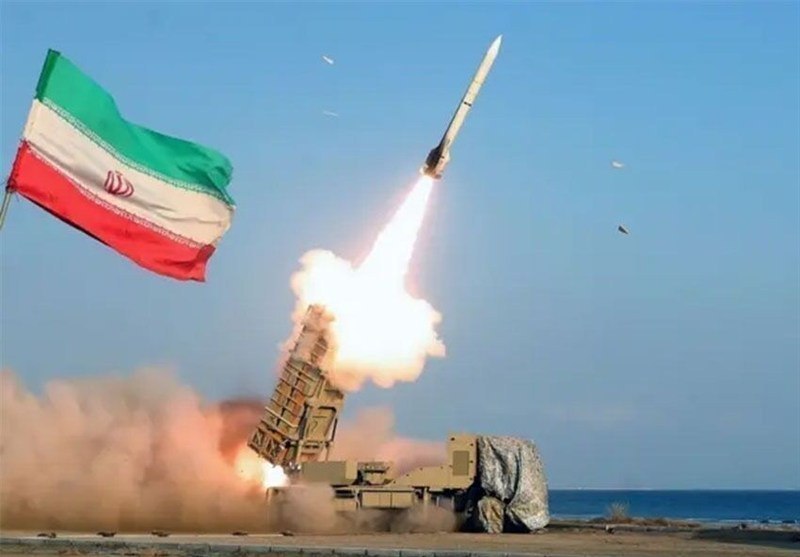
On the morning of April 19, 2026, as the international community absorbed the consequences of a five-day military campaign whose scope was still being contested, an Iranian official sat before cameras in Tehran and laid out a proposition that ran directly counter to the narrative emerging from Washington and Jerusalem: that Iran had not started this war, had attacked no country, and was, by every measure that mattered, the aggrieved party.
The statement from Bazashkian, carried verbatim by Iran's Arabic-language Al Alam television, was not merely defensive rhetoric. It was a carefully constructed legal and moral brief, intended for export as much as domestic consumption — a framing exercise designed to anchor Tehran's position in the language of international law at the precise moment that law was being invoked against it.
The core claim was stark: Iran had been the object of aggression, its civilian infrastructure bombed, its schools and hospitals struck, its people targeted. The enemy — a term applied without ambiguity to the United States and Israel — had failed to achieve its objectives, violated international law with impunity, and now faced the impossible task of explaining why a nation it had attacked was somehow the aggressor in the ensuing crisis.
What makes Bazashkian's statement significant is not the rhetoric itself — all parties to a conflict produce self-serving narratives — but the structural gap it exposes between the way Iran understands its own role in the region and the way that role is understood in Western capitals. That gap is not new. But the April 2026 strikes have pushed it to a point where diplomatic ambiguity is no longer sustainable for anyone.
The 233 Targets: What the Acknowledgment Reveals
For the first time since the strikes began on April 14, an Iranian official directly acknowledged the scale of the campaign against the country. The figure of 233 targets — spanning nuclear facilities, missile installations, and air defense positions — represents a level of transparency that would have been unthinkable in Tehran a decade ago. The question is why the acknowledgment came now.
One reading is domestic: Iranian leadership needed to demonstrate that it understood the scope of what had happened and was not concealing the damage from its own population. Another reading is strategic: by cataloguing the targets, Iran is constructing a record of destruction that can be presented to international bodies, international opinion, and the non-aligned world as evidence of disproportionate force.
The strikes were, by most external assessments, precise in their selection of military and nuclear-linked sites and deliberate in their avoidance of civilian centers. Iranian state media has disputed this framing, emphasizing damage to infrastructure that it characterizes as dual-use — facilities that serve civilian as well as military purposes. The argument has legal resonance even where its factual basis is contested: the laws of armed conflict permit strikes on dual-use infrastructure, but the definition of what qualifies, and the precautions required, remain among the most disputed questions in international humanitarian law.
Western analysts have largely characterized the campaign as calibrated — designed to degrade Iran's nuclear program and its ballistic missile arsenal without triggering the kind of regional escalation that would force the United States to commit forces beyond what had already been deployed. Iran has rejected this framing entirely, describing the strikes as indiscriminate in intent if not in execution.
Legal Arguments in Contested Territory
Bazashkian's invocation of international law is, on its face, paradoxical. Iran has spent decades developing a nuclear program that much of the world considers a violation of its obligations under the Nuclear Non-Proliferation Treaty, and its regional proxy networks have been a consistent source of instability across the Middle East. The United States and Israel did not act without legal justification in their own view — the right of anticipatory self-defense, the failure of diplomatic constraints, and the existential character of a nuclear-armed Iran all featured in the official American justification for the strikes.
But the law here is not self-applied. International law has no arbiter. The Security Council is paralyzed on matters involving the United States. The International Court of Justice has no enforcement mechanism. What remains is a contest of framings — each side invoking the same vocabulary of self-defense, proportionality, and necessity while meaning entirely different things.
Iran's argument is that it is the party under attack and therefore the party exercising self-defense. The United States' argument is that it acted pre-emptively to prevent an imminent threat. Both positions have support in different streams of international legal scholarship. Neither has been adjudicated. The result is a legal vacuum at the center of the most dangerous crisis in the Middle East since 2003.
This vacuum is not accidental. It is the product of decades of deliberate resistance by major powers to submitting great-power security decisions to international review. The rules exist in outline. The mechanisms for enforcement do not. What the April 2026 strikes have done is expose that structure with unusual clarity.
The Non-Aligned Majority and the Fracturing Consensus
The most significant consequence of the strikes may not be measured in facilities destroyed or missiles launched. It may be measured in the diplomatic ground that has shifted between April 14 and April 19.
The initial Western assumption was that the strikes would be understood, if not endorsed, by the Gulf monarchies whose security concerns about Iran are genuine, and that the broader non-aligned world, while uncomfortable with unilateral military action, would ultimately conclude that the threat from an Iranian nuclear weapon justified exceptional measures. That assumption is now under pressure.
The language from Tehran — framing the strikes as an assault on a sovereign state that has never initiated conflict, targeting civilian infrastructure and violating every norm of international conduct — is finding an audience beyond the usual chorus of Iranian allies. States that have no interest in seeing Iran acquire nuclear weapons, and no love for its regional behavior, are nonetheless troubled by a precedent in which major powers determine that a country constitutes an existential threat and act to eliminate that threat without a clear international mandate.
China and India have been notably cautious in their public statements. Neither has endorsed Iran's position. Neither has endorsed the strikes. The carefully calibrated ambiguity in both capitals reflects the reality that the precedent being set here — the unilateral determination of existential threat, the resort to military force without Security Council authorization — applies as readily to their own strategic situations as to Iran's.
This is the long game that Bazashkian's statement was designed to play. It is not about winning the legal argument at the International Court of Justice. It is about ensuring that when the history of April 2026 is written, it reads as a story of a sovereign state defending itself against external aggression — not as a story of a regime that brought consequences upon itself through decades of provocative behavior.
The Path Forward and the Risks That Remain
The immediate question is whether the April 2026 strikes have achieved their stated objective: the degradation of Iran's nuclear program and missile capability to a point where the timeline to weapons development has been extended by years rather than months. Iranian officials insist the program remains intact. External assessments are not yet available. The uncertainty itself is a factor in the calculation of what comes next.
The deeper question is whether the conflict has reached a stable equilibrium or whether it is the precursor to something larger. Iranian officials have been careful to note that they do not seek to expand the circle of war. They have been equally careful not to rule anything out. The calculus in Tehran will depend on assessments of American resolve, the cohesion of the Gulf states, and the domestic political temperature in both countries as the consequences of the strikes become visible.
In Washington, the administration faces a domestic audience that was told the strikes were limited, proportionate, and designed to prevent a greater war — a narrative that will become harder to sustain if Iranian retaliation begins to target American assets or allies in the region. The legal justification for the strikes requires them to have ended the threat. If the threat persists, the logic of escalation reasserts itself.
What is clear is that the diplomatic architecture that managed — imperfectly, contentiously, but continuously — the question of Iran's nuclear program has been demolished. What replaces it will define the strategic landscape of the Gulf for a generation. Whether that new architecture is built on force, on negotiated constraint, or on the kind of stable deterrence that kept the Cold War cold remains the central unanswered question of April 2026.
Bazashkian's statement will not resolve that question. But it has defined the terms in which the argument will now be conducted — and those terms are, on all sides, combustible.
Desk note: The wire agencies led with the American legal justification for the strikes and the IDF's acknowledgment of target numbers. Monexus led with the Iranian framing and its implications for the non-aligned world's response — a choice that reflects our editorial conviction that in a conflict where the great powers hold all the enforcement mechanisms, the diplomatic ground being fought over is in the Global South.