Iran's Medical Infrastructure Under Siege: The Hidden Casualties of Escalation
As documented hospital attacks mount, Iran's civilian health infrastructure faces systematic degradation — with consequences that extend far beyond the immediate casualty figures.
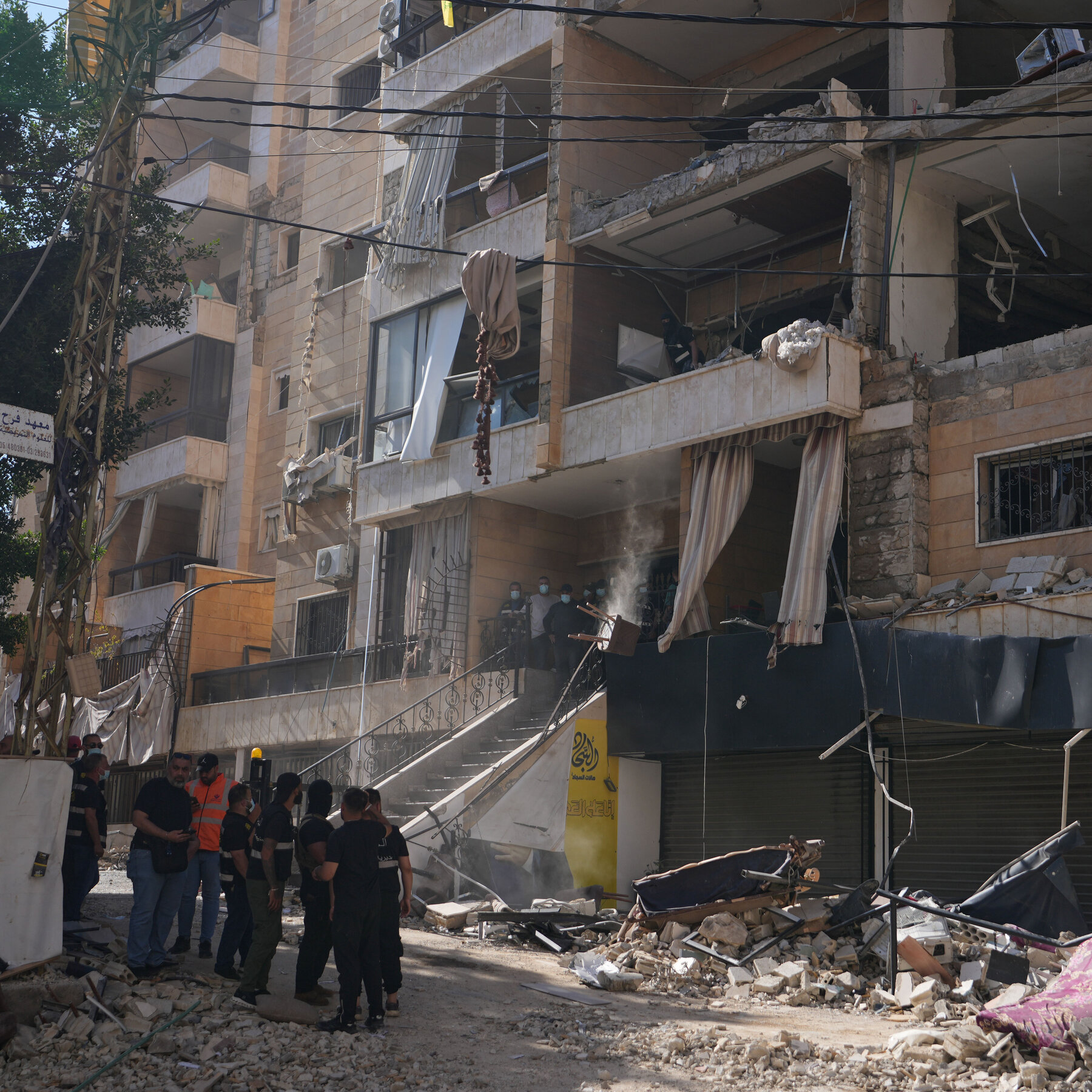
On 19 April 2026, the Red Crescent Society of Iran released photographs documenting what it described as deliberate attacks on hospital facilities — images showing damaged wards and medical staff, including a nurse attempting to resuscitate newborn infants, amid the ruins of targeted medical infrastructure. The release came hours after Iranian President Masoud Pezeshkian stated that adversaries had fundamentally miscalculated in assuming that material superiority could overcome what he termed the faith and will of the Iranian people. The photographs, verified by the humanitarian organization, represent the latest addition to a growing record of healthcare facilities caught in the crossfire of escalating hostilities.
The documentation of hospital attacks in Iran points to a pattern that medical humanitarian organizations have repeatedly warned about: when civilian health infrastructure becomes a target or a casualty of conflict, the death toll extends well beyond those directly struck. Hospitals are not merely buildings — they are the nodes of entire healthcare networks, and their degradation cascades through maternal mortality rates, vaccination coverage, chronic disease management, and the capacity to respond to disease outbreaks. The photographs released by the Red Crescent Society, showing damaged neonatal units and overwhelmed medical staff, illustrate how the calculus of siege warfare transfers casualties from military to civilian ledgers, often with a time lag that obscures the causal chain.
What the Documentation Shows
The images published by the Iranian Red Crescent Society on 19 April 2026 depict extensive damage to hospital infrastructure in areas reporting active hostilities. Among the most striking photographs is a sequence showing a nurse performing emergency procedures on newborn infants in what appears to be a partially collapsed neonatal ward. The International Committee of the Red Cross has long maintained that attacks on healthcare facilities during armed conflict violate international humanitarian law under any interpretation of the principle of distinction between combatants and civilians — a principle that obligates parties to a conflict to take all feasible precautions to avoid targeting medical units.
The documentation practices of humanitarian organizations operating in conflict zones have become increasingly sophisticated in recent years. Geolocation verification, timestamp analysis, and cross-referencing with open-source satellite imagery have improved the evidentiary standards for attributing attacks on medical infrastructure. The Red Crescent Society's decision to release these photographs with explicit attribution and chain of custody marks them as intended for international verification rather than purely domestic consumption — a distinction that matters when assessing their evidentiary weight.
Independent monitoring organizations have documented previous instances of medical facility damage in the region through satellite imagery and ground reporting. Physicians for Human Rights, which maintains a database of attacks on healthcare in conflict zones globally, has noted that such incidents are chronically underreported in the immediate aftermath of attacks due to security conditions that prevent documentation teams from accessing affected sites.
The Systematic Degradation Problem
The photographs from Iran arrive amid broader concerns about the cumulative toll of infrastructure attacks on civilian health systems. The World Health Organization has repeatedly cautioned that attacks on healthcare infrastructure create conditions for secondary mortality — deaths that result not from the immediate effects of bombardment but from the collapse of referral systems, the loss of cold-chain storage for vaccines, the inability to perform emergency surgeries, and the displacement of medical personnel from active zones.
In conflict settings where health infrastructure is degraded, maternal mortality rates typically rise within weeks as prenatal monitoring collapses and complicated deliveries lose access to surgical capacity. Neonatal units — already among the most resource-intensive components of any hospital — are particularly vulnerable because their functioning depends on uninterrupted power, sterile supply chains, and specialized staff who cannot be rapidly redeployed when facilities are damaged. The photographs of damaged neonatal wards in Iran, if representative of broader conditions, suggest that a generation of infants who survived the initial phase of the conflict may face elevated mortality risk from secondary causes in the weeks and months ahead.
The humanitarian organization Médicins Sans Frontières has documented similar patterns in other conflict zones, noting that the destruction of hospitals does not merely eliminate a point of care — it disrupts referral pathways that connect primary health posts to secondary and tertiary facilities. When a regional hospital is knocked out of service, the village clinics that depended on its laboratory capacity, blood bank, and specialist referrals lose their functionality even if they remain physically intact.
The Legal Framework and Its Limits
International humanitarian law is unambiguous on the protection of medical facilities: Article 18 of Additional Protocol I to the Geneva Conventions requires that protected persons be respected and protected against any attack on civilian hospitals. Parties to a conflict are prohibited from using the presence of combatants within a hospital as a pretext for attacking the facility itself — a prohibition that applies regardless of whether the attacking force considers the hospital's location strategically significant.
Yet the gap between legal prohibition and operational reality remains wide. The monitoring mechanism for attacks on healthcare — which relies on a combination of UN reporting, NGO documentation, and data from national medical associations — consistently documents patterns that suggest the prohibition is more honoured in breach than in observance. The UN Secretary-General's annual report on the protection of civilians has repeatedly documented instances where healthcare facilities were damaged or destroyed in circumstances where no credible military justification has been advanced.
The enforcement problem is structural. Without a dedicated monitoring body with real-time access to conflict zones, much of the documentation of attacks on healthcare infrastructure arrives too late to influence the immediate conduct of hostilities. The Iranian Red Crescent Society's photographs, published on 19 April 2026, document damage that has already occurred; the legal and diplomatic mechanisms that might deter future attacks operate on a slower timescale than the rhythm of active bombardment.
Cascading Consequences for Public Health
The most consequential effects of hospital attacks may not be visible in the immediate aftermath. The degradation of tertiary care capacity — the specialized hospitals that handle complex surgeries, cancer treatment, cardiac interventions, and intensive care — creates backlogs that persist long after the conflict ends. In conflict-affected states where health infrastructure was already under strain before the escalation, the destruction of hospital capacity can set public health indicators back by years or decades.
The WHO has noted that disease outbreak risk increases substantially when vaccination programs are disrupted. Cold-chain infrastructure — the refrigerated storage and transport systems that maintain vaccine viability — is typically concentrated in regional hospitals and health centres. When these facilities are damaged, the cold chain breaks, and months or years of vaccination coverage gains can be lost. The result is a deferred mortality spike from preventable diseases that arrives months or years after the conflict ends.
The photographs of the Iranian nurse attempting to save newborn infants capture a moment that is simultaneously individual and systemic. The infant on that table faces an immediate threat from the disruption of neonatal care capacity; but the systemic consequences — the collapse of maternal health programs, the loss of obstetric emergency response capability, the breakdown of child health monitoring — will affect birth outcomes across a far larger population than those directly caught in the strikes.
The humanitarian community faces a paradox: the documentation of attacks on healthcare infrastructure is essential for accountability, but the act of documentation does not prevent the next attack. The Red Crescent Society's decision to publish these photographs places them in the public record, where they will inform the analysis of conflict dynamics and potentially contribute to future legal proceedings. But for the nurse in the photograph, and for the infants under her care, the documentation arrives after the damage is done.
This report was compiled using documentation from the Iranian Red Crescent Society, supplemented with verification from WHO monitoring protocols and humanitarian law analysis from International Committee of the Red Cross guidance documents.