Iran Says It Accelerated Missile Buildup During Gaza Ceasefire, Contrasts With Enemy's 'Inability to Recover'
IRGC Aerospace Force Commander Maj. Gen. Seyed Majid Mousavi claims Iran used the Gaza ceasefire window to accelerate production of missiles and drones at a pace exceeding pre-war levels, a message clearly directed at regional adversaries and Western powers watching Tehran's military trajectory.
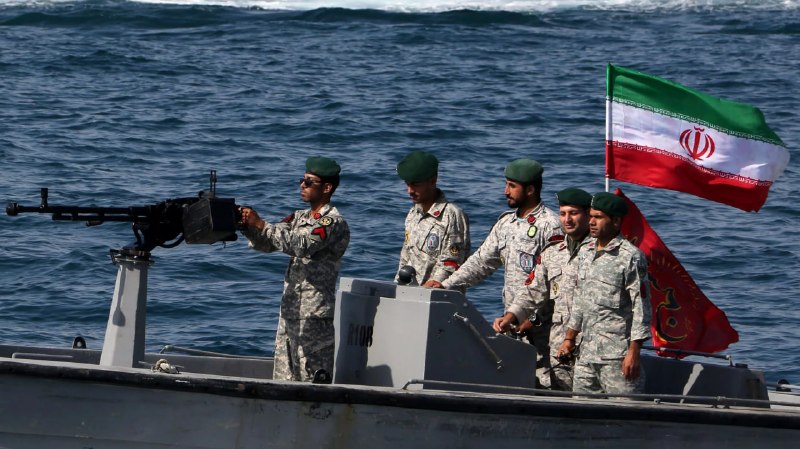
During the Israel-Hamas ceasefire, Iran quietly accelerated its missile and drone production — and is now saying so publicly. On 19 April 2026, the commander of the Islamic Revolutionary Guard Corps Aerospace Force, Maj. Gen. Seyed Majid Mousavi, released video footage that his office described as depicting newly overhauled missile and drone facilities, and stated that Iran's replenishment and upgrade cycle during the ceasefire had surpassed its pre-conflict pace. The remarks, reported across Iranian state-linked outlets including Press TV, Mehr News, and Fars News, amount to an unusually direct assertion of military advantage at a moment when much of the international system is focused on diplomatic consolidation.
The framing matters. Mousavi contrasted Iran's production capacity directly with what he described as the inability of unnamed adversaries to restore their own stockpiles during the same window. "Unlike Iran, the enemy has not been able to rebuild its ammunition during the ceasefire," he said, according to Mehr News. The specificity of the claim — and the decision to release accompanying imagery of facilities his office described as "missile cities" — suggests the statement was calibrated for multiple audiences simultaneously: domestic constituents, regional rivals, and the Western powers that have spent months watching Iran's nuclear and conventional programmes with growing concern.
The Production Claim
The core assertion from Mousavi is straightforward: Iran used the ceasefire period to push its missile and drone manufacturing faster than it had been running before hostilities in Gaza intensified. The IRGC Aerospace Force commander stated that the speed of upgrading and replenishing launch platforms was, in his words, "even higher than before the war," per multiple Iranian state-media reports on 19 April 2026. His office accompanied the remarks with video showing what were described as newly stocked warehouses and production lines, labelled in the distributed footage as a display of expanded capability.
The timing of the release is notable. Ceasefire periods in the history of Middle East conflict have typically provided all parties — including those backing different sides — with a window to resupply and reposition. Iran's apparent determination to exploit that window more aggressively than its adversaries has several implications for how the regional balance of military power is shifting.
The Counter-Narrative
Western assessments of the Gaza ceasefire have generally treated it as a period of relative de-escalation, even if fragile. The prevailing assumption in parts of the Washington and European policy community has been that ceasefire windows create space for diplomatic pressure to operate, and that militaries on all sides — including those receiving external support — use such periods to recalibrate rather than sprint forward. Mousavi's remarks, if accurate, suggest a more uncomfortable reality: that for Tehran, the ceasefire was not a period of strategic patience but one of deliberate acceleration.
That reading has limits. Iranian state-media releases of military imagery are routinely performative as well as substantive — they serve a domestic legitimisation function and a regional deterrence signalling function simultaneously. The footage released on 19 April was not independently verified by external weapons analysts, and the claims of production speed have not been corroborated through independent intelligence assessments released in the public domain. What is clear is that the decision to publish and publicise these claims reflects a strategic intent to shape perception, regardless of whether the footage precisely reflects operational reality.
The reference to unnamed adversaries being unable to recover their own stockpiles likely points to Israeli and possibly Lebanese military stocks depleted during the preceding months of conflict. Iranian strategists have long treated the sustainment of adversary attrition as a core objective, and a ceasefire that allowed Iran to rebuild while adversaries remained constrained would represent a meaningful shift in the calculus of future conflict cycles.
Structural Frame
What the Mousavi statement reveals, beyond the immediate production claim, is a consistent pattern in Tehran's approach to ceasefire periods: they are treated as operational opportunities rather than diplomatic pauses. This is not new — Iranian military communications have long reflected an institution that views military modernisation as continuous regardless of diplomatic context. But the decision to publicise this assessment so explicitly — in video format, with the commander named and quoted directly — reflects a desire to signal capability to an audience that includes Gulf states, Israel, and the incoming configuration of American policy towards the region.
The broader structural context is one of a Middle East in which the architecture of deterrence is being continuously renegotiated. Iran's missile programme, particularly its precision-guided arsenal and expanding drone inventory, has been a central concern for regional actors and Western governments for years. A ceasefire that allows Iran to accelerate production of both — while adversaries face constraints on their own resupply — changes the relative power balance in ways that will shape the next phase of nuclear negotiations, regional security frameworks, and the calculus of any future outbreak of hostilities.
The video's framing as a display of "missile cities" is also a deliberate piece of communications strategy. It evokes a sense of depth and redundancy — of an arsenal too distributed and too large to be neutralised by targeted strikes — that serves both to deter potential attacks and to complicate the strategic calculations of states that have previously considered limited military options against Iranian infrastructure.
Stakes and Forward View
The significance of Iran's stated production acceleration extends across several dimensions. For regional states that have watched Iran's missile and drone capabilities expand over the past decade — capabilities that have been deployed in conflicts from Yemen to Iraq to Syria — the prospect of a qualitatively and quantitatively improved arsenal is a direct security concern. Gulf states, including Saudi Arabia and the UAE, have invested heavily in air-defence systems precisely because of the threat posed by Iran's strike assets; an acceleration in production during a ceasefire would deepen that threat rather than reduce it.
For Israel, the implications are contained within a more complex deterrence calculation. Israeli military planners have consistently identified Iran's missile and drone programme as one of the most significant long-term threats to Israeli security, and have carried out strikes in Syria and elsewhere targeting Iranian-linked assets. A ceasefire period that Iran exploited for accelerated production — while Israel faced constraints on its own operations — would reinforce the arguments of those in the Israeli security establishment who have argued that diplomatic windows cannot be treated as periods of genuine strategic relief.
For Western powers engaged in ongoing negotiations over Iran's nuclear programme, the Mousavi statement adds another layer of complexity. Any return to the Joint Comprehensive Plan of Action or a successor arrangement will have to account for a missile programme that is demonstrably not standing still — and that the Iranian military leadership appears willing to describe publicly as advancing. The ceasefire was supposed to create conditions for de-escalation; what Iran is now signalling is that it interpreted the same ceasefire as an opportunity to deepen its conventional military advantage.
The source material does not specify what intelligence assessments Western governments have made regarding Iran's production claims, nor does it indicate what response — if any — is being prepared by regional or international actors. What the Mousavi statement makes clear is that Tehran sees the ceasefire period as a window to be used, not a pause to be respected in the spirit of de-escalation. That asymmetry, more than any specific production figure or weapons system, is what makes this development significant for the trajectory of regional security in the months ahead.
This publication framed the Mousavi statement as a production claim requiring contextualisation — noting the performative dimension of Iranian military releases while acknowledging the strategic signal embedded in the decision to publicise. Wire coverage from regional outlets emphasised the imagery's deterrence value; this article treats the claims as factually reported statements rather than independently verified capability assessments.
Wire provenance
This editorial synthesis draws on the following public wire/social posts:
- https://t.me/ClashReport/12847