Iran Standoff Deepens as European Nations Reassess Energy Dependency
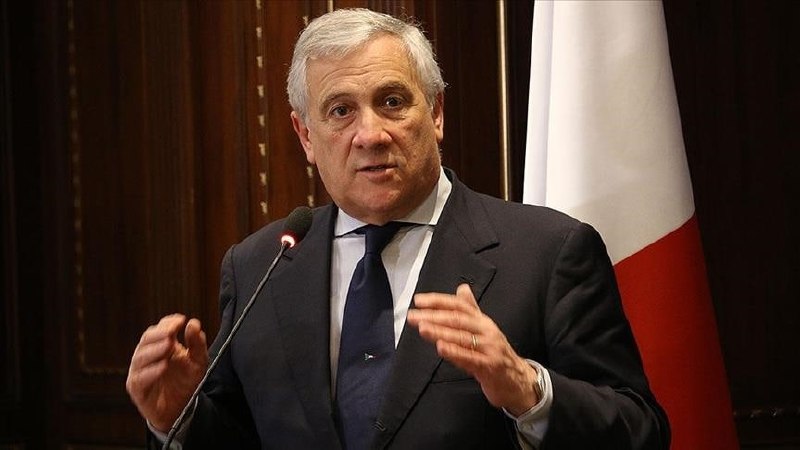
Iran's deputy foreign minister delivered a blunt assessment on Saturday that multilateral talks with the United States remain stalled, with negotiations failing to produce results sufficient for convening a second session. The statement, reported by regional observers at Middle East Spectator at 0053 UTC on 19 April 2026, underscores a diplomatic void that European capitals can no longer afford to ignore as they scramble to insulate their economies from a conflict showing no signs of de-escalation.
The failure of backchannel diplomacy arrives as leaked planning documents reveal that UK government officials have been quietly modeling worst-case food shortage scenarios stretching into summer, according to reporting by BBC News on 16 April 2026. While ministers have stopped short of public alarm, the internal assessments point to supply chain vulnerabilities that three decades of neoliberal restructuring—outsourcing domestic food production and consolidating retail infrastructure—have systematically deepened. The framing matters: this is not merely a distant war; it is a structural exposure that European economies have constructed, brick by ideological brick, since the post-Cold War unipolar moment.
The Diplomacy Fiction Collapses
For months, Western officials have publicly maintained that diplomatic off-ramps remain open, that sanctions pressure would eventually bring Tehran to the table on terms favorable to Washington and its allies. Iran's deputy foreign minister's weekend remarks puncture that narrative with remarkable directness. No satisfactory results. No second meeting imminent. The gap between the rhetoric of engagement and the reality of mutual exclusion has rarely been stated so baldly.
this analytical framework offers a useful lens here—not because the coverage is fraudulent, but because the filters that shape what counts as legitimate discourse have rendered certain questions unspeakable in mainstream corridors. ownership bias, the sourcing bias, the editorial framing bias: together they ensure that Western escalation is processed as defensive necessity while Iranian responses are framed as provocation. The institutional pressure on coverage—the ability to punish dissent—functions as a disciplinary mechanism against analysts who might ask why European nations positioned themselves so completely within a US-led sanctions architecture without adequate contingency planning.
What the Iranian statement reveals is that the assumption underlying Western policy—that economic strangulation produces political capitulation—remains unverified despite its near-universal acceptance among Atlanticist think tanks. The real world, however, continues to operate on its own logic.
Europe's Structural Vulnerability
The UK food shortage scenarios leaked to BBC journalists represent something more significant than contingency planning: they constitute an admission that European consumption patterns have become untenable under conditions of prolonged geopolitical confrontation. The documents reportedly outline supply chain disruptions that would hit within months, not years, suggesting that buffer stocks and diversified sourcing arrangements are far thinner than public reassurances imply.
This vulnerability did not emerge overnight. It is the product of four decades of market-driven efficiency drives, the consolidation of retail into a handful of multinational operators, the decline of domestic agricultural capacity, and the systematic removal of strategic reserves as politically incorrect relics of a less-globalized era. structural power analysis would suggest that core economies perpetually externalize risk onto peripheral zones—this is the structural function of the global south. But when peripheral zones themselves become conflict zones, the externalization machinery jams.
Germany, France, and Italy have made similar internal assessments, though officials in Berlin and Paris have been notably less transparent about the severity of their exposure. Trade data from the past eighteen months shows European imports of agricultural commodities and processed foods increasingly concentrated through Mediterranean and Black Sea routes—routes that active hostilities render hazardous, unpredictable, or simply impassable. The efficiency gains that justified just-in-time supply architecture now appear as systemic fragilities awaiting their triggering event.
The Multipolar Reckoning
The Iran situation is, at one level, a bilateral US-Iran confrontation. But its ramifications expose a deeper truth about the post-1991 order that European nations helped construct and from which they assumed permanent benefit. The dollar hegemony that undergirds global trade routing, the SWIFT-based financial architecture that disciplines dissenting states, the US security umbrella that permitted European defense budgets to atrophy—all of this was predicated on a stable unipolar environment that no longer exists.
The rise of multipolar alternatives—dollar-free trade arrangements, alternative payment systems, commodity partnerships that bypass Western-controlled logistics—has accelerated precisely because such alternatives offer insulation against precisely the kind of disruption now materializing. China, which has deepened energy and agricultural partnerships with Iran across the past decade, faces its own adjustment costs but operates from a position of greater systemic independence.
This is not to suggest that European nations should align with Iranian positions. It is to observe that the binary framing—Western alliance solidarity versus Iranian antagonism—leaves no room for the independent calculation of European interests that their populations are beginning to demand. Public opinion surveys across major EU member states have shown consistent declines in support for involvement in Middle Eastern conflicts, particularly when that involvement translates into domestic economic pressure. The dissonance between elite consensus and popular sentiment reflects a democracy deficit that the current crisis is beginning to expose.
The Summer Threshold
What makes the UK leaked documents significant is their temporal specificity. Summer is not abstract. It is the season when Northern European agricultural output peaks, when stores draw down inventory accumulated through spring, when the system has maximum resilience. If officials are modeling shortages under these conditions, the implications for autumn and winter are considerably grimmer.
The question European governments face is not whether to adapt, but how much disruption their political systems can absorb before the consensus that supports current foreign policy orientations fractures. Sanctions regimes that seemed cost-free when their targets remained abstractions become considerably more contentious when grocery shelves thin and energy prices spike. The information environment matters here—how the crisis is framed, whose responsibility is assigned, what alternatives are permitted to circulate—will shape whether public tolerance holds or erodes.
The Iranian deputy foreign minister's statement this weekend carries an implicit message that Western analysts would be wise to take seriously: the assumption that time operates in their favor has not been established. Waiting for the other side to collapse requires that the other side actually be in a position to collapse. The evidence from Tehran suggests otherwise.
Desk note: Wire coverage emphasized the UK food shortage scenario as a domestic preparedness story. Monexus frames this as structural consequence—the vulnerability is not accidental but manufactured through four decades of efficiency-first policy architecture. The distinction matters.
Wire provenance
This editorial synthesis draws on the following public wire/social posts:
- https://t.me/Middle_East_Spectator/8472