Iran's Chokepoint: How the Strait of Hormuz Became the West's Worst Nightmare
The Atlantic calls it Iran's apocalyptic weapon. Former Centcom commander Petraeus warns it could make Iran strategically invincible. What the Strait of Hormuz reveals about the limits of American power in the Gulf.
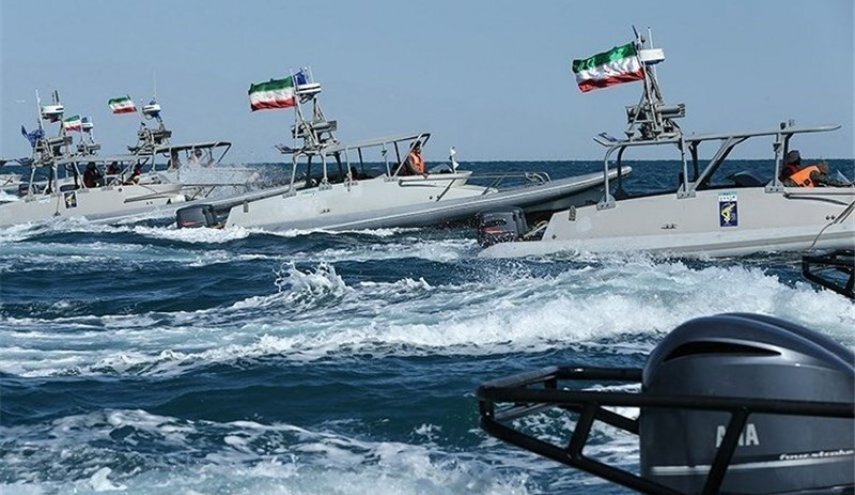
The Strait of Hormuz is 34 kilometers wide at its narrowest. Roughly 20 percent of global oil flows through it daily. And according to The Atlantic, it is Iran's apocalyptic weapon.
That framing—from a publication not known for sensationalism—tells us something revealing about how Western capitals are processing a geopolitical reality that has existed, in essence, since 1979. The strait is simultaneously a maritime corridor and a state of mind. Tehran has transformed a geographic fact into asymmetric leverage, and the West is only now catching up to what that means.
The Geography of Leverage
What makes the Strait of Hormuz different from most chokepoints is that the leverage flows entirely in one direction. Iran does not need a blue-water navy to control the passage. It needs anti-ship missiles, a modest fleet of small boats, and the willingness to lay mines. Any one of these capabilities—let alone all three—could turn the world's most important oil shipping lane into a no-go zone.
Western military analysts have understood this arithmetic for decades. What has changed is the urgency with which they are now articulating it. The Atlantic Council published an analysis this week declaring that the strait will determine the fate of any war against Iran. The framing matters: not that a conflict would threaten the strait, but that the strait already determines the conflict's parameters. Iran does not need to close the waterway to wield power over it. The threat alone suffices.
Iranian state media has reported that Tehran has established a designated corridor for vessels transiting the strait, a system it presents as orderly and predictable. In practical terms, this means Iran has constructed an infrastructure of permission. Ships pass not because they have a right to pass, but because Iran allows them to. The distinction may seem subtle, but it defines the entire power relationship.
The Petraeus Warning
David Petraeus, the former Centcom commander and CIA director, offered a blunt assessment this week. If the United States cannot resolve both the Iranian nuclear question and the strait's status, Iran will emerge from this period strategically stronger than before.
The assessment deserves attention precisely because it comes from someone who spent years managing American military posture in the region. Petraeus is not an Iran sympathizer. He is a strategist acknowledging a strategic reality: the correlation of forces has shifted, and not in Washington's favor.
The nuclear question and the Hormuz question are, in the eyes of Iranian planners, linked. Western pressure on enrichment is met with Iranian reference to Western dependence on Gulf oil. Every sanctions regime, every covert operation, every carrier group dispatched to the Gulf reinforces Tehran's incentive to maintain and demonstrate the strait's vulnerability. The more the West pushes, the more valuable the chokepoint becomes.
This is not a revelation to Iranian strategists. It is the foundation of their deterrence architecture. The Islamic Republic has maintained an explicit policy of making any strike on its nuclear facilities catastrophically expensive—by ensuring that the response would disrupt global oil markets in ways that no Western government could politically absorb. The strait is not a backup plan. It is the plan.
Beijing's Stake
If there is a factor that complicates the Western calculus further, it is China. Beijing imports roughly half its oil through the Strait of Hormuz. The Dragon's dependence on Gulf crude has grown steadily as domestic production has declined and the economy has expanded. A sustained disruption would not merely spike prices—it would directly threaten Chinese industrial output and, by extension, the political stability that the Communist Party has conditioned on continued growth.
This creates an interesting dynamic. China has no interest in seeing Iranian nuclear capability expand unchecked. But it also has no interest in a US-led military operation that closes the strait as a byproduct—or in sanctions regimes that ultimately serve to remind Beijing how dependent it has become on a passage Iran can disrupt at will.
Iran understands this. The relationship between Tehran and Beijing has deepened markedly over the past decade, with energy trade expanding and diplomatic coordination increasing on issues from OPEC+ policy to infrastructure investment. China cannot afford to be seen as complicit in any arrangement that pressures Iran. But it also cannot afford to see Iran as a threat to its own energy security. The result is careful ambiguity—a relationship structured to avoid triggering American ire while preserving Iranian goodwill.
What Iran Actually Wants
The Western framing of the Hormuz problem treats it as a military contingency. Warships could be deployed. Mines could be swept. The strait could be kept open by force.
This framing misses the point. The strategic value of the Strait of Hormuz for Iran is not primarily military. It is informational. By making the vulnerability visible—by ensuring that every military planner, every energy minister, every finance minister in the Western world knows that a narrow waterway controlled by Iran carries one-fifth of global oil production—Iran has reshaped the information environment in which its adversaries operate.
It is the same principle that governs nuclear deterrence, stripped of the formal architecture. You do not need to fire the weapon. You need your adversary to believe you will fire the weapon under certain conditions—and you need those conditions to be ones where your adversary has more to lose than you do.
The conditions are straightforward: any military strike on Iranian soil that Tehran defines as existential triggers Hormuz disruption. The asymmetry is absolute. Iran loses infrastructure and possibly its regime. The global economy loses a fifth of its oil supply and possibly its recovery from the post-pandemic inflation shock. No Western government has been willing to make that bet.
Iran knows it.
The Strait of Hormuz will remain the world's most important waterway not because of what happens in it, but because of what everyone believes Iran could do to it. The chokepoint is a fact of geography. Its leverage is a fact of politics. And until Western strategists accept that the second fact is as immutable as the first, they will continue to find themselves surprised by how much power a country roughly the size of Alaska can project from a narrow strip of Persian Gulf.
—
This piece was reported and composed at 06:35 UTC on April 19, 2026.