Khamenei Is Dead. What Happens to the Islamic Republic Now?
The death of Iran's Supreme Leader on 15 April 2026 throws one of the Middle East's most consequential political systems into uncertainty at a moment of acute regional tension. The succession process is scripted by constitution; the outcome is not.
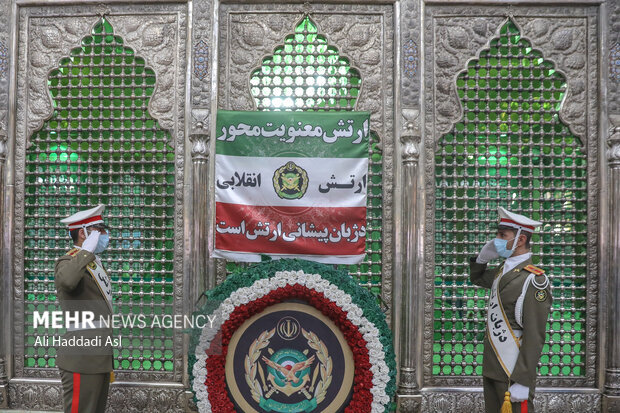
Sayyid Ali Khamenei, who ruled the Islamic Republic of Iran as Supreme Leader for thirty-five years after inheriting the role from Ayatollah Ruhollah Khomeini in 1989, died on 15 April 2026. Iranian state media confirmed the death that day, publishing images of mourners gathering at the site where Khamenei was declared martyred. The following night, scenes of night mourning spread across Iranian state channels and social media. By 19 April, the Islamic Republic had entered the 40th-day commemoration period — a significant marker in Shia Islamic tradition — with senior clerics beginning to address the question of Khamenei's legacy and the republic's future.
The death arrives at a moment of compounding pressure for Tehran. Nuclear negotiations with Western powers remain deadlocked. Iran's regional proxy networks — from Hezbollah in Lebanon to militia formations in Iraq and Yemen — are navigating their own cycles of confrontation and constraint. Sanctions continue to constrict oil revenues and access to global financial infrastructure. Khamenei's tenure spanned all of this, and the institutions he shaped will now be tested by a transition the constitution addresses in principle but does not guarantee in practice.
The Succession Mechanism
Iran's constitution provides a clear procedural script for the period between a Supreme Leader's death and the swearing-in of a successor. The Assembly of Experts — a body of 88 senior clerics — must convene within five days of a vacancy, designate a interim leader, and then, according to the constitutional text, proceed to "investigate and introduce" a new Supreme Leader. The process has been rehearsed once, in 1989, when Khamenei himself moved from president to Supreme Leader following Khomeini's death. That transition was not smooth; several senior clerics contested Khamenei's qualification for the role, arguing that his religious credentials fell short of the highest marjaiyat. He assumed the office anyway, and spent the next three and a half decades building the institutional apparatus — the IRGC, the security services, the bonyad conglomerate network — that now constitutes the republic's power structure.
The names circulating as potential successors carry different implications. A senior cleric from the Qom seminary establishment would signal continuity with the clerical institution Khamenei himself embodied. A figure with stronger IRGC or security-affiliated credentials would represent a further consolidation of the militarized governance model that expanded under his rule. The Assembly of Experts will make that determination. What the sources reviewed for this article do not yet establish is which faction currently commands the decisive majority in that body, or what agreements may have been reached in advance of Khamenei's death about the succession's shape.
The Regional Dimension
Across the Shia-majority regions stretching from Lebanon to Yemen, Khamenei's death lands as a destabilizing variable in already volatile dynamics. Hezbollah, whose relationship with Tehran was forged and sustained under Khamenei's direct guidance, faces its own internal pressures following years of confrontation with Israel and the economic collapse of Lebanon. The Houthis in Yemen have conducted their anti-shipping campaign partly on the basis of solidarity with Iranian strategic doctrine. Iraqi paramilitary formations — many of them Tehran-aligned — are watching the succession closely for signals about the depth of Iran's commitment to their networks.
The sources reviewed for this article do not include direct statements from any of these regional actors as of publication. What is structurally clear is that Khamenei was not merely a symbolic figure; he was the ultimate decision-maker on Iran's regional posture. Whoever succeeds him will inherit relationships built on his specific calibrations of risk and restraint. The new Leader's posture toward ongoing ceasefire negotiations in Gaza, toward Hezbollah's rehabilitation, and toward the Houthis' escalation calculus will be among the earliest indicators of whether Iran's regional posture is subject to revision.
The Internal Political Landscape
Khamenei's death removes a figure who functioned, for three decades, as the final arbiter of Iran's internal political conflicts. The reformist-pragmatist versus hardliner tensions that animated Iranian politics through the presidencies of Khatami, Ahmadinejad, and Rouhani were mediated, ultimately, through his office. The suppression of the 2009 Green Movement protests, the crackdowns following the 2019 fuel price protests, and the violence deployed against the 2022 Mahsa Amini demonstrations all proceeded because Khamenei backed them. His death does not automatically liberalize Iranian politics; the security apparatus he built remains intact. But it removes a reference point that all factions — from the Revolutionary Guards command to the bazaari commercial establishment to the reformist remnants — had to navigate.
Mourning rituals in Iran carry political weight. The gatherings documented on Iranian state channels since 15 April are genuine expressions of grief among a population that includes both regime loyalists and citizens navigating a complex relationship with a government whose compromises they have absorbed but not always endorsed. The 40th-day commemoration — when large public gatherings are traditional — will be monitored closely by both regime loyalists seeking to demonstrate continuity and opposition actors looking for signals of instability.
What Remains Uncertain
The sources reviewed for this article are concentrated in Iranian state media and regime-adjacent channels. The fact of Khamenei's death is confirmed across those sources. The cause of death, however, is described uniformly as "martyrdom" — language that asserts political or violent causation without specifying mechanism. Independent confirmation of circumstances surrounding the death is not yet available in the source material reviewed. It is also not yet possible to verify independently the internal deliberations of the Assembly of Experts, the balance of factions within the IRGC command structure, or the posture of senior figures — such as former nuclear negotiator Ali Akbar Rafsanjani's surviving network — who might exert influence during the transition.
The 40th-day commemoration rituals will produce new sources. The Assembly of Experts will meet within the constitutional window. The shape of the new Supreme Leader's authority — how much is personal, how much is institutional — will become legible in the weeks and months ahead. What is already clear is that the Islamic Republic has lost the figure who held its contradictions together longest, and that no institutional mechanism automatically reproduces what he uniquely provided: a single, final word on questions the republic could not otherwise settle.
The initial Reuters and BBC coverage of Khamenei's death led with the succession process and the constitutional mechanism. This piece foregrounds the regional and institutional dimensions that the wire services treated as secondary — reflecting Monexus's view that, for a system built on the Supreme Leader's absolute authority, the succession is not merely a procedural question but the defining political event of the decade.
Wire provenance
This editorial synthesis draws on the following public wire/social posts:
- https://t.me/Khamenei_en/3456
- https://t.me/Khamenei_en/3453