Macron Hosts Lebanon PM as Paris Repositioning in Levant Comes Under Pressure
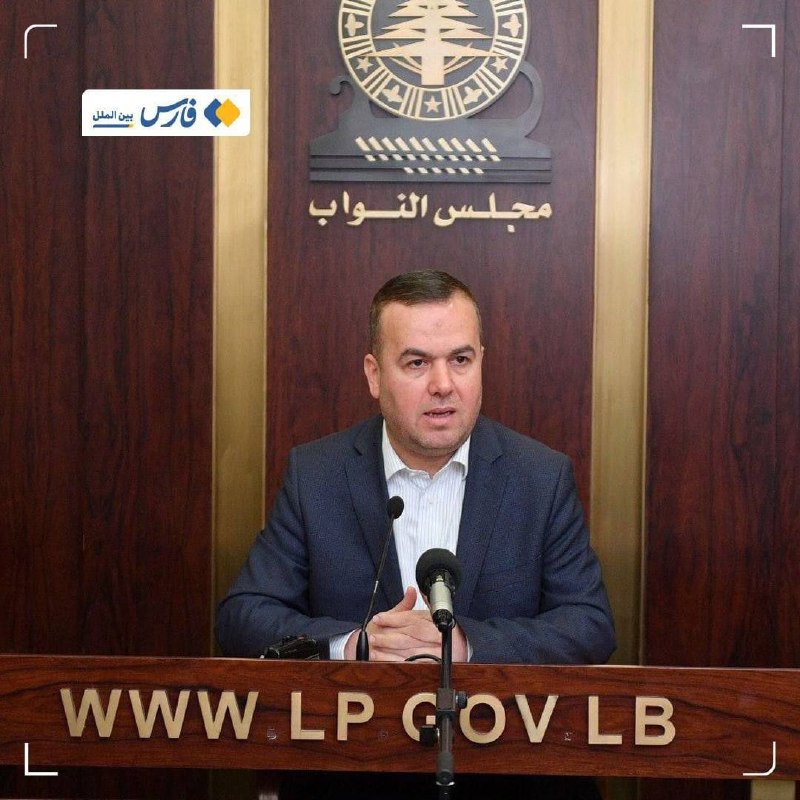
French President Emmanuel Macron received Lebanese Prime Minister Nawaf Salam at the Élysée Palace on 19 April, a visit the French presidency described as a reaffirmation of France's commitment to Lebanon's sovereignty and stability. The meeting placed France front and centre in a diplomatic moment that comes as Western engagement across the Middle East has grown episodic, and as Lebanon's own foreign policy posture has shifted toward deliberate diversification.
France has long styled itself as Lebanon's most consistent Western partner — a relationship rooted in the post-Ottoman Mandate era that still shapes how Paris approaches the eastern Mediterranean. That legacy gives Macron's government a particular standing in Beirut that no other Western capital matches with equivalent ease. But the visit, arriving in the second quarter of 2026, also arrives at a moment of genuine constraint: Western attention is stretched across multiple theatres, and France itself is managing domestic pressures that limit the diplomatic bandwidth available for distant commitments.
The Élysée's framing — and its limits
The French presidency said the encounter would "reaffirm" France's commitment to Lebanon. That phrasing is deliberate. It acknowledges the relationship without specifying new resources or policy departures — language that allows Paris to project presence without immediately costing anything concrete. The visit's substance — whether Salam secured binding financial pledges, security guarantees, or diplomatic prioritisation — is not detailed in the public readout available as of this publication.
The counter-scheduling is notable. The same set of diplomatic movements that brought Salam to Paris also includes a Luxembourg leg on the same day, according to the Lebanese Prime Minister's Media Office. Salam was due to meet Union foreign ministers in Luxembourg following or alongside the Paris engagement. That Lebanon ran both tracks simultaneously suggests Beirut is not treating Paris as its exclusive Western interlocutor — nor should it, given the range of leverage available across European capitals.
France's structural position in Lebanon
France's historical relationship with Lebanon carries specific institutional weight that other Western governments cannot replicate easily. French is still spoken in Lebanese government circles, French banks have long maintained positions in Beirut's financial sector, and Macron's government has invested diplomatic capital in Lebanon's recovery through multiple cycles of political crisis. France also sells arms to Lebanese security institutions — a relationship that brings France into daily contact with Lebanese state structures in a way that US or UK engagement does not.
That depth of involvement is precisely what gives the Élysée its leverage — and what makes this visit politically sensitive for Paris. France cannot afford to be seen as disengaging from Lebanon, because doing so would leave space that Iran, Saudi Arabia, or other regional actors would fill. But maintaining engagement requires that France produce outcomes, not just summit photographs. The question Paris has not yet answered publicly is whether Macron's government has the inclination and the capacity to back its stated commitments with the financial and diplomatic resources that Lebanon's situation — including its longstanding territorial dispute with Israel — actually requires.
Lebanon's diplomatic diversification
The dual-track scheduling — Paris and Luxembourg on the same day — reflects a broader pattern in Lebanese foreign policy that predates Salam but has accelerated under his government. Beirut has been cultivating European engagement more systematically, not as a substitute for the Franco-American relationship but as a deliberate hedge. Luxembourg's role as the seat of the European Court of Justice and the venue for certain EU ministerial configurations makes it a natural port of call for governments seeking to signal Brussels-level seriousness.
For a small state caught between Israel, Syria, Iran, and Gulf monarchies with competing interests, diversification is rational risk management. Lebanon has learned — across multiple diplomatic cycles — that depending on any single patron leaves the country exposed when that patron's priorities shift. Running parallel engagements with Paris and Luxembourg simultaneously is not a snub to France; it is evidence that Lebanon is doing what smaller states do when they can: keeping multiple options open rather than committing to a single external anchor.
What this visit can and cannot do
The honest measure of this engagement is not the photograph from the Élysée but the policy that follows it. France has interests in a stable Lebanon — energy relationships, counterterrorism cooperation, a bulwark against uncontrolled migration routes — that give Macron's government genuine reasons to engage. But France also has interests closer to home that regularly crowd out Mediterranean commitments when domestic politics or European crises demand attention.
Lebanon's government, for its part, needs more than reaffirmations. It needs debt relief, infrastructure investment, and security cooperation that addresses the Israeli occupation of southern Lebanese territory — issues on which France's ability to deliver is real but not unlimited. Whether this visit produced movement on any of those specifics remains to be seen from subsequent readouts. What is clear is that both governments wanted the optics, and both got them.
This publication's coverage of the Macron–Salam meeting leads with the Élysée readout rather than the Lebanese government schedule, reflecting the editorial judgment that a French presidency confirmation represents a higher-confidence anchor for the immediate event. The Luxembourg leg is reported as stated by the Lebanese Prime Minister's Media Office and is not treated as verified independently at time of publication.
Wire provenance
This editorial synthesis draws on the following public wire/social posts:
- https://t.me/wfwitness/13333
- https://t.me/alalamarabic/1318
- https://t.me/JahanTasnim/1316
- https://t.me/alalamarabic/1317