Netanyahu rejects Lebanon ceasefire as IDF releases footage of Bint Jbeil destruction
Israeli prime minister rules out a Lebanon ceasefire on 18 April 2026, a day after aerial footage published by Israeli military sources showed extensive destruction in the southern Lebanese city of Bint Jbeil.
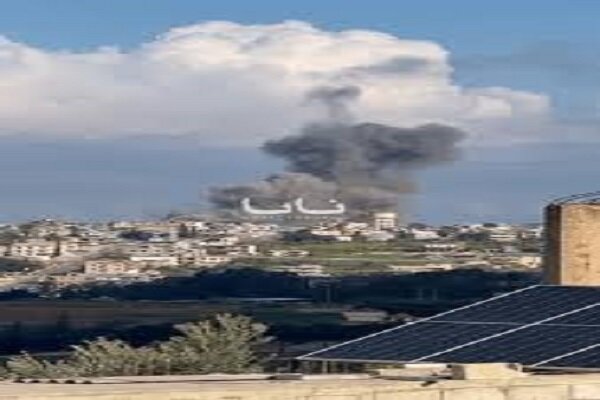
Israeli Prime Minister Benjamin Netanyahu ruled out a ceasefire with Lebanon on 18 April 2026, telling reporters that a truce would not hold and that he had ordered the Israeli military to deepen and extend the security zone along the northern border. The statement, delivered from Jerusalem, came 24 hours after the Israel Defense Forces published aerial imagery showing extensive destruction in Bint Jbeil, a predominantly Shi'a city in the Nabatieh Governorate of southern Lebanon.
The footage, circulated on official Israeli military Telegram channels on 17 April, showed blocks of residential buildings reduced to rubble and a main road穿过 the city center severed. The IDF said the images demonstrated what it described as the scale of infrastructure it had dismantled in the area — a framing used by Israeli military spokespeople to justify months of sustained operations along the border corridor. United Nations officials have repeatedly expressed alarm at the cumulative toll on Lebanese civilian populations, though precise casualty figures remain contested between Lebanese government sources and international monitors.
The rejection marks the fourth time since January that senior Israeli officials have publicly dismissed international calls for a temporary halt in hostilities along the Lebanon-Israel frontier. American officials, who have pressed for a deal that would allow displaced Israeli civilians to return to northern communities, have not publicly contradicted the prime minister's position, a dynamic that critics say effectively grants Tel Aviv a veto over diplomatic progress.
The footage and what it shows
The IDF's aerial images, timestamped 17 April 2026, cover an area of approximately 1.2 square kilometres in central Bint Jbeil, a city of roughly 45,000 people before the current phase of hostilities began. Visible in the footage are at least three multi-storey residential buildings collapsed inward, a commercial district reduced to structural shells, and what appears to be a primary road partially blocked by debris. Israeli military officials, speaking on condition of anonymity to wire services, said the destruction was the result of months of precision strikes targeting what they described as Hezbollah tunnel infrastructure and command nodes embedded in civilian areas — a claim that independent verification organisations have been unable to confirm from open-source imagery alone.
Lebanese authorities have recorded more than 1,200 civilian deaths in the country since October 2023, according to figures compiled by the Lebanese Health Ministry and cited in UN reporting. The UN Human Rights Office said in a March 2026 statement that it had documented incidents in which Israeli strikes hit residential buildings with no apparent military presence, though it said investigations were ongoing. Israeli military officials dispute the characterisation, citing what they describe as lawful use of proportionality assessments before each strike.
Bint Jbeil itself had been largely emptied of its civilian population by December 2024, according to reporting by the Associated Press, which quoted local municipal officials as saying that between 80 and 90 percent of residents had fled southward toward Sidon and Beirut. Those who remain — estimated by the UN Office for the Coordination of Humanitarian Affairs at fewer than 3,000 — have access to only one functioning medical clinic, which receives intermittent supplies through the Syrian-Lebanese border crossings.
The political calculation behind the rejection
Netanyahu's statement on 18 April was notable not for what it said about Hezbollah's capabilities, but for what it revealed about the Israeli government's approach to American-diplomacy. American officials had in recent weeks floated a proposal that would link a 60-day pause in IDF ground operations to a parallel withdrawal of Hezbollah forces from the border corridor — a formula that senior US diplomats described as a first step toward a durable arrangement. The prime minister's office rejected the framework publicly, with officials telling Israeli media that any ceasefire that did not permanently dismantle Hezbollah's northern deployment would leave Israel exposed.
Three senior officials in the Biden administration, speaking to Reuters on background, confirmed that the American proposal remained under review but acknowledged that Israel's position had not shifted. The officials said the US continued to believe a negotiated pause was the fastest route to returning displaced Israeli civilians to their homes — a key domestic political priority for the current administration ahead of the 2026 midterms — but that they would not pressure Israel publicly to accept terms its government had rejected.
Hezbollah issued a statement on 18 April via its official media office calling Netanyahu's comments "confirmation that the occupation aims to destroy the resistance through military force rather than negotiation." The statement did not address whether Hezbollah would consider adjusting its own deployment along the border, a point that Western diplomats have repeatedly identified as a prerequisite for any sustainable agreement. The group has maintained, since the expiry of the 2020 maritime border understandings, that its military posture along the frontier is a response to Israeli overflights and that any change is contingent on a broader regional settlement.
How Western media framed the footage
The aerial images published by the IDF circulated widely in Western wire reporting on 17 April, where they were consistently introduced with language drawn from the IDF's own caption. Reuters, the Associated Press, and Agence France-Presse all ran the imagery with framing that emphasised the military targets allegedly neutralised — tunnel networks, weapons depots, observation posts — while the civilian infrastructure visible in the background received secondary placement. The Guardian's reporting on 18 April described the images as evidence of "significant changes to the urban landscape" in Bint Jbeil, a formulation that neither confirmed nor denied civilian harm but used language less specific than the IDF's own framing.
Lebanese media, including the National News Agency and reporting by An-Nahar, gave the imagery more prominent placement in the context of casualty reporting, with headlines that foregrounded the scale of destruction. Iranian state-adjacent outlets, including Tasnim News and Fars News International, carried the same footage on 19 April with captions that used the word "brutal" to describe the destruction — language that does not appear in the wire services' own reporting. This divergence in characterisation reflects a structural feature of conflict coverage: outlets whose editorial alignment tracks closer to one party in a dispute tend to amplify language that emphasises harm caused by that party, while outlets aligned with the opposing party emphasise the military necessity of the same action. Neither framing constitutes independent verification.
The path forward — and who holds it
The immediate humanitarian situation in southern Lebanon is severe and shows no signs of easing. The roughly 3,000 civilians remaining in Bint Jbeil are operating without reliable access to food, medical care, or safe passage, according to OCHA's latest situation report from 16 April. The UN agency said it had requested Israeli authorization for a humanitarian corridor three times since March and had received no formal response.
Whether a ceasefire takes hold depends on two variables that current diplomacy has not resolved: whether the Israeli government will accept any pause that does not permanently resolve the Hezbollah threat along the border, and whether Hezbollah's leadership will accept a withdrawal that removes the group's primary deterrent against a future Israeli ground operation. American officials say privately that the gap between the two positions is narrower than it was in November, but that neither side has an incentive to move first — and that the continued absence of a credible outside arbiter leaves the gap unbridged.
The longer structural question is whether the pattern of conflict coverage that appeared in this week's wire reporting — military framing foregrounded, civilian harm backgrounded, official language incorporated without distance — produces pressure on policymakers or relief from it. The evidence from previous cycles is ambiguous: sustained high-intensity coverage has sometimes accelerated diplomatic intervention, but it has also, in other cases, reinforced public tolerance for operations that might otherwise face scrutiny. Bint Jbeil is not a new story. It is a continuation of one that has so far resisted resolution.
This publication framed the aerial footage through IDF-sourced captions and OCHA humanitarian data rather than through the framing of either party to the conflict.