The Starter Pistol and the Breaking News Machine: Chernihiv, Panic, and the Perils of Instant Reporting
A chaotic 24 hours of contradictory Chernihiv reports exposes how the pressure to break news can distort the very reality journalists are meant to document — with consequences that extend far beyond a single city in northern Ukraine.
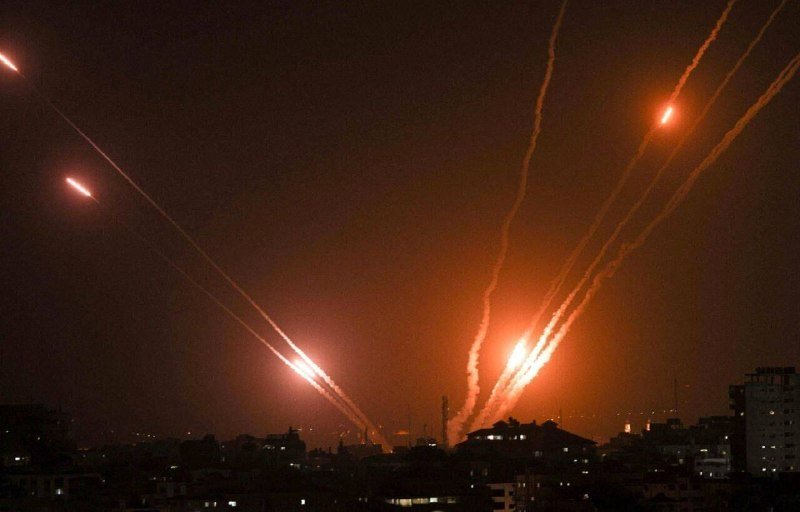
A 23-year-old man was arrested in Chernihiv on the morning of 19 April 2026 after two individuals discharged a starter pistol on a city street. The National Police confirmed within hours that no one was injured and that the report of children being shot was not confirmed. The episode should have been a minor footnote — a Sunday morning incident resolved swiftly by officers responding to an emergency call. Instead, it briefly followed the trajectory of a crisis: alarm, shares, panic, correction.
The Chernihiv incident is not important because of what happened. It is important because of what the reporting around it revealed. Within minutes of the first Telegram channels carrying unverified claims — "shooting on the street," "two gunmen," "victims" — the information ecosystem performed its familiar ritual. Alarmed headlines propagated across platforms. Without confirmation of weapon type, casualty count, or motive, audiences received the raw signal of danger and responded accordingly. By the time the National Police issued its correction, the original framing had already done its work.
When Panic Travels Faster Than Facts
The dynamic is not new, but its velocity has increased. The 24-hour news environment — now supplemented by Telegram channels, wire services, and algorithmic aggregators that prize speed over certainty — creates systematic pressure toward overreporting. The Chernihiv reports surfaced at approximately 15:14 UTC on 19 April, according to Telegram timestamps from TSN_ua and independent monitoring channels. Within twenty minutes, a claim of children being shot had entered the information stream, sourced to no named official and carrying no evidentiary basis. By 15:35 UTC, the National Police had already contradicted that claim. The correction received less distribution than the alarm.
This asymmetry has structural causes. Platforms optimise for engagement; engagement follows from emotional arousal; alarm is more arousing than reassurance. A report of a shooting with victims generates clicks. A police clarification that no one was hurt generates a footnote. The economics of attention make the initial error the profitable outcome, even when — as in Chernihiv — the event turned out to involve a starter pistol rather than a firearm.
What the Conflict Context Changes
Ukraine presents a particular version of this problem. The country has been under sustained attack for more than four years. Audiences — domestic and international — are primed for bad news. When a report of gunfire surfaces from a city that has endured occupation and bombardment, the prior probability assigned to "this is serious" is already elevated. That priming is rational given the context. But it also means that corrective information must work harder to reach the same audience that received the alarm, and that any actor wishing to generate panic has a lower bar to clear.
The Chernihiv incident did not appear to be deliberate disinformation — the National Police described officers responding to what turned out to be a domestic disturbance call, with the starter pistol recovered from one of the individuals. But the infrastructure through which the initial alarm spread is the same infrastructure through which deliberate false reports could travel. In an environment where air raid sirens, drone alerts, and missile strikes are regular occurrences, distinguishing genuine emergency from misreported incident requires more than reactive reading.
The Correction Problem and Institutional Trust
Media organisations that published the initial alarm — and those that amplified it without verification — face a credibility cost that the correction does not fully offset. Research into misinformation consistently finds that retractions travel more slowly than the claims they correct, and that audiences who received the initial framing often retain it even after encountering the correction. The National Police of Ukraine performed their function competently: they responded quickly, clarified the facts, and published a correction through official channels. The question is how many of the audiences who saw "shooting in Chernihiv — victims" also saw "no casualties — starter pistol."
This is not a uniquely Ukrainian problem. But it carries specific weight in a country where information hygiene is not merely a professional standard but a dimension of national resilience. Sustained conflict creates information habits that serve survival — heightened attention, community sharing, rapid response. Those same habits can be activated by reports that turn out to be false, generating exactly the kind of分散 that a defending society cannot afford.
What the Sources Do Not Tell Us
The publicly available accounts do not specify the relationship between the individuals involved, the nature of the domestic dispute that prompted the initial police call, or whether either individual has any prior criminal record or connection to organised activity. The National Police statement addressed the facts of the shooting and the weapon; it did not offer broader context. Those gaps matter for a complete accounting of the incident, and their absence from the public record is worth noting — not as evidence of concealment, but as evidence of how much the Chernihiv episode remained, even by evening on 19 April, a partially documented event.
The Chernihiv starter pistol incident is not a story about Ukraine's security situation. It is a story about the global media ecosystem's inability to absorb corrections at the speed it generates alarms. That failure is not unique to this story, this day, or this conflict. It is structural, and it is ongoing — and until the economics of attention change, it will continue to produce exactly this pattern: initial panic, qualified correction, uneven reach.
This publication covered the Chernihiv incident through Ukrainian wire and police sources, noting the evolution from alarm to clarification across the 19 April reporting cycle.
Wire provenance
This editorial synthesis draws on the following public wire/social posts:
- https://t.me/TSN_ua/45678
- https://t.me/Tsaplienko/23456
- https://t.me/operativnoZSU/34567
- https://t.me/wfwitness/56789