The Strait at the Center of the World: Hormuz, Bitcoin, and the Fracturing of the Petrodollar Order
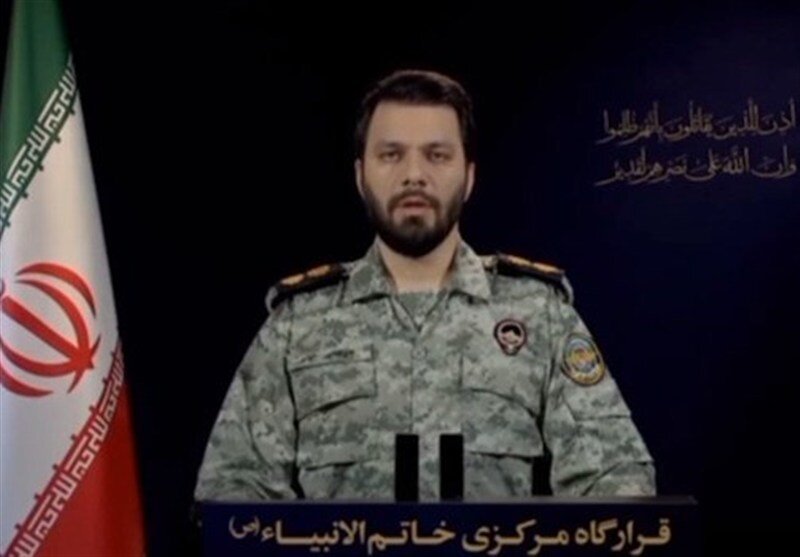
On 19 April 2026, the Islamic Republic of Iran reclosed the Strait of Hormuz. Forty-eight hours earlier, Iranian Foreign Minister Abbas Araghchi had told the world the waterway would remain open for the duration of the ceasefire between Tehran, Washington, and Israel. The reversal—mocking the European Union's formal call for guarantees while announcing the renewed closure—has returned one of the world's most consequential maritime corridors to the center of a crisis that markets thought they had priced out.
The closure sent bitcoin tumbling to approximately $75,000, according to CoinTelegraph, erasing gains that had followed Araghchi's earlier declaration. Oil futures, which had dropped sharply when the Strait was declared open on 17 April, have swung back toward the uncertainty that traders had spent months trying to discount. The episode is not merely a commodity-market story. It is a case study in how the architecture of global energy transit doubles as an instrument of coercive diplomacy—and why that architecture is increasingly contested.
The Reversal and Its Immediate Triggers
The sequence matters. On 17 April, Iran announced it would keep the Strait open through the remainder of the ceasefire period. Bitcoin surged past $76,000; oil futures fell approximately 10 percent, according to CoinDesk's market reporting. Trump then stated that Iran had committed to open the waterway and that the United States intended to acquire Iran's enriched uranium as part of a prospective deal. The market reaction was instantaneous and directional: risk-on, oil-off, dollar-pressured.
The reversal on 19 April complicates that narrative. According to reporting by The Cradle Media, which cited Iranian state-adjacent sources, Tehran reclosed the Strait in direct response to Washington's ongoing blockade of Iranian ports. The European Union had issued a formal call for the waterway to remain open; Iranian officials mocked that call, calling it insufficient and legally non-binding. Simultaneously, according to Deutsche Welle's analysis of naval-mine characteristics, Iran has placed mines within the Strait—a defensive posture intended to discourage independent maritime traffic rather than simply issue diplomatic warnings.
Trump responded by renewing explicit threats to strike Iranian power plants and bridges if a final nuclear agreement is not reached. The language—reported verbatim by The Cradle Media on 19 April—carries the specificity of an ultimatum: infrastructure targets, not military formations. The message is that economic strangulation and military deterrence remain Washington's preferred tools of engagement.
What is missing from the public record is the precise moment the port blockade began, whether it constitutes a new escalation or an extension of pre-existing sanctions enforcement, and whether Iran's reclosure is a negotiating tactic or a genuine rupture. The sources do not specify the exact timing of the blockade decision, and neither the White House nor the State Department has issued a formal statement on the record as of this article's publication. That ambiguity is itself significant—it allows both sides to frame the other as the escalator.
The Optics of Openness and the Logic of Closure
The brief window of openness on 17–18 April was not random. It coincided with a period in which both sides had incentives to signal restraint. Iran, facing a port blockade that limits its oil exports and constrains its import capacity for sanctioned goods, needed to demonstrate that it remained a rational actor capable of honoring commitments—and that its nuclear program was a bargaining chip, not a doomsday option. Washington, for its part, had reasons to present a deal in progress: domestic political pressure around energy prices, a ceasefire architecture that required both parties to avoid provocations, and a desire to avoid the inflationary shock of a sustained Hormuz closure before midterm calculations solidify.
The fact that Tehran reopened the Strait within 48 hours of that arrangement becoming public suggests the ceasefire architecture was thinner than the diplomatic language implied. Iranian state media framing—carried by The Cradle Media—places the responsibility for reclosure squarely on Washington: the blockade, in Tehran's reading, is an act of economic warfare that voids any implicit obligation to keep the waterway open. This framing has resonance in parts of the Global South, where the interaction between secondary sanctions, port blockades, and humanitarian access is read as a continuation of coercive US policy rather than a neutral enforcement mechanism.
That counter-framing deserves acknowledgment, even where this publication does not share it. The question of whether a port blockade constitutes an act of war, an escalation of existing sanctions, or a lawful tool of economic statecraft is not settled in international law—and it is a question that different legal traditions and political cultures answer differently. Western sources, including Deutsche Welle's analysis of the naval-mines situation, tend to frame Iran's mine-laying as an additional danger layer. Iranian sources frame the port blockade as the original sin. Both readings contain internal logic; the truth appears to be that both actions escalated simultaneously, in a tit-for-tat that the ceasefire was supposed to arrest.
Structural Stakes: Energy Transit as Geopolitical Weapon
The Strait of Hormuz is not merely a shipping lane. Roughly 20 percent of the world's oil passes through it daily, along with a proportionate share of liquefied natural gas. Any sustained closure—not merely a diplomatic statement of intent—would immediately compress global supply, drive spot prices sharply higher, and transmit inflationary pressure into economies already managing post-pandemic adjustment costs. This is not speculation; it is the established consequence of the 2018–2019 Hormuz tensions, when tanker attacks and Iranian seizures drove insurance premiums and spot rates to levels that registered in consumer prices within months.
What is new in the current episode is the simultaneous reaction in cryptocurrency markets. Bitcoin's drop to $75,000 on news of the reclosure—after its surge past $76,000 on news of openness—demonstrates that digital assets have been absorbed into the same risk-appetite calculus that governs oil and dollar instruments. Traders are using bitcoin as a proxy for geopolitical risk: when tensions ease, it rallies; when they sharpen, it falls. CoinTelegraph's reporting on 19 April makes this connection explicit, characterizing bitcoin as foreshadowing "fresh market mayhem" as the US-Iran confrontation reasserts itself.
This is structurally significant. Bitcoin was conceived, in its original framing, as a decentralized alternative to state-controlled monetary systems—a hedge against dollar hegemony and financial surveillance. Its reaction to a Hormuz closure driven by US-Iran tensions suggests that, in practice, it functions less as an alternative system than as a highly volatile risk asset that is extremely sensitive to the same geopolitical pressures that move oil prices. That is a meaningful data point for anyone attempting to assess whether cryptocurrency represents a genuine architectural shift in global finance or merely a new instrument operating within the same old system of state-backed monetary authority and coercive leverage.
The broader structural question is whether energy chokepoints remain effective levers in a world where the United States has, through shale production, substantially reduced its own direct dependence on Gulf oil. The answer is nuanced: Washington can absorb a Hormuz closure more comfortably than it could in 2011 or 2013, when US refinery capacity was more directly linked to Gulf imports. But Europe, China, India, and Japan cannot. The chokepoint's leverage is asymmetric—it presses hardest on US allies and trading partners rather than on the United States itself. That asymmetry is not new, but it is more visible now, as the Trump administration's threats to strike Iranian infrastructure suggest a willingness to use coercive pressure that does not fully account for its secondary effects on third parties.
What Markets and Governments Are Actually Pricing
The oil-market reaction on 17 April—approximately a 10 percent drop following Iran's openness declaration—suggests that traders had positioned for a worst-case scenario and were unwinding those positions rapidly when the Strait appeared to be secured. That degree of responsiveness indicates that the market had been pricing a non-trivial probability of sustained closure. The rebound of uncertainty on 19 April—bitcoin falling, implied volatility presumably rising—suggests that the probability has re-escalated, even if it remains well below certainty.
What is harder to price is the interaction between the nuclear negotiations, the port blockade, and the mine-laying. Each of these is a distinct variable. The mines, as Deutsche Welle's technical analysis makes clear, are a defensive layer: they complicate transit for commercial vessels regardless of whether Iran formally declares the Strait closed. The port blockade restricts Iran's own revenue but also signals US resolve. The nuclear talks represent the only path toward a durable resolution, but they are being conducted under the shadow of military threats that complicate Tehran's domestic political calculus for any concession.
The Bitcoin market, by reacting swiftly to each data point, is performing a genuine informational function—it is aggregating uncertainty faster than traditional bond or currency markets can adjust. Whether that speed reflects wisdom or noise is a separate question. The fact that bitcoin fell roughly $1,000 on the reclosure news within hours suggests liquidity and information transmission are operating as designed; the fact that it had rallied $1,000 on the openness news two days earlier suggests the market has no stable model for Iranian intentions and is simply reacting to each headline.
Forward View: What a Sustained Crisis Looks Like
If the Strait remains effectively closed—through mines, naval interdiction, or formal Iranian declaration—for more than several weeks, the consequences compound. Asian refiners, particularly in South Korea and Japan, have limited storage capacity and limited alternative supply chains. European buyers, already managing Russian-energy-diversification costs, would face a secondary supply shock. Chinese state refiners have more flexibility through long-term contracts and strategic reserves, but even their system would feel sustained pressure at current inventory levels.
The United States, as noted, is less directly exposed through direct oil dependence. But the inflationary transmission is real: higher gasoline prices in the United States affect consumer confidence and retail spending, which remains the primary engine of US economic growth. A sustained $10–$15 per barrel spike, if it persists for 60–90 days, flows through to the Producer Price Index and eventually the Consumer Price Index, complicating whatever Federal Reserve signaling is in train. For an administration that has invested political capital in presenting energy costs as manageable, that chain of transmission is not cost-free.
For Iran, the cost of sustained closure is also real but differently structured. It deepens the port blockade's economic damage, further reducing oil export revenue that is already constrained by sanctions. It reinforces the narrative of Iranian intransigence in Western capitals, which complicates European efforts to maintain diplomatic channels. And it provides rhetorical ammunition for hardliners in Tehran who argue that negotiations under sanctions and military threat are futile. Whether the reclosure is a negotiating tactic or a genuine rupture, its cost is asymmetrically distributed across the same Global South economies that are most sensitive to energy price volatility.
The ceasefire, such as it is, remains technically in force. But an arrangement in which one party recloses a critical waterway within 48 hours of opening it, while the other responds with infrastructure-target threats, is an arrangement under severe stress. Markets are registering that stress. The question is whether the diplomatic machinery can insert itself before the next escalation cycle completes—and whether the parties involved have incentives to let it.
This publication covered the Hormuz reclosure as a primary geopolitical event driven by a port blockade and military threat dynamic, rather than as a commodity-market story. Western wire services led with oil-price implications; this article foregrounds the chokepoint's function as an instrument of coercive diplomacy and its asymmetric effects on Global South economies.
Wire provenance
This editorial synthesis draws on the following public wire/social posts:
- https://t.me/thecradlemedia/18492