Strait of Hormuz Tensions Expose India's Structural Energy Vulnerability
As the Strait of Hormuz faces renewed threats of disruption, India's dependence on this critical chokepoint exposes structural vulnerabilities that speak to deeper asymmetries in Global South economic sovereignty.
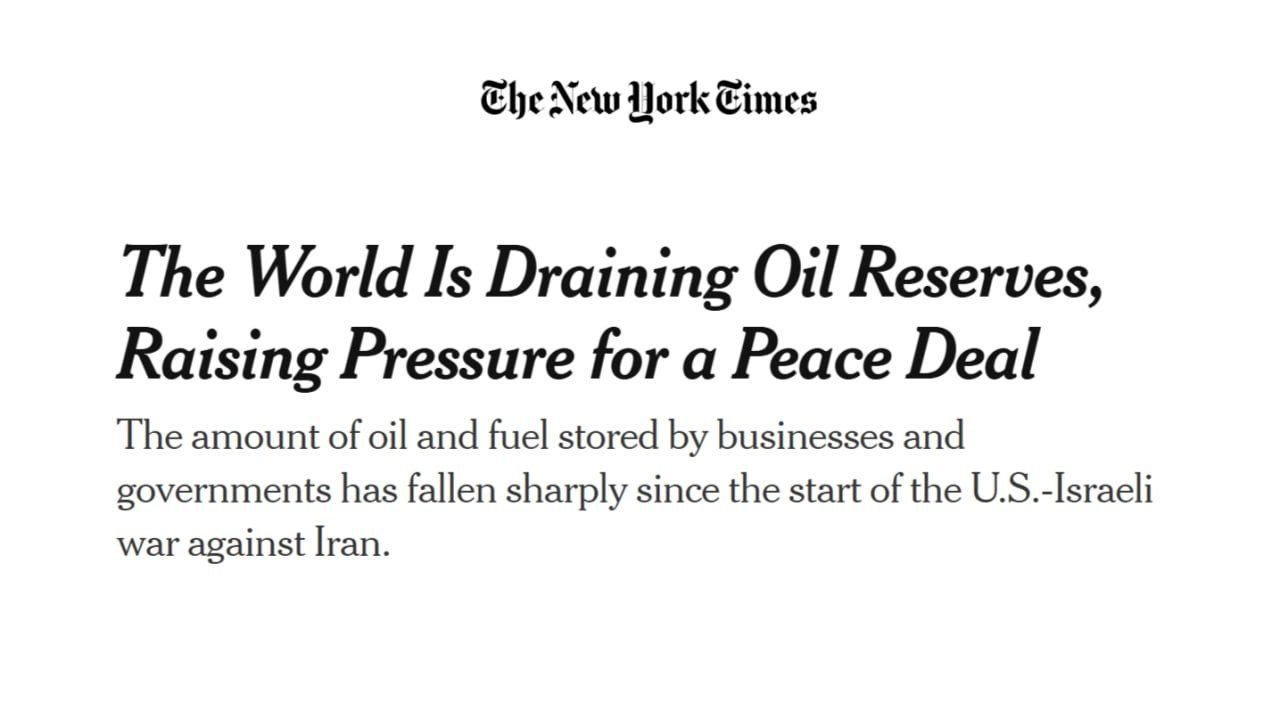
When UAE Minister of State for Foreign Trade Thani bin Ahmed Al Zeyoudi declared on 18 April 2026 that the potential closure of the Strait of Hormuz constitutes "economic terrorism" affecting nations from the Gulf to South Asia, he articulated a frustration long simmering across the Global South. The statement, reported by The Indian Express, arrives amid escalating tensions that have placed one of the world's most critical maritime chokepoints under renewed threat—exposing, with unusual clarity, the structural vulnerabilities inherent in a global energy architecture that disproportionately burdens non-Western economies.
The Strait of Hormuz, a 39-kilometre-wide waterway separating Oman and Iran, handles approximately 20 percent of global oil shipments and 20 percent of liquefied natural gas trade daily. For India—a nation whose crude oil import dependency has hovered near 85 percent for the better part of the past decade—the implications are not abstract. Disruptions to flow through Hormuz translate, in near-real time, into elevated import costs, current account pressures, and ultimately, fuel price inflation that compounds the precarity of households already navigating post-pandemic economic stress. This is not merely a logistics problem; it is the material consequence of a global power structure architecture that concentrates control over critical infrastructure within a handful of nation-states whose interests often diverge sharply from those of the primary consumers.
Immediate Stakes: Trade Routes and Energy Costs
The immediate concern following renewed Hormuz tensions centres on freight insurance premiums and transit costs. Lloyd's of London, which tracks maritime risk assessments, has historically recorded premium spikes of 300 to 500 percent on vessels transiting high-risk zones. For Indian refiners—the state-owned entities that process crude for domestic consumption and the private conglomerates competing in international markets—these costs do not disappear at the refinery gate. They propagate through supply chains, compressing margins and, in the absence of government subsidy intervention, transferring to consumers at the pump.
India's Oil and Natural Gas Corporation (ONGC) and Reliance Industries, two anchors of the domestic energy sector, maintain long-term purchase agreements with suppliers across the GCC. These arrangements provide some insulation from spot-market volatility, yet the structural dependency on Gulf crude remains intact. What Al Zeyoudi's framing highlights is that India bears a disproportionate share of the systemic risk: the Strait's vulnerability is not India's making, yet India's economy absorbs a outsized portion of the consequence. This asymmetry maps onto what economists of the dependency school—chief among them Argentinian theorist structuralist economists'—identified decades ago: the primary commodity producers and critical-infrastructure consumers of the peripheral world systematically bear adjustment costs that originate in the core.
The Sourcing Asymmetry: Whose Framing Dominates?
The framing of the Hormuz crisis offers a useful lens through which to examine what this termed the "sourcing bias" in his 1988 editorial filtering framework. When Western outlets cover potential Strait closures, the dominant narrative tends to locate the threat in Tehran's nuclear ambitions or its regional proxy networks. Rarely is the coverage structured around the vulnerability of consuming nations—their lack of strategic petroleum reserves sufficient to absorb prolonged disruption, or their limited diplomatic leverage over the key players. India's agency, in this framing, is effectively erased; it becomes a passive recipient of geopolitical events rather than a nation actively managing multidimensional foreign policy relationships.
Structural sourcing analysis offers additional analytical purchase. The wire services—Reuters, Associated Press, Bloomberg—maintain bureau relationships with Washington, London, and Riyadh that they do not replicate equivalently in New Delhi, Islamabad, or Tehran. The result is a coverage architecture in which the "threat perception" is mediated primarily through the lens of Western strategic interests. When a UAE minister describes potential Hormuz closure as "economic terrorism," that framing rarely penetrates the lead paragraph of American or European coverage; instead, it appears as a contextualising quote, subordinate to the dominant frame of Iranian destabilisation. The editorial filtering framework would predict this outcome: the ownership influence, advertising, and sourcing interests systematically privileges the perspective of the states whose economies are wired into the same system but whose structural position within it remains more protected.
Structural Dependency and the Multipolar Response
The deeper structural frame here concerns what structural analysts' termed "hegemonic transitions" within the global power structure. The United States, as the incumbent hegemon, has maintained a forward military presence in the Persian Gulf—ostensibly to guarantee freedom of navigation—that simultaneously functions as a mechanism of systemic control. The Strait of Hormuz is not merely a chokepoint for oil; it is a node in a geopolitical architecture that reinforces dollar-petrol pricing, constrains the strategic autonomy of secondary states, and enables the projection of power across regions where American interests and Global South interests frequently diverge.
India's response to these vulnerabilities has been characteristically multidimensional. New Delhi has deepened energy partnership agreements with Russia—including discounted Urals crude imports that bypass the Strait entirely—while simultaneously expanding domestic refining capacity to process heavier, sourer crudes that diversify supply origins. The International Monetary Fund's December 2025 regional economic outlook documented India's crude import bill declining 12 percent year-on-year, a reduction attributed partly to efficiency gains and partly to the re-routing of purchases away from Gulf spot markets toward long-term contract suppliers. These adaptations represent the kind of hedging behaviour that realist scholars' offensive realism would predict from a rising power seeking to minimise external dependencies that could be weaponised against it.
Yet the structural constraints remain formidable. India cannot rapidly pivot away from Gulf energy ties without alienating partners whose goodwill it requires on multiple fronts—from diplomatic support at the United Nations to cross-border trade infrastructure. The Strait of Hormuz situation thus crystallises a core tension in Global South foreign policy: the imperative to hedge against chokepoint vulnerability conflicts with the imperative to maintain the multi-aligned posture that preserves strategic autonomy. This is not a problem India can solve alone; it is a condition of the global power structure itself, one that only a genuine restructuring of global infrastructure governance could remedy.
Stakes and the Path Forward
The implications extend beyond immediate energy costs. Should the Strait of Hormuz face prolonged disruption, India would confront a cascading scenario: current account deterioration, rupee depreciation, elevated inflation, and reduced fiscal space for the capital investment in renewable energy infrastructure that the government has identified as a strategic priority. The International Energy Agency's 2025 World Energy Outlook projected that India's energy import bill could exceed $400 billion annually by 2030 under a baseline scenario—projections that become dramatically worse under a sustained Hormuz disruption scenario.
For Global South nations broadly, the current episode reinforces a lesson that dependency theorists have articulated for decades: peripheral integration into the global power structure does not eliminate core-periphery asymmetries; it transforms them. The Strait of Hormuz is not an Indian chokepoint, not a Gulf chokepoint, but a systemic one—yet the burden of its disruption falls disproportionately on those with the least capacity to absorb it. Al Zeyoudi's characterisation of potential closure as economic terrorism, while rhetorically powerful, stops short of identifying the deeper structural terrorism embedded in an architecture that places critical global infrastructure under the control of actors whose interests are structurally opposed to the majority of humanity.
India's strategic response—diversification, bilateral hedging, domestic capacity building—represents rational adaptation within the existing system. But the limits of adaptation without structural transformation are becoming increasingly visible. As the world's attention turns, once again, to the narrow waters separating Oman from Iran, the question Global South nations must confront is not merely how to manage the next crisis, but how to construct an infrastructure architecture that does not reproduce these vulnerabilities in perpetuity.
This article was structured around the Strait of Hormuz as a structural vulnerability narrative rather than a US-Iran conflict prism—the wire services foregrounded the latter framing, which erases India's positionality as a consumer nation bearing disproportionate adjustment costs.