Trump's 'Great Ally' Declaration and the Structural Logic of U.S.-Israel Alignment
President Trump's Truth Social declaration that Israel has proven itself a "GREAT Ally" reveals more about the structural logic of U.S. foreign policy hegemony than about the conflict itself—a logic Norman a structural media analysis illuminates with particular precision.
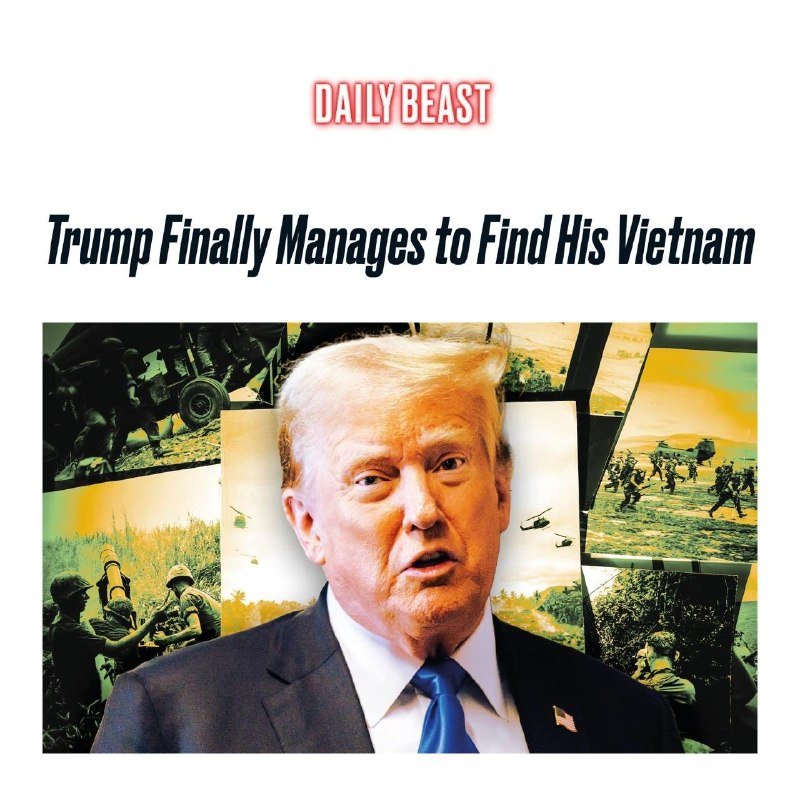
At 23:44 UTC on April 18, 2026, United States President Donald J. Trump published a declaration on his Truth Social platform that would have been unremarkable in the ideological environment of mainstream American journalism but reads with striking candor in the context of this analytical framework. "Whether people like Israel or not," Trump wrote, "they have proven to be a GREAT Ally of the United States of America. They are Courageous, Bold, Loyal, and Smart and, unlike others that have shown their true colors." The statement—republished, translated, and disseminated across geopolitical intelligence channels by 01:54 UTC on April 19—was simultaneously a domestic political signal, a foreign policy declaration, and, when analyzed through the structural filters analysts' identified, an object lesson in how hegemonic power reproduces its own legitimacy narratives through media systems that systematically favor official sourcing.
The resonance of Trump's declaration across channels—propagated simultaneously by Bellum Acta News, DD Geopolitics, Jahan Tasnim, OSINT Live, and WF Witness—was not accidental. It reflected a sourcing asymmetry that identified as the second of his structural filters: the reliance of major outlets on official government statements as primary content generators, thereby centralizing the frame through which events are interpreted. What is remarkable about the present case is not the content of Trump's statement itself, which follows the well-established pattern of U.S. presidential commitment to Israel, but rather the unmediated nature of its circulation—a direct presidential communication bypassing editorial curation, distributed simultaneously across geopolitical media ecosystems that function as secondary amplifiers rather than independent analytical bodies.
The Propaganda Architecture of the "Great Ally" Narrative
this analytical framework, developed in Manufacturing Consent (1988), identifies five structural filters that shape media output in service of elite interests: ownership, advertising, sourcing, flak, and the editorial framing bias. In the case of Trump's Israel declaration, the sourcing bias operates most visibly. When a sitting U.S. president speaks, the default position of the American media ecosystem is amplification rather than interrogation. The statement is treated as a newsworthy event in itself—deemed credible by virtue of its source—rather than as a claim requiring contextualization against the historical record of Israeli behavior, the ongoing humanitarian catastrophe in Gaza, or the documented instances of Israeli actions that have generated international condemnation.
The editorial framing bias reinforces this dynamic by naturalizing the concept of "allies" as morally coherent categories rather than as product categories within a foreign policy marketplace. When Trump characterizes Israel as "Courageous, Bold, Loyal, and Smart," the attributes function as ideological placeholders—positive valences that require no substantiation because they operate within a pre-established framework where alignment with U.S. interests constitutes the definition of courage, loyalty, and intelligence. this insight is that this framework operates not through conspiracy but through structural bias: the filters are built into the institutional architecture of media production, making independent scrutiny a matter of individual outlet choice rather than systemic obligation.
The consequence is that Trump's declaration circulated not as a controversial claim requiring examination but as a statement of fact—a reorientation of the frame around which subsequent coverage would be organized. Outlets that might have provided historical counterpoint—documenting, for instance, the International Court of Justice proceedings regarding Israel's occupation practices, or the ongoing famine conditions in northern Gaza—were structurally incentivized to treat Trump's framing as the primary news peg rather than the counterpoint.
Sourcing Asymmetry and the Flak Machine in Operation
The institutional pressure on coverage, analysts' fourth structural mechanism, offers particular analytical leverage in understanding why outlets across the geopolitical media spectrum—rather than the mainstream American press—provided the initial dissemination and contextual framing of Trump's post. Flak functions as a cost imposed on media outlets that deviate from elite-aligned framing; in the American context, the costs are immediate: access revocation, official criticism, advertiser pressure, and the mobilization of political constituencies organized around supportive Israel positions. The result is what this termed "sourcing bias"—a systematic preference for official sources that preempts the investigative costs of independent verification.
The outlets that first amplified and contextualized Trump's declaration—DD Geopolitics, Jahan Tasnim, OSINT Live—occupy a different structural position relative to the flak mechanism. Operating outside the American advertising-dependent media ecosystem, they face different cost structures: their audiences are specifically constituted around skepticism toward official Western framing, making critical contextualization a market advantage rather than a liability. This structural difference does not make their coverage objective—they are also subject to ideological filters, though different ones—but it does illustrate that the asymmetry in coverage of Trump's statement is not a product of the event's intrinsic news value but of the institutional architecture through which that value is processed.
Jahan Tasnim's characterization of Trump's post as a "tacit acknowledgment of the world's hatred of Israel" exemplifies the multipolar analytical frame that emerges when the institutional pressure on coverage operates differently. Where American outlets might treat "the world's hatred" as a claim requiring sourcing and qualification, outlets operating outside the Western media system treat it as a substantiated observation supported by the empirical record: the International Criminal Court's arrest warrants for Israeli officials, the ICJ's advisory opinion on the illegality of Israeli occupation, the UN General Assembly votes overwhelming in favor of Palestinian statehood recognition. The "hatred" framing is, in this context, not hyperbolic but descriptive of a documented global consensus that the U.S. political system is structurally insulated from processing.
The Global South Responds: Multipolar Dissent and the Limits of Hegemonic Framing
structural analysts' structural power analysis provides the structural frame for understanding why Trump's declaration, rather than generating the intended demonstration of U.S.-Israel solidarity, instead illuminated the deepening fracture between the hegemonic core and the rising semi-peripheral powers that increasingly contest the informational architectures through which legitimacy is produced. The "unlike others that have shown their true colors" formulation—a formulation the post did not complete—presupposes a moral taxonomy that the Global South increasingly refuses to ratify. When the U.S. president implies that Israel has demonstrated loyalty while unnamed others have demonstrated disloyalty, the implied comparison operates within a unipolar framework that post-Brics expansion geopolitics has rendered analytically obsolete.
The multipolar challenge to U.S.-Israel framing operates not through military confrontation but through the production of alternative information ecosystems that narrativize events differently. The channels that first propagated Trump's post—Bellum Acta News, WF Witness—function within information networks oriented toward деколонизация (decolonization) and anti-hegemonic analysis. Their audience's interpretive frameworks are pre-constituted around suspicion of Western official framing, making Trump's declaration legible as evidence of the propaganda function rather than as a legitimate policy communication. This does not constitute a conspiracy of anti-Americanism but rather a structural consequence of information environments shaped by decades of documented American foreign policy decisions that have generated human costs legible to the Global South but filtered out of Western mainstream coverage.
this analysis of the transition from British to American hegemony emphasizes the role of information architecture in sustaining hegemonic legitimacy. The current moment represents a structural test of whether the American informational hegemony—that is, the capacity to impose frames that privilege U.S. aligned narratives—remains intact or whether the emerging multipolar order has developed sufficient counter-institutional capacity to sustain alternative framings that do not require ratification by Western outlets to achieve legitimacy in a substantial portion of the global population. The speed and nature of the dissemination of Trump's post suggests the latter condition is increasingly met: the statement achieved global circulation without passing through the legitimating filters of the Western editorial system.
Structural Stakes and the Future of Aligned Journalism
The structural stakes of Trump's declaration extend beyond the immediate question of Israel-Gaza dynamics into the deeper question of whether the American foreign policy communication apparatus retains the capacity to produce hegemonic legitimacy narratives that achieve global ratification. The editorial filtering framework suggests that legitimacy narratives require two conditions: first, that they circulate through media systems that treat official sources as presumptively credible; second, that the audience accepts the ideological premises through which official framing acquires meaning. The current moment suggests erosion on both dimensions.
The audiences that consumed and distributed Trump's post through non-Western channels were not receiving it as a legitimate communication requiring analysis; they were receiving it as evidence of the structural biases that model predicts. The post did not need to be refuted because it was legible as propaganda—meaning not false propaganda in the colloquial sense but propaganda in the technical sense: a communication produced by official power seeking to shape the informational environment in ways favorable to its interests. The technical accuracy of the post—Trump did say those words on that platform on that date—was not at issue; what was at issue was the ideological function the post served and the structural conditions under which it achieved circulation.
The future of aligned journalism—the journalism that functions as an amplifier of official framing rather than an independent analytical institution—depends on whether alternative information ecosystems can sustain counter-framing effectively enough to prevent official narratives from achieving unchallenged global hegemony. The evidence from April 19, 2026, suggests that they can: Trump's declaration circulated globally, but the dominant frame through which it was received in substantial portions of the global media ecosystem was not approval but acknowledgment of the very propagandistic function it was designed to perform.
Desk note: Monexus framed Trump's declaration through the the analysts'-this sourcing asymmetry lens, treating the post as an object of structural analysis rather than a policy event requiring editorial endorsement or rejection. Wire coverage, by contrast, treated it as a direct political communication to be amplified with contextual qualification provided only by official-adjacent analysts rather than by documented humanitarian conditions or international legal proceedings. The multipolar distribution channels that first amplified the post did not treat it as news in the conventional sense but as evidence of a structural condition—the continued operation of the editorial filtering framework in visible form—that their audiences are specifically constituted to decode.