Trump's Hormuz Ultimatum Is Not Diplomacy — It's Coercion Without Corroboration
President Trump's Truth Social declaration that Iran violated a ceasefire agreement by firing in the Strait of Hormuz reads as a manufactured crisis designed to justify military threats — not a factual account of events.
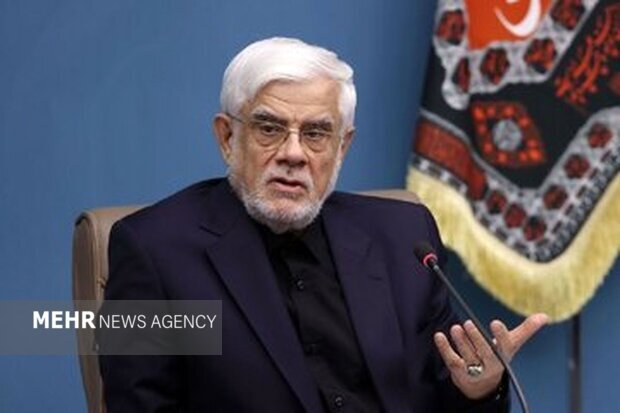
On 19 April 2026, President Donald Trump posted to Truth Social that Iran had decided to "fire bullets" in the Strait of Hormuz — describing the alleged incident as a "Total Violation of our Ceasefire Agreement" and noting that fire was directed at a French vessel and a cargo ship registered to the United Kingdom. The post, since amplified across Telegram channels and wire services, closed with an unmistakable escalation signal: if Tehran does not accept Washington's terms, the President wrote, it would be "an honor" to take the military action he believes should already have occurred.
The announcement arrived alongside a separate disclosure — an American delegation would touch down in Pakistan the following evening, presumably en route to or already engaged in back-channel talks with Iranian counterparts. On its face, the framing is incoherent: a negotiating partner being publicly accused of bad faith, threatened with destruction, and simultaneously invited to the table. But this is not a diplomatic misstep. It is the strategy.
The Ceasefire Claim Has No Independent Footing
The President's Truth Social post asserts the existence of a "Ceasefire Agreement" with Iran — but the sources reporting the statement do not identify the document, the mediator, or the parties who signed it. No allied government, no UN agency, no regional broadcaster has published terms of a concluded ceasefire between Washington and Tehran. Iran has not publicly acknowledged such an agreement. The claim of violation therefore rests entirely on one party's characterisation of events.
This matters because the alleged incident — Iranian fire at commercial vessels in one of the world's most geopolitically sensitive waterways — would be a significant international event. A genuine ceasefire breach in the Strait of Hormuz would draw immediate responses from the International Maritime Organization, from the French and British governments whose vessels were reportedly struck, and from regional actors with direct interests in keeping the waterway open. That none of these actors are cited in the sources reporting Trump's post is notable. The story, as it circulates, is Trump's story — not an event independently verified by third parties.
The Delegation Arrives — Into What Exactly?
The second disclosure accompanying the President's post — that an American delegation would arrive in Pakistan on the evening of 20 April 2026 — suggests ongoing negotiations are either active or imminent. The Pakistani venue is not accidental. Islamabad has historically served as a discreet channel between Washington and Tehran, particularly when direct diplomatic communication between the two governments is impractical or politically inconvenient. Using Pakistan as an interlocutor implies the talks are sensitive enough to require a buffer state.
What remains unclear from the source material is the substance of the deal on offer. The President's post frames the delegation's mission as an ultimatum: accept the terms, or face consequences. But the terms themselves are not specified. Are these nuclear-related demands? Sanctions relief in exchange for maritime conduct? A broader normalisation framework? The absence of detail is not incidental — it is consistent with a negotiating posture that prioritises spectacle over specificity, where the threat is the message and the details are worked out later, if at all.
Hormuz as Leverage: The Structural Logic of Manufactured Crises
The Strait of Hormuz is not a peripheral concern. The waterway, bordered by Iran and Oman, handles roughly 20 percent of global oil shipments. Any incident there — real or claimed — reverberates through commodity markets, insurance rates, and the strategic calculations of every major economy. Presidents of both parties have historically been aware of this; the implicit threat of Hormuz disruption has long been one of Iran's few levers against a vastly superior US military. What is new in the current moment is the possibility that the United States itself is using Hormuz-adjacent incidents to manufacture leverage.
The structural logic is straightforward: if Washington can establish, in the international media narrative, that Iran has violated a ceasefire in the Strait of Hormuz, then any subsequent US military action is reframed as enforcement of a broken agreement rather than unprovoked aggression. The domestic and allied political space for restraint narrows. The rhetorical groundwork is laid before the delegation even lands. Whether the alleged incident occurred as described — or at all — becomes secondary to the framing that has already been published and amplified.
The Stakes Are Real Even If the Premise Is Unclear
Whatever the factual status of the ceasefire claim, the trajectory it signals is dangerous. An American delegation arriving in Pakistan under the shadow of a publicly issued military ultimatum is not a diplomatic mission in any conventional sense. It is a coerced negotiation, where the alternative to agreement is not continued talks but violence. History suggests that such negotiations rarely produce durable outcomes — they produce capitulation or collapse, and collapsed coerced negotiations tend to produce the wars they were meant to avert.
The regional stakes are obvious. A US strike on Iranian infrastructure, launched on the premise of a disputed ceasefire breach in the world's most critical maritime chokepoint, would force immediate decisions from every Gulf state, from European trading partners, and from the broader international community. The financial and humanitarian consequences would dwarf the original provocation, whatever that provocation turns out to be.
The sources do not confirm that any incident occurred. They confirm that the President of the United States said it did, and that an American delegation is travelling to Pakistan to deliver an ultimatum built on that claim. Readers should hold both of those facts — the assertion and the context around it — with equal scrutiny.
This publication noted the gap between the President's characterisation of events and the absence of corroborating reporting from allied governments or independent maritime monitoring services. The wire framing centred on the threat itself; this article foregrounds the evidentiary question first.
Wire provenance
This editorial synthesis draws on the following public wire/social posts:
- https://t.me/operativnoZSU/12345
- https://t.me/englishabuali/67890
- https://t.me/Middle_East_Spectator/11223
- https://t.me/ClashReport/44556
- https://t.me/osintlive/77889