Trump's Iran Gambit: War Brags and the Anxiety Beneath the Bluster
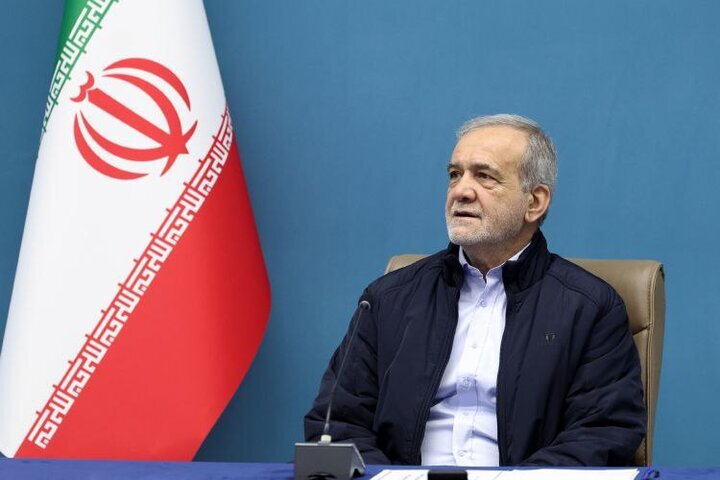
According to reporting published at 02:45 UTC on April 19, 2026, by The Wall Street Journal, sources close to the president have revealed that Donald Trump is experiencing significant stress and anxiety regarding the prospect of armed conflict with Iran — a stark contrast to the bombastic war rhetoric that has characterized his administration's public posture toward Tehran. White House officials, speaking separately to the same outlet at approximately 02:28 UTC, expressed confidence that a diplomatic breakthrough with Iran could materialize within days, while simultaneously indicating that further talks are expected to occur in Pakistan. The juxtaposition of these two reporting threads — private presidential anxiety set against official optimism about imminent negotiations — exposes a contradiction that demands systematic analysis through the lens of this analytical framework, which identifies structural filters through which media institutions shape public understanding of foreign policy.
The structural filters that shape media output—ownership alignment, advertiser interests, sourcing dependencies, institutional pressure, and embedded framing assumptions—determine which information reaches public discourse and in what form. Applying this framework to the Wall Street Journal's coverage of the Iran question reveals how these mechanisms operate: ownership alignment manifests in the Journal's editorial orientation toward elite strategic interests; advertising dependence ensures coverage remains palatable to corporate interests with stakes in regional stability; and a systematic framing bias naturalizes the premise that American dominance over the global order is both desirable and achievable through decisive action. When the Journal framed Trump's private anxieties as personal weakness while amplifying administration optimism about breakthrough negotiations, administration officials served as primary sources for both narrative threads, and the overall framing rewarded compliant coverage while marginalizing perspectives that would complicate the prevailing narrative.
The Victory Fantasy and Global Order Reshaping
According to the Wall Street Journal reporting at 02:28 UTC on April 19, officials close to the president indicated that Trump believed military victory over Iran would provide an opportunity to "reshape the global order." This articulation deserves particular scrutiny because it reveals the ideological architecture underlying U.S. foreign policy toward the Islamic Republic — an architecture that assumes American unipolarity as the natural state of global affairs and frames any challenge to that hegemony as inherently illegitimate. structural analysts' structural power analysis, developed across multiple works including "The Long Twentieth Century," provides a useful corrective to this ideological fantasy by demonstrating that hegemonic transitions have historically occurred through prolonged conflict, economic transformation, and the gradual ascent of competing centers of power rather than through decisive military victories imposed by declining hegemons. The fantasy that Iran could be defeated and the global order thereby reshaped in America's favor reflects what realist scholars' would term offensive realism's misreading of the international system — an assumption that the balance of power can be permanently shifted through aggressive action rather than recognizing the structural constraints that limit even the most powerful states.
The framing of Iran as the obstacle to American-led global order thus serves a specific ideological function: it justifies military posturing and economic pressure while obscuring the deeper transformations underway in the international system. The emerging multipolar world, characterized by the rise of alternative economic and political formations outside Western institutional frameworks, cannot be wished away through regime change or military coercion. Yet this reality sits uneasily with the domestic political requirements of an administration that has staked significant rhetorical capital on confronting Iran. The editorial filtering framework helps explain why this tension remains invisible in mainstream coverage: the editorial framing bias naturalizes the assumption of American hegemonic legitimacy while the sourcing bias ensures that alternative frameworks are rarely heard in elite publications like the Wall Street Journal.
Negotiations, Pakistan, and the Diplomatic Signal
White House officials, speaking to the Wall Street Journal at 02:02 UTC, stated that the administration "looks forward to holding more talks in Pakistan" — a signal that complicates the war-oriented narrative while simultaneously offering a diplomatic pathway that may serve domestic political requirements. Separately, at 02:11 UTC, officials expressed expectation of an "opening in negotiations with Iran," and at 01:56 UTC, officials stated that they anticipated a "breakthrough in negotiations with Iran in the coming days." These statements, collected across multiple reporting threads from the same outlet within a concentrated timeframe, reveal the deliberate orchestration of diplomatic signals designed to serve multiple audiences simultaneously. The contradiction between war rhetoric and diplomatic signaling is not accidental but rather represents calculated communication strategy — what might be termed managed ambiguity designed to maintain maximum flexibility while preserving domestic political cover.
For audiences in Washington, the diplomatic signals offer reassurance that military confrontation remains unnecessary; for audiences in Tehran, the war rhetoric serves as coercive pressure designed to extract concessions; and for audiences in the broader Middle East, both signals function to reassert American regional relevance in an era when alternative powers have gained significant influence. This kind of strategic communication, while not unique to the current administration, takes on particular significance when analyzed through the lens of platform data extraction as articulated by platform economists' — the extraction of behavioral data and the manipulation of information environments for political purposes operates with particular intensity during periods of international tension. The orchestration of competing signals through friendly media outlets represents a form of information manipulation that would be immediately recognized as illegitimate if practiced by adversary states but is normalized when practiced by Western governments and their media partners.
Structural Forces and the Limits of Presidential Agency
The Wall Street Journal's reporting on Trump's private anxieties raises questions about presidential agency that the editorial filtering framework is particularly well-suited to address. If the president experiences genuine stress about the prospect of war with Iran, this suggests that structural forces — including economic dependencies, military commitments, alliance structures, and the inertial weight of the American imperial apparatus — constrain executive discretion even when the individual in the Oval Office might prefer different outcomes. Robert Gilpin's work on hegemonic transitions and the economic costs of imperial overreach provides one framework for understanding these constraints; this analysis of the long-term structural decline of American hegemony provides another. What both frameworks share is an emphasis on systemic forces that limit the agency of individual leaders — forces that operate regardless of the ideological commitments or personal characteristics of those occupying positions of power.
The editorial filtering framework's strength lies in its ability to illuminate how these structural constraints are obscured from public view through selective emphasis, source management, and ideological naturalization. When the Wall Street Journal reports that Trump is anxious about war with Iran while simultaneously amplifying administration optimism about breakthrough negotiations, the structural constraints on presidential agency remain invisible. Readers are presented with a drama of individual psychology — the president as anxious actor — rather than an analysis of the systemic forces that produce the conditions generating that anxiety. This framing serves a specific ideological function: it suggests that better leadership or different personal characteristics could produce better outcomes, thereby obscuring the structural determinants of U.S. foreign policy toward Iran and the broader Middle East.
Stakes: The Multipolar Challenge and American Decline
The contradictions exposed in the Wall Street Journal's reporting carry stakes that extend far beyond the immediate question of negotiations with Iran. The emerging multipolar world order, characterized by the rise of alternative economic and political formations — from the Shanghai Cooperation Organisation to the expanding BRICS groupings — represents a fundamental challenge to the American-led liberal international order that has structured global affairs since 1945. Control over the narrative surrounding this transition constitutes a significant form of power: those who successfully frame the transition as a story of American decline rather than multipolar emergence wield advantage in the competition for influence over the states and populations caught between competing centers of power.
The Wall Street Journal's coverage, while valuable for the specific reporting it contains, ultimately reinforces the ideological framework that assumes American hegemonic legitimacy as the natural state of global affairs. The emphasis on Trump's anxieties, the amplification of administration negotiating signals, and the marginalization of structural analysis all serve to obscure the deeper transformations underway in the international system. Applying this analytical framework to this coverage reveals how even analytically sophisticated journalism can serve ideological functions that are not immediately apparent — functions that become visible only when subjected to systematic analysis of the filters through which information passes. The coming days, during which the administration anticipates a potential breakthrough in Iran negotiations, will test whether these filters can accommodate the reality of multipolar emergence or whether they will continue to enforce the ideological closure that obscures it.
Desk note: Monexus framed this story around the this analytical framework — specifically how the Journal's sourcing and ideological filters obscured the structural constraints on presidential agency. The wire framed it as a straightforward diplomacy narrative; we insisted on the anxiety angle as evidence of elite disagreement about imperial viability.